Browse Articles

The Effects of Atmospheric Attenuation on Cosmic Ray Muons: How is Surface Level Cosmic Ray Muon Flux Affected by Atmospheric Attenuation?

Sun et al. | Sep 11, 2021

The Effects of Atmospheric Attenuation on Cosmic Ray Muons: How is Surface Level Cosmic Ray Muon Flux Affected by Atmospheric Attenuation?

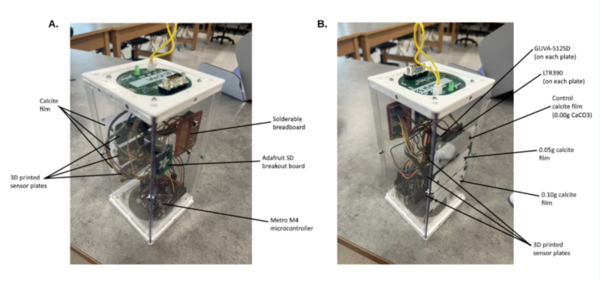
Cosmic rays are high-energy astronomical particles originating from various sources across the universe. Here, The authors sought to understand how surface-level cosmic-ray muon flux is affected by atmospheric attenuation by measuring the variation in relative muon-flux rate relative to zenith angle, testing the hypothesis that muons follow an exponential attenuation model. The attenuation model predicts an attenuation length of 6.3 km. This result implies that only a maximum of 24% of muons can reach the Earth’s surface, due to both decay and atmospheric interactions.

Read More...

Motion tracking and analysis of spray water droplets studied by high-speed photography using an iPhone X

Geng et al. | Sep 11, 2021

Motion tracking and analysis of spray water droplets  studied by high-speed photography using an iPhone X

Smartphones are not only becoming an inseparable part of our daily lives, but also a low-cost, powerful optical imaging tool for more and more scientific research applications. In this work, smartphones were used as a low-cost, high-speed, photographic alternative to expensive equipment, such as those typically found in scientific research labs, to accurately perform motion tracking and analysis of fast-moving objects. By analyzing consecutive images, the speed and flight trajectory of water droplets in the air were obtained, thereby enabling us to estimate the area of the water droplets landing on the ground.

Read More...

Thermoelectric Power Generation: Harnessing Solar Thermal Energy to Power an Air Conditioner

Lew et al. | Jul 06, 2021

Thermoelectric Power Generation: Harnessing Solar Thermal Energy to Power an Air Conditioner

The authors test the feasibility of using thermoelectric modules as a power source and as an air conditioner to decrease reliance on fossil fuels. The results showed that, at its peak, their battery generated 27% more power – in watts per square inch – than a solar panel, and the thermoelectric air conditioner operated despite an unsteady input voltage. The battery has incredible potential, especially if its peak power output can be maintained.

Read More...

The Effect of Anubias barteri Plant Species on Limiting Freshwater Acidification

Ramanathan et al. | Jul 06, 2021

The Effect of <i>Anubias barteri</i> Plant Species on Limiting Freshwater Acidification

Research relating to freshwater acidification is minimal, so the impact of aquatic plants, Anubias barteri var. congensis and Anubias barteri var. nana, on minimizing changes in pH was explored in an ecosystem in Northern California. Creek water samples, with and without the aquatic plants, were exposed to dry ice to simulate carbon emissions and the pH was monitored over an eight-hour period. There was a 25% difference in the observed pH based on molar hydrogen ion concentration between the water samples with plants and those without plants, suggesting that aquatic plants have the potential to limit acidification to some extent. These findings can guide future research to explore the viable partial solution of aquatic plants in combating freshwater acidification.

Read More...

Comparative singlet oxygen photosensitizer efficiency of berberine, rose bengal, and methylene blue by time course nuclear magnetic resonance (NMR) monitoring of a photochemical 4+2 cycloaddition endoperoxide formation

Su et al. | May 14, 2021

Comparative singlet oxygen photosensitizer efficiency of berberine, rose bengal, and methylene blue by time course nuclear magnetic resonance (NMR) monitoring of a photochemical 4+2 cycloaddition endoperoxide formation

Berberine, a natural product alkaloid, has been shown to exert biological activity via in situ production of singlet oxygen when photo irradiated. Berberine utilizes singlet oxygen in its putative mechanism of action, wherein it forms an activated complex with DNA and photosensitizes triplet oxygen to singlet oxygen to specifically oxidize guanine residues, thereby halting cell replication and leading to cell death. This has potential application in photodynamic therapy, alongside other such compounds which also act as photosensitizers and produce singlet oxygen in situ. The quantification of singlet oxygen in various photosensitizers, including berberine, is essential for determining their photosensitizer efficiencies. We postulated that the singlet oxygen produced by photoirradiation of berberine would be superior in terms of singlet oxygen production to the aforementioned photosensitizers when irradiated with UV light, but inferior under visible light conditions, due to its strong absorbance of UV wavelengths.

Read More...

Determining the Effects of Voice Pitch on Adolescent Perception, Subconscious Bias, and Marketing Success Using Electroencephalography

Guan et al. | Apr 28, 2021

Determining the Effects of Voice Pitch on Adolescent Perception, Subconscious Bias, and Marketing Success Using Electroencephalography

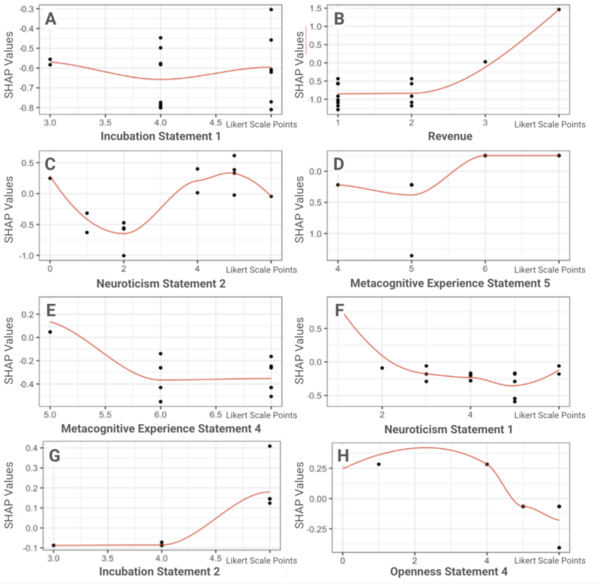
Voice pitch affects perceived authoritativeness, competency, and leadership capacity. In this study, the authors suggest that examining certain measures of brain activity collected using an affordable EEG could predict advertising effectiveness, which may be invaluable in future neuromarketing research. Understanding voice pitch and other factors that cause implicit bias may allow significant advances in marketing, facilitating business success.

Read More...

Phytochemical Analysis of Amaranthus spinosus Linn.: An in vitro Analysis

Sharma et al. | Mar 20, 2021

Phytochemical Analysis of <em>Amaranthus spinosus</em> Linn.: An <em>in vitro</em> Analysis

Mainstream cancer treatments, which include radiotherapy and chemotherapeutic drugs, are known to induce oxidative damage to healthy somatic cells due to the liberation of harmful free radicals. In order to avert this, physiological antioxidants must be complemented with external antioxidants. Here the authors performed a preliminary phytochemical screen to identify alkaloids, saponins, flavonoids, polyphenols, and tannins in all parts of the Amaranthus spinosus Linn. plant. This paper describes the preparation of this crude extract and assesses its antioxidant properties for potential use in complementary cancer treatment.

Read More...