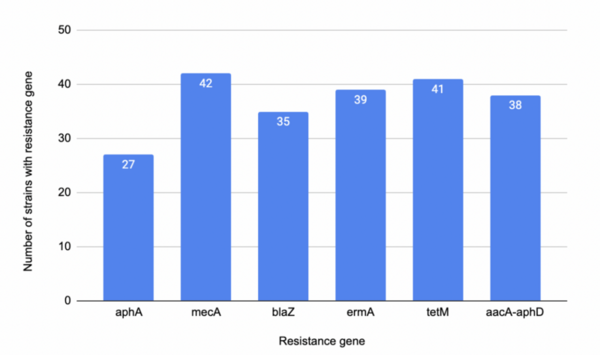
The authors looked at how the presence of difference antibiotic resistance genes would influence antibiotic resistance in Staphylococcus aureus.
Read More...Analysis of antibiotic resistance genes in publicly accessible Staphylococcus aureus genomes
The authors looked at how the presence of difference antibiotic resistance genes would influence antibiotic resistance in Staphylococcus aureus.
Read More...Investigation of Everyday Locations for Antibiotic-Resistant Bacteria in Cambridge, Massachusetts
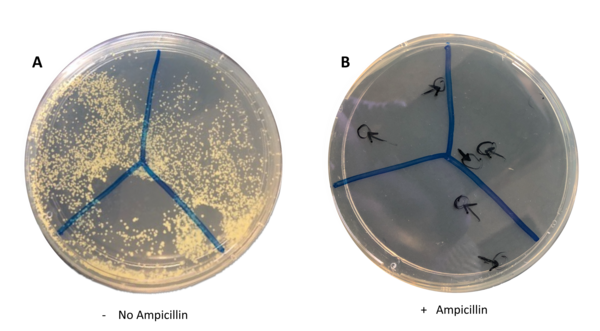
In this study, the authors investigate whether antibiotic-resistant bacteria can be found in everyday locations. To do this, they collected samples from multiple high-trafficked areas in Cambridge, MA and grew them in the presence and absence of antibiotics. Interestingly, they grew bacterial colonies from many locations' samples, but not all could grow in the presence of ampicillin. These findings are intriguing and relevant given the rising concern about antibiotic-resistant bacteria.
Read More...Phages Can Be More Effective and Specific Than Antibiotics in Combating Bacteria
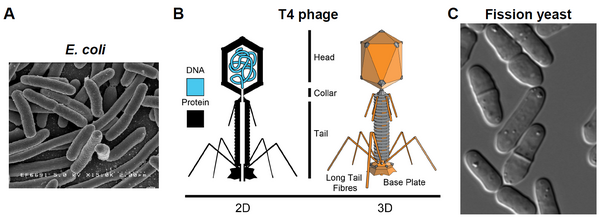
Phage therapy has been suggested as an alternative to antibiotics because bacteria resistant to antibiotics may still be susceptible to phages. However, phages may have limited effectiveness in combating bacteria since bacteria possess several antiviral defense mechanisms and can quickly develop resistance to phages. In this study, Wu and Pinta compare the effectiveness and specificity of antibiotics and phages in combating bacteria. They found that T4 phages are more specific and effective in fighting or inhibiting both antibiotic-resistant and sensitive bacteria than antibiotics, suggesting that phage therapy can be developed as an efficient tool to combat antibiotic-resistant bacteria.
Read More...Impact of gadodiamide (Omniscan) on a beef liver catalase ex vivo model

Here, seeking to better understand the effects of gadolinium-based contrast agents, dyes typically used for MRI scans, the authors evaluated the activity of catalase found in beef liver both with and without gadodiamide when exposed to hydrogen peroxide. They found that gadioamide did not significantly inhibit catalase's activity, attributing this lack of effects to the chelating agent found in gadodiamide.
Read More...Investigating facilitated biofilm formation in Escherichia coli exposed to sublethal levels of ampicillin
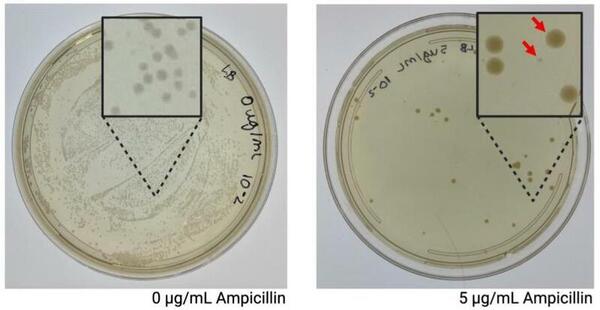
Here, the authors recognized the tendency of bacteria to form biofilms, where this behavior offers protection against threats such as antibiotics. To investigate this, they observed the effects of sublethal exposure of the antibiotic ampicillin on E. coli biofilm formation with an optical density crystal violet assay. They found that exposure to ampicillin resulted in the favored formation of biofilms over time, as free-floating bacteria were eradicated.
Read More...How has California’s Shelter-in-Place Order due to COVID-19 and the Resulting Reduction in Human Activity Affected Air and Water Quality?

As the world struggled to grapple with the emerging COVID-19 pandemic in 2020, many countries instated policies to help minimize the spread of the virus among residents. This inadvertently led to a decrease in travel, and in some cases, industrial output, two major sources of pollutants in today's world. Here, the authors investigate whether California's shelter-in-place policy was associated with a measurable decrease in water and air pollution in that state between June and July of 2020, compared to the preceeding five years. Their findings suggest that, by some metrics, air quality improved within certain areas while water quality was relatively unchanged. Overall, these findings suggest that changing human behavior can, indeed, help reduce the level of air pollutants that compromise air quality.
Read More...The Effects of Ultraviolet Light on Escherichia coli
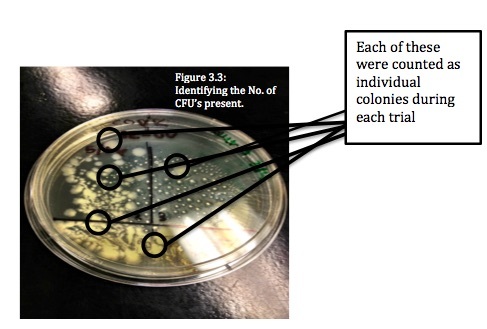
In this study E. coli bacteria was exposed to small UV lights currently used in school laboratories to see the effect on colony growth. This project explores how UV radiation methods could be applied in common households to inhibit bacterial growth.
Read More...Iron oxide nanoparticles coated with liposomes and chitosan pass a model blood–brain barrier to kill bacteria
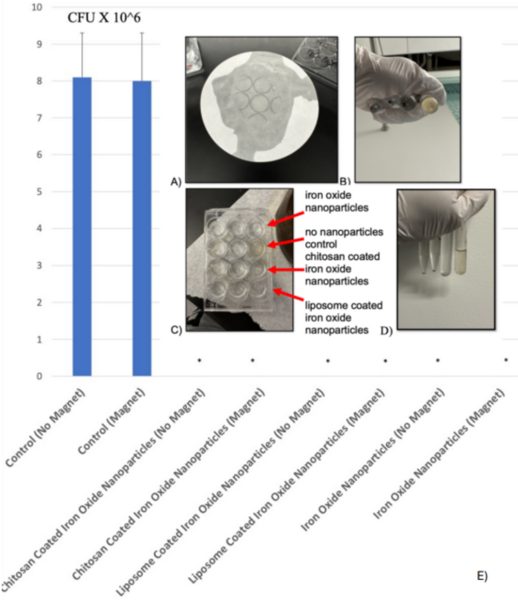
This study explored using iron oxide nanoparticles embedded in liposomes and coated with antibacterial chitosan as a potential alternative to antibiotics for treating bacterial meningitis. The nanoparticles were tested for their ability to cross a model blood–brain barrier and kill E. coli, with and without magnetic guidance.
Read More...Intra and interspecies control of bacterial growth through extracellular extracts
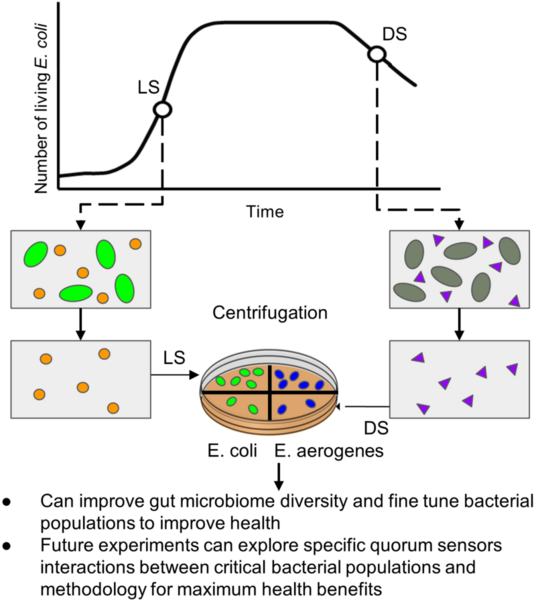
The study discusses the relationship between bacterial species and the human gut microbiome, emphasizing the role of quorum sensing molecules in bacterial communication and its implications for health. Authors investigated the impact of bacterial supernatants from Escherichia coli (E. coli) on the growth of new E. coli and Enterobacter aerogenes (E. aerogenes) cultures.
Read More...Utilizing a novel T1rho method to detect spinal degeneration via magnetic resonance imaging
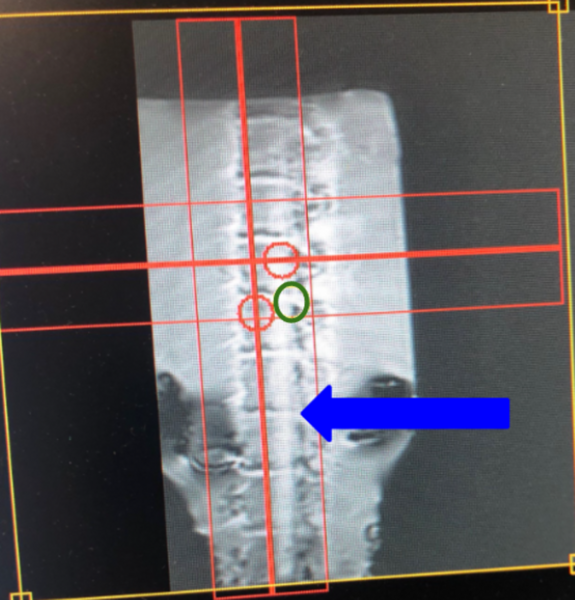
Spinal degeneration has been linked to critical conditions such as osteoarthritis in adults aged 40+; while this condition is considered to be irreversible, we took interest in magnetic resonance imaging (MRI) for early detection of the condition. Ultimately, our purpose was to determine the effectiveness of a relatively novel T1rho method in the early detection of spinal degeneration, and we hypothesized that the early to mild progression of spinal degeneration would affect T1rho values following an MRI scan.
Read More...