Browse Articles

Analysis of Monotherapy and Combination Therapy on Helicobacter felis

Custodio et al. | Apr 28, 2020

Analysis of Monotherapy and Combination Therapy on <em>Helicobacter felis</em>

Heliobacter felis causes gastritis which is accompanied by a range of unpleasant symptoms in small animals such as cats. In order to identify effective antibiotics for treating H. felis infections, the researchers investigate whether a combination of different antibiotics is more effective than the use of individual antibiotics alone. Of the antibiotics they selected, Streptomycin alone was better than any other single antibiotic or in combination. Their results have not yet been validated in live animals, but suggest that Streptomycin alone might be an effective treatment of H. felis-induced gastritis in cats.

Read More...

Testing the Effects of Resveratrol, Apigenin, and Glucosamine to Effectively Reduce Prostate Cancer Cell Proliferation, Migration Levels, and Increase Apoptosis

Yang et al. | Apr 16, 2020

Testing the Effects of Resveratrol, Apigenin, and Glucosamine to Effectively Reduce Prostate Cancer Cell Proliferation, Migration Levels, and Increase Apoptosis

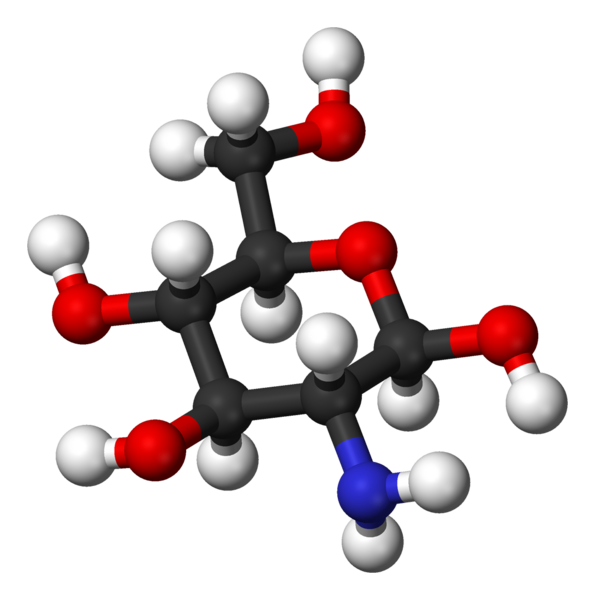
The current five-year survival rate of metastasized prostate cancer is only 30% and occurs in every one in nine men. Researchers have shown that people with a type of dwarfism called Laron’s Syndrome are immune to cancer due to their low levels of insulin-like growth factor-1 (IGF-1). For this reason, experimentally modifying the level of IGF-1 could provide better insight into whether lowering the levels of IGF-1 in prostate cancer cell lines (e.g. PC-3) could be an effective treatment to reduce their rates of proliferation and migration and increase apoptosis. We selected three compounds, which researchers have shown decrease IGF-1 levels, to test and combine to determine which is the most promising.

Read More...

A Novel Method for Auto-Suturing in Laparoscopic Robotic-Assisted Coronary Artery Bypass Graft (CABG) Anastomosis

Levy et al. | Jun 21, 2018

A Novel Method for Auto-Suturing in Laparoscopic Robotic-Assisted Coronary Artery Bypass Graft (CABG) Anastomosis

Levy & Levy tackle the optimization of the coronary artery bypass graft, a life-saving surgical technique that treats artery blockage due to coronary heart disease. The authors develop a novel auto-suturing method that saves time, allows for an increased number of sutures, and improves graft quality over hand suturing. The authors also show that increasing the number of sutures from four to five with their new method significantly improves graft quality. These promising findings may help improve outcomes for patients undergoing surgery to treat coronary heart disease.

Read More...

The Effect of Various Preparation Methods on the Spoilage Rate of Roma Tomatoes (Solanum lycopersicum)

Cataltepe et al. | Feb 22, 2018

The Effect of Various Preparation Methods on the Spoilage Rate of Roma Tomatoes (Solanum lycopersicum)

As levels of food waste continue to rise, it is essential to find improved techniques of prolonging the shelf life of produce. The authors aimed to find a simple, yet effective, method of slowing down spoilage in tomatoes. Linear regression analysis revealed that the tomatoes soaked salt water and not dried displayed the lowest correlation between time and spoilage, confirming that this preparation was the most effective.

Read More...

Effect of Natural Compounds Curcumin and Nicotinamide on α-synuclein Accumulation in a C. elegans Model of Parkinson’s Disease

Mehrotra et al. | Jan 29, 2018

Effect of Natural Compounds Curcumin and Nicotinamide on α-synuclein Accumulation in a C. elegans Model of Parkinson’s Disease

Parkinson's disease is a neurodegenerative disorder that affects over 10 million people worldwide. It is caused by destruction of dopamine-producing neurons, which results in severe motor and movement symptoms. In this study, the authors investigated the anti-Parkinsonian effects of two natural compounds curcumin and nicotinamide using C. elegans as a model organism.

Read More...

Redesigning an Experiment to Determine the Coefficient of Friction

Hu et al. | Jun 27, 2016

Redesigning an Experiment to Determine the Coefficient of Friction

In a common high school experiment to measure friction coefficients, a weighted mass attached to a spring scale is dragged across a surface at a constant velocity. While the constant velocity is necessary for an accurate measurement, it can be difficult to maintain and this can lead to large errors. Here, the authors designed a new experiment to measure friction coefficients in the classroom using only static force and show that their method has a lower standard deviation than the traditional experiment.

Read More...

The Effect of Radiant Energy on Radish Seed Germination

Simon et al. | Jul 06, 2018

The Effect of Radiant Energy on Radish Seed Germination

Simon and colleagues test how exposure to microwaves affect radish seed germination, either microwaving seeds for ninety seconds or four minutes prior to planting. Surprisingly, the authors found that seeds microwaved for four minutes exhibited 150% increased germination as compared to controls. The authors hypothesize that breakdown of the radish seed coat when exposed to heat may allow seedlings to sprout more efficiently.

Read More...

Development and Implementation of Enzymatic and Volatile Compound-based Approaches for Instantaneous Detection of Pathogenic Staphylococcus aureus

Nori et al. | Feb 20, 2021

Development and Implementation of Enzymatic and Volatile Compound-based Approaches for Instantaneous Detection of Pathogenic <i>Staphylococcus aureus</i>

Staphylococcus aureus (S. aureus) has a mortality rate of up to 30% in developing countries. The purpose of this experiment was to determine if enzymatic and volatile compound-based approaches would perform more quickly in comparison to existing S. aureus diagnostic methods and to evaluate these novel methods on accuracy. Ultimately, this device provided results in less than 30 seconds, which is much quicker than existing methods that take anywhere from 10 minutes to 48 hours based on approach. Statistical analysis of accuracy provides preliminary confirmation that the device based on enzymatic and volatile compound-based approaches can be an accurate and time-efficient tool to detect pathogenic S. aureus.

Read More...