Browse Articles

Efficacy of Rotten and Fresh Fruit Extracts as the Photosensitive Dye for Dye-Sensitized Solar Cells

Jayasankar et al. | Jan 16, 2019

Efficacy of Rotten and Fresh Fruit Extracts as the Photosensitive Dye for Dye-Sensitized Solar Cells

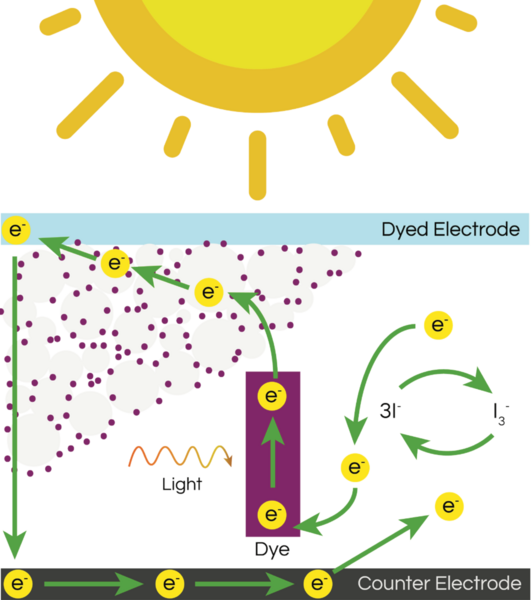
Dye-sensitized solar cells (DSSC) use dye as the photoactive material, which capture the incoming photon of light and use the energy to excite electrons. Research in DSSCs has centered around improving the efficacy of photosensitive dyes. A fruit's color is defined by a unique set of molecules, known as a pigment profile, which changes as a fruit progresses from ripe to rotten. This project investigates the use of fresh and rotten fruit extracts as the photoactive dye in a DSSC.

Read More...

Investigating Lymphocytic Involvement in Minimal Change Nephrotic Syndrome

Muncan et al. | Jan 27, 2016

Investigating Lymphocytic Involvement in Minimal Change Nephrotic Syndrome

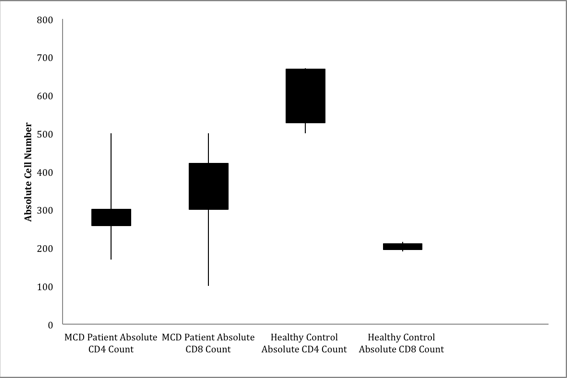
Minimal Change Disease (MCD) is a degenerative kidney disease. Researchers know very little about the cause of this disorder, however some research has suggested that T lymphocytes may be involved. In this study, the authors measure CD4 and CD8 T cell subpopulations in patients with MCD to investigate whether irregular T lymphocyte populations may be involved in MCD pathogenesis.

Read More...

Deep learning for pulsar detection: Investigating hyperparameter effects on TensorFlow classification accuracy

Upadhyay et al. | Jan 31, 2026

Deep learning for pulsar detection: Investigating hyperparameter effects on TensorFlow classification accuracy

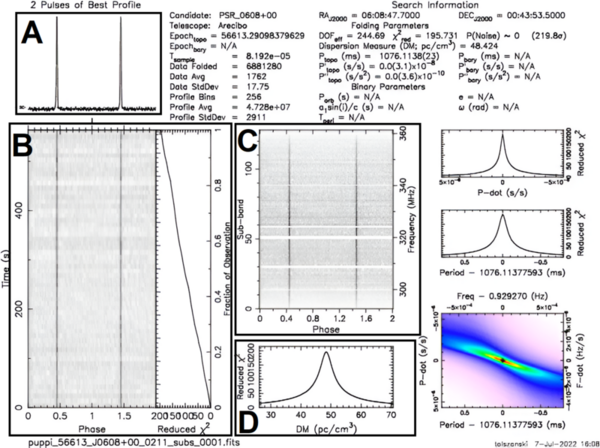
This study investigates how the hyperparameters epochs and batch size affect the classification accuracy of a convolutional neural network (CNN) trained on pulsar candidate data. Our results reveal that accuracy improves with increasing number of epochs and smaller batch sizes, suggesting that with optimized hyperparameters, high accuracy may be achievable with minimal training. These findings offer insights that could help create more efficient machine learning classification models for pulsar signal detection, with the potential of accelerating pulsar discovery and advancing astrophysical research.

Read More...

Redefining and advancing tree disease diagnosis through VOC emission measurements

Stoica et al. | Mar 27, 2025

Redefining and advancing tree disease diagnosis through VOC emission measurements

Here the authors investigated the use of an affordable gas sensor to detect volatile organic compound (VOC) emissions as an early indicator of tree disease, finding statistically significant differences in VOCs between diseased and non-diseased ash, beech, and maple trees. They suggest this sensor has potential for widespread early disease detection, but call for further research with larger sample sizes and diverse locations.

Read More...

The optimization of high-protein duckweed cultivation in eutrophicated water with mutualistic bacteria

Akkarajeerawat et al. | Mar 18, 2025

The optimization of high-protein duckweed cultivation in eutrophicated water with mutualistic bacteria

he rapid growth of the human population is driving food crises in Thailand and Southeast Asia, while contributing to global food insecurity and a larger carbon footprint. One potential solution is cultivating duckweed (Wolffia globosa) for consumption, as it grows quickly and can provide an alternative protein source. This research explored two methods to optimize duckweed cultivation: using phosphorus- and nitrogen-rich growing media and plant growth-promoting bacteria (PGPB).

Read More...

Economic performance of solar energy systems financed with green bonds in New Jersey

Peng et al. | Jan 22, 2025

Economic performance of solar energy systems financed with green bonds in New Jersey
Image credit: Peng and Peng 2025

Global reliance on extractive energy sources has many downsides, among which are inconsistent supply and consequent price volatility that distress companies and consumers. It is unclear if renewable energy offers stable and affordable solutions to extractive energy sources. The cost of solar energy generation has decreased sharply in recent years, prompting a surge of installations with a range of financing options. Even so, most existing options require upfront payment, making installation inaccessible for towns with limited financial resources. The primary objective of our research is to examine the use of green bonds to finance solar energy systems, as they eliminate the need for upfront capital and enable repayment through revenue generated over time. We hypothesized that if we modeled the usage of green bonds to finance the installation of a solar energy system in New Jersey, then the revenue generated over the system’s lifetime would be enough to repay the bond. After modeling the financial performance of a proposed solar energy-producing carport in Madison, New Jersey, financed with green bonds, we found that revenue from solar energy systems successfully covered the annual green bond payments and enabled the installers to obtain over 50% of the income for themselves. Our research demonstrated green bonds as a promising option for New Jersey towns with limited financial resources seeking to install solar energy systems, thereby breaking down a financial barrier.

Read More...

Machine learning predictions of additively manufactured alloy crack susceptibilities

Gowda et al. | Nov 12, 2024

Machine learning predictions of additively manufactured alloy crack susceptibilities

Additive manufacturing (AM) is transforming the production of complex metal parts, but challenges like internal cracking can arise, particularly in critical sectors such as aerospace and automotive. Traditional methods to assess cracking susceptibility are costly and time-consuming, prompting the use of machine learning (ML) for more efficient predictions. This study developed a multi-model ML pipeline that predicts solidification cracking susceptibility (SCS) more accurately by considering secondary alloy properties alongside composition, with Random Forest models showing the best performance, highlighting a promising direction for future research into SCS quantification.

Read More...