Browse Articles

The Effects of Micro-Algae Characteristics on the Bioremediation Rate of Deepwater Horizon Crude Oil

Cao et al. | Jun 17, 2013

The Effects of Micro-Algae Characteristics on the Bioremediation Rate of Deepwater Horizon Crude Oil

Environmental disasters such as the Deepwater Horizon oil spill can be devastating to ecosystems for long periods of time. Safer, cheaper, and more effective methods of oil clean-up are needed to clean up oil spills in the future. Here, the authors investigate the ability of natural ocean algae to process crude oil into less toxic chemicals. They identify Coccochloris elabens as a particularly promising algae for future bioremediation efforts.

Read More...

Obscurity of eyebrows influences recognition of human emotion and impacts older adolescents

Zhang et al. | Jan 20, 2025

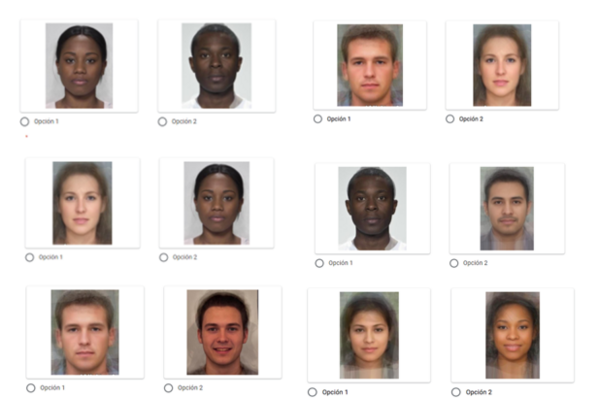
Obscurity of eyebrows influences recognition of human emotion and impacts older adolescents
Image credit: Ernesto Norman

Here, seeking to better understand how facial features provide important visual cues to help convey emotions, the authors evaluated the accuracy and reaction time of participants in regards to experimental photographs where a person's eyebrows were obscured and ones where they were not. Their findings revealed that removing eyebrows resulted in a significant decrease in a participant's ability to recognize anger, with adolescents most likely to misidentify emotions.

Read More...

Tomato disease identification with shallow convolutional neural networks

Trinh et al. | Mar 03, 2023

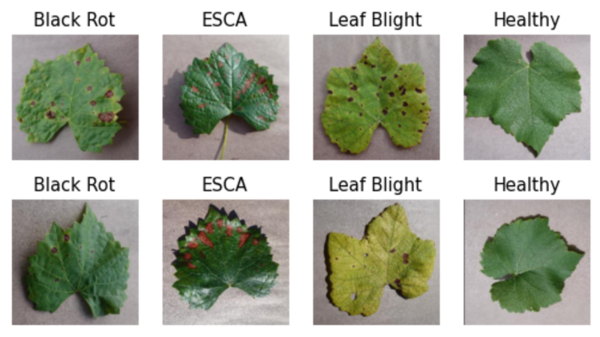
Tomato disease identification with shallow convolutional neural networks

Plant diseases can cause up to 50% crop yield loss for the popular tomato plant. A mobile device-based method to identify diseases from photos of symptomatic leaves via computer vision can be more effective due to its convenience and accessibility. To enable a practical mobile solution, a “shallow” convolutional neural networks (CNNs) with few layers, and thus low computational requirement but with high accuracy similar to the deep CNNs is needed. In this work, we explored if such a model was possible.

Read More...

The novel function of PMS2 mutation on ovarian cancer proliferation

Cho et al. | Dec 18, 2022

The novel function of <em>PMS2</em> mutation on ovarian cancer proliferation

With disruption of DNA repair pathways pertinent to the timeline of cancer, thorough evaluation of mutations relevant to DNA repair proteins is crucial within cancer research. One such mutation includes S815L PMS2 - a mutation that results in significant decrease of DNA repair function by PMS2 protein. While mutation of PMS2 is associated with significantly increased colorectal and endometrial cancer risk, much work is left to do to establish the functional effects of the S815L PMS2 mutation in ovarian cancer progression. In this article, researchers contribute to this essential area of research by uncovering the tumor-progressive effects of the S815L PMS2 mutation in the context of ovarian cancer cell lines.

Read More...

Identifying Neural Networks that Implement a Simple Spatial Concept

Zirvi et al. | Sep 13, 2022

Identifying Neural Networks that Implement a Simple Spatial Concept

Modern artificial neural networks have been remarkably successful in various applications, from speech recognition to computer vision. However, it remains less clear whether they can implement abstract concepts, which are essential to generalization and understanding. To address this problem, the authors investigated the above vs. below task, a simple concept-based task that honeybees can solve, using a conventional neural network. They found that networks achieved 100% test accuracy when a visual target was presented below a black bar, however only 50% test accuracy when a visual target was presented below a reference shape.

Read More...

A novel approach for early detection of Alzheimer’s disease using deep neural networks with magnetic resonance imaging

Ganesh et al. | Mar 20, 2022

A novel approach for early detection of Alzheimer’s disease using deep neural networks with magnetic resonance imaging

In the battle against Alzheimer's disease, early detection is critical to mitigating symptoms in patients. Here, the authors use a collection of MRI scans, layering with deep learning computer modeling, to investigate early stages of AD which can be hard to catch by human eye. Their model is successful, able to outperform previous models, and detected regions of interest in the brain for further consideration.

Read More...