Browse Articles

Mathematical modeling of plant community composition for urban greenery plans

Fang et al. | Jul 05, 2023

Mathematical modeling of plant community composition for urban greenery plans
Image credit: CHUTTERSNAP

Here recognizing the importance of urban green space for the health of humans and other organisms, the authors investigated if mathematical modeling can be used to develop an urban greenery management plan with high eco-sustainability by calculating the composition of a plant community. They optimized and tested their model against green fields in a Beijing city park. Although the compositions predicted by their models differed somewhat from the composition of testing fields, they conclude that by using a mathematical model such as this urban green space can be finely designed to be ecologically and economically sustainable.

Read More...

The effect of sports on teenagers’ depression symptoms during the COVID-19 pandemic

Düzgezen et al. | Jun 12, 2023

The effect of sports on teenagers’ depression symptoms during the COVID-19 pandemic
Image credit: Izuddin Helmi Adnan

Here, seeking to identify the possible role of sports in helping teenagers navigate the troubles associated with societal changes during a pandemic, the authors surveyed 50 adolescents to collect Beck Depression Inventory scores. They found that 9 out of students with severe depressions did not do sports, while no significant relationship between depressive symptoms and either gender or place of exercise was observed.

Read More...

Time-Efficient and Low-Cost Neural Network to detect plant disease on leaves and reduce food loss and waste

Singh et al. | Apr 24, 2023

Time-Efficient and Low-Cost Neural Network to detect plant disease on leaves and reduce food loss and waste

About 25% of the food grown never reaches consumers due to spoilage, and 11.5 billion pounds of produce from gardens are wasted every year. Current solutions involve farmers manually looking for and treating diseased crops. These methods of tending crops are neither time-efficient nor feasible. I used a convolutional neural network to identify signs of plant disease on leaves for garden owners and farmers.

Read More...

Evaluating machine learning algorithms to classify forest tree species through satellite imagery

Gupta et al. | Mar 18, 2023

Evaluating machine learning algorithms to classify forest tree species through satellite imagery
Image credit: Sergei A

Here, seeking to identify an optimal method to classify tree species through remote sensing, the authors used a few machine learning algorithms to classify forest tree species through multispectral satellite imagery. They found the Random Forest algorithm to most accurately classify tree species, with the potential to improve model training and inference based on the inclusion of other tree properties.

Read More...

Blockchain databases: Encrypted for efficient and secure NoSQL key-store

Mehrota et al. | Mar 18, 2023

Blockchain databases: Encrypted for efficient and secure NoSQL key-store
Image credit: Ayushi Mehrota & David Kim

Although commonly associated with cryptocurrency, blockchains offer security that other databases could benefit from. These student authors tested a blockchain database framework, and by tracking runtime of four independent variables, they prove this framework is feasible for application.

Read More...

Deciphering correlation and causation in risk factors for heart disease with Mendelian randomization

Singh et al. | Feb 08, 2023

Deciphering correlation and causation in risk factors for heart disease with Mendelian randomization
Image credit: Robina Weermeijer

Here, seeking to identify the risk of coronary artery disease (CAD), a major cause of cardiovascular disease, the authors used Mendelian randomization. With this method they identified several traits such as blood pressure readings, LDL cholesterol and BMI as significant risk factors. While other traits were not found to be significant risk factors.

Read More...

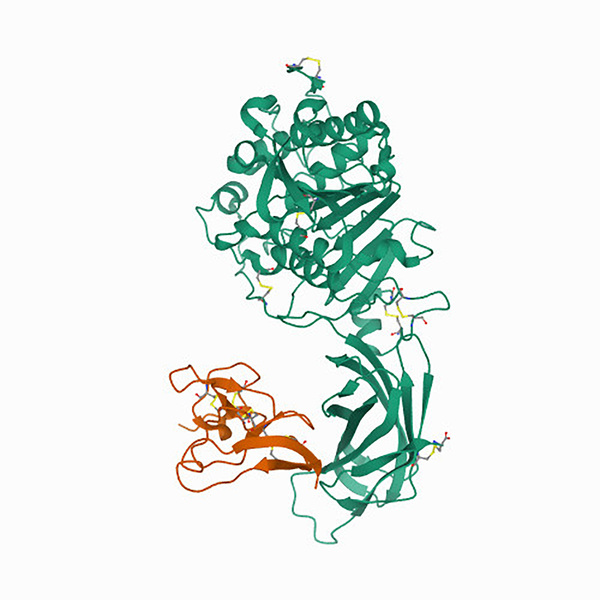
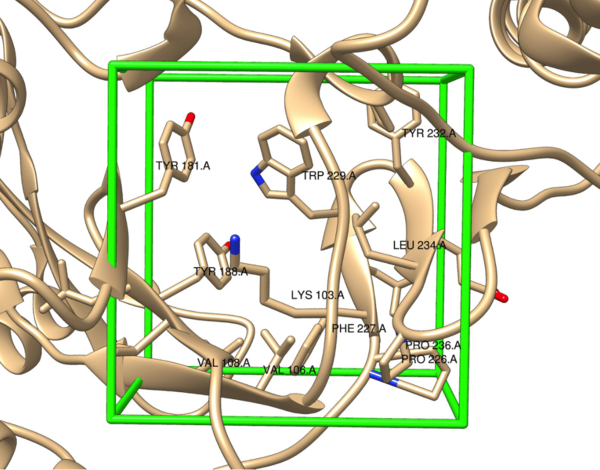
Machine learning-based enzyme engineering of PETase for improved efficiency in plastic degradation

Gupta et al. | Jan 31, 2023

 Machine learning-based enzyme engineering of PETase for improved efficiency in plastic degradation
Image credit: Markus Spiske

Here, recognizing the recognizing the growing threat of non-biodegradable plastic waste, the authors investigated the ability to use a modified enzyme identified in bacteria to decompose polyethylene terephthalate (PET). They used simulations to screen and identify an optimized enzyme based on machine learning models. Ultimately, they identified a potential mutant PETases capable of decomposing PET with improved thermal stability.

Read More...