Browse Articles

Effects of an Informational Waste Management App on a User’s Waste Disposal Habits

Rao et al. | Apr 28, 2021

Effects of an Informational Waste Management App on a User’s Waste Disposal Habits

While 75% of waste in the United States is stated to be recyclable, only about 34% truly is. This project takes a stance to combat the pillars of mismanaged waste through a modern means of convenience: the TracedWaste app. The purpose of this study was to identify how individuals' waste disposal habits improved and knowledge increased (i.e. correctly disposing of waste, understanding negative incorrect waste disposal) due to their use of an informational waste management app as measured by a survey using a 1-5 Likert Scale. The results showed that the TracedWaste app helped conserve abundant resources such as energy and wood, decrease carbon emissions, and minimize financial toll all through reducing individual impact.

Read More...

Synergistic Effects of Metformin and Captopril on C. elegans

Kadıoğlu et al. | Jul 10, 2018

Synergistic Effects of Metformin and Captopril on <em>C. elegans</em>

Kadıoğlu and Oğuzalp study the synergistic effects of Metformin and Captopril, two commonly prescribed drugs for type 2 diabetes and hypertension, respectively. Using C. elegans nematodes as a model system, the authors find that the nematodes decreased in average body length when exposed to Metformin or Captopril individually, but grew 11% in body length when both drugs were used together. Because C. elegans body size is regulated in part by the TGF-β signaling pathway, the authors suggest that synergistic effects of these two drugs may be modulating TGF-β activity, a previously uncharacterized phenomenon.

Read More...

Deep learning for pulsar detection: Investigating hyperparameter effects on TensorFlow classification accuracy

Upadhyay et al. | Jan 31, 2026

Deep learning for pulsar detection: Investigating hyperparameter effects on TensorFlow classification accuracy

This study investigates how the hyperparameters epochs and batch size affect the classification accuracy of a convolutional neural network (CNN) trained on pulsar candidate data. Our results reveal that accuracy improves with increasing number of epochs and smaller batch sizes, suggesting that with optimized hyperparameters, high accuracy may be achievable with minimal training. These findings offer insights that could help create more efficient machine learning classification models for pulsar signal detection, with the potential of accelerating pulsar discovery and advancing astrophysical research.

Read More...

Impact of carbon number and atom number on cc-pVTZ Hartree-Fock Energy and program runtime of alkanes

Pan et al. | Mar 06, 2024

Impact of carbon number and atom number on cc-pVTZ Hartree-Fock Energy and program runtime of alkanes
Image credit: The authors

It's time-consuming to complete the calculations that are used to study nuclear reactions and energy. To uncover which computational chemistry tools are useful for this challenge, Pan, Vaiyakarnam, Li, and McMahan investigated whether the Python-based Simulations of Chemistry Framework’s Hartree-Fock (PySCF) method is an efficient and accurate way to assess alkane molecules.

Read More...

Time-Efficient and Low-Cost Neural Network to detect plant disease on leaves and reduce food loss and waste

Singh et al. | Apr 24, 2023

Time-Efficient and Low-Cost Neural Network to detect plant disease on leaves and reduce food loss and waste

About 25% of the food grown never reaches consumers due to spoilage, and 11.5 billion pounds of produce from gardens are wasted every year. Current solutions involve farmers manually looking for and treating diseased crops. These methods of tending crops are neither time-efficient nor feasible. I used a convolutional neural network to identify signs of plant disease on leaves for garden owners and farmers.

Read More...

Effects of Temperature on Hand Sanitizer Efficiency

Molom-Ochir et al. | May 11, 2022

Effects of Temperature on Hand Sanitizer Efficiency

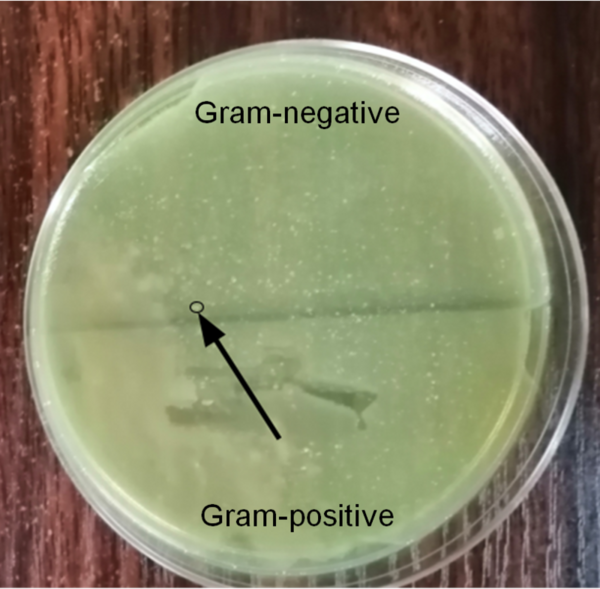
Here, recognizing the widespread use of hand sanitizers, the authors investigated their effectiveness in relation to storage temperature. They applied hand sanitizer before and after touching a cell phone and used LB-agar plates to monitor the growth of bacteria following this process. They found that 70% ethyl-alcohol-based sanitizers are least effective at temperatures above 107.27 °F and most effective at 96.17 °F.

Read More...