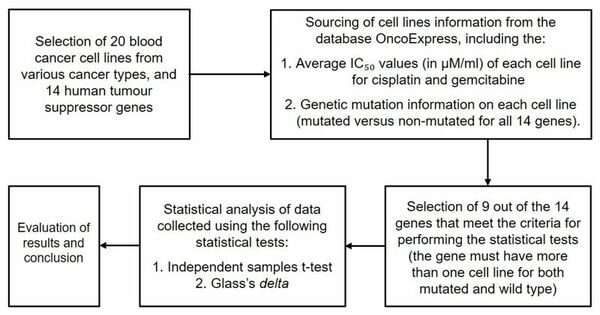
The authors investigate whether human blood cancers carrying mutations in DNA repair genes possess increased sensitivity to common chemotherapy drugs cisplatin or gemcitabine.
Read More...DNA repair protein mutations alter blood cancer sensitivity to cisplatin or gemcitabine in vitro
The authors investigate whether human blood cancers carrying mutations in DNA repair genes possess increased sensitivity to common chemotherapy drugs cisplatin or gemcitabine.
Read More...Thermoelectric cooling in greenhouses: Implications for small-holder production
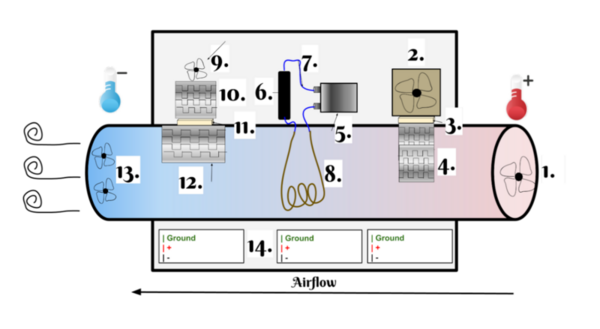
The authors set to test a system that would help with the dehumidification and overall management of greehouses.
Read More...Comparing Measurements of Sun-Earth Distance: Shadow Method and Two Pinhole Method Variations
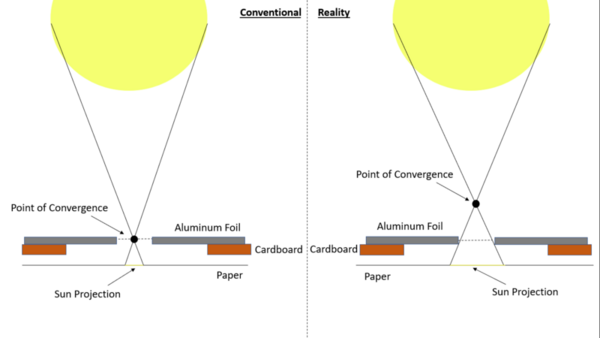
This study compares three methods regarding their accuracy in calculating the distance between the Earth and the Sun. The hypothesis presented was that the shadow method would have the greatest mean accuracy, followed by the tube pinhole method, and finally the plate pinhole method. The results validate the hypothesis; however, further investigation would be helpful in determining effective mitigation of each method’s limitations and the effectiveness of each method in determining the distance of other light-emitting objects distant from the Earth.
Read More...Synthesis of a novel CCR1 antagonist for treatment of glioblastoma
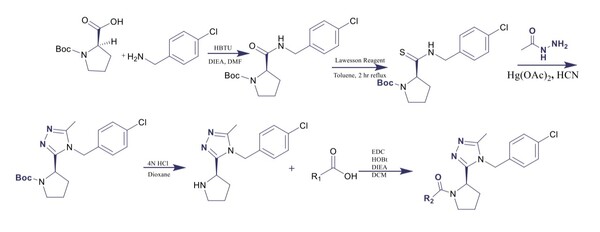
Glioblastoma is a brain cancer caused by the presence of a fast-growing, malignant tumor in the brain. As of now, this cancer is universally lethal due to lack of efficacious treatment options. C-C chemokine receptor 1 (CCR1) is a G-protein coupled receptor that controls chemotaxis, the movement of cells in response to chemical stimuli. This research aims to synthesize potential CCR1 antagonists by coupling carboxylic acids with a triazole core. We synthesized these compounds using a simple carboxylic acid coupling and confirmed the identity of the final compounds using nuclear magnetic resonance (NMR) spectroscopy.
Read More...Alterations of the [Fe/H] Values Modulate Light Curves by Absolute Magnitude in non-Blazhko RRab Lyraes
![Alterations of the [Fe/H] Values Modulate Light Curves by Absolute Magnitude in non-Blazhko RRab Lyraes](/rails/active_storage/representations/proxy/eyJfcmFpbHMiOnsiZGF0YSI6MTU5MCwicHVyIjoiYmxvYl9pZCJ9fQ==--b3730bc16f26aaa866961d7f4258855afdedc07d/eyJfcmFpbHMiOnsiZGF0YSI6eyJmb3JtYXQiOiJwbmciLCJyZXNpemUiOiI2MDB4NjAwXHUwMDNlIn0sInB1ciI6InZhcmlhdGlvbiJ9fQ==--20af2ab250946fb690460d59fe8ec701a65c860b/Figure_4.png)
In this study, the authors investigate the relationship between iron/hydrogen ratio [Fe/H] of a type of variable stars commonly used as reference points RR Lyrae stars and their light curves to see if one can determine the composition of these stars solely by measuring their light curve characteristics.
Read More...Investigating the functionality of an Eco-Cooler made of plastic bottles
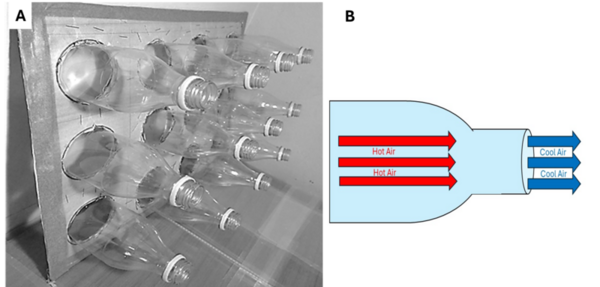
In the study, the authors looked at an environmentally friendly alternative to A/C systems/cooling. They wanted to test the effectiveness of this cooling system called the Eco-Cooler as well as see if they could improve it. They found that the Eco-Cooler had minimal cooling, while their altered Eco-Cooler system had some cooling. This results shows the use of water helps cool the environment a lot more.
Read More...Distributional effects of residential energy tax credits: A machine learning approach
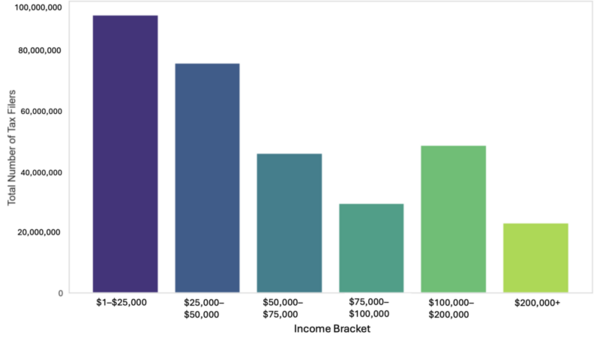
Tax incentives for sustainable technology are a key part of the push for a greener future. However, these incentives may not reach all income strata equally. Using a machine learning approach, this study analyzed the distributional effects of residential energy tax credits across different income levels in the United States.
Read More...Enhanced soil fertility through seaweed-derived biochar: A comparative analysis with commercial fertilizers
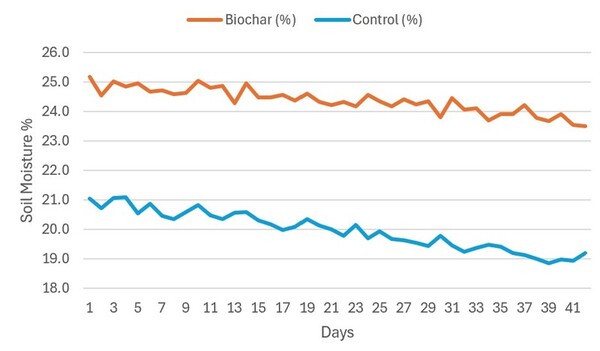
The study explored converting Gracilaria seaweed waste—known for releasing toxic hydrogen sulfide when decomposed—into biochar as a sustainable solution for waste management and soil improvement.
Read More...The effect of music on teenagers in combatting stress and improving performance

Here, the researchers investigated how exposure to active versus passive music affects a teenager's ability to perform a challenging task, namely a Sudoku puzzle, under stressful conditions. Following testing 75 high school teenagers split into two group, the researchers found that singing in a choir (active music) yielded a greater improvement in performance compared to passive listening for brief time periods.
Read More...Transfer Learning with Convolutional Neural Network-Based Models for Skin Cancer Classification
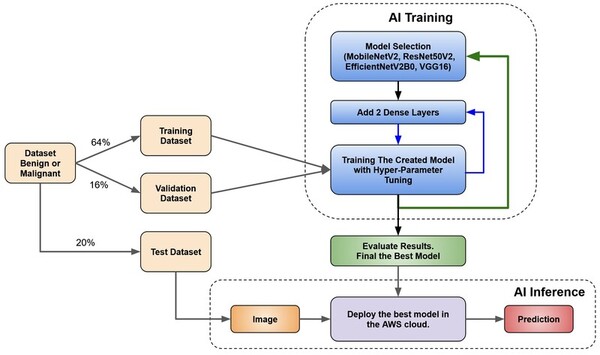
Skin cancer is a common and potentially deadly form of cancer. This study’s purpose was to develop an automated approach for early detection for skin cancer. We hypothesized that convolutional neural network-based models using transfer learning could accurately differentiate between benign and malignant moles using natural images of human skin.
Read More...