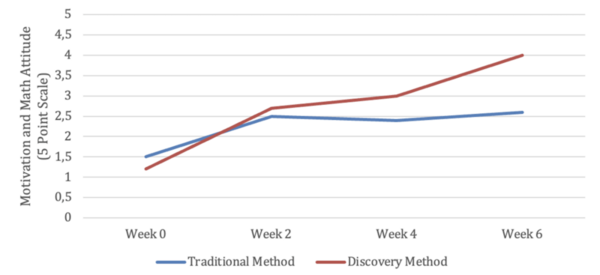
This study compares traditional and discovery-based instructional methods in online middle school mathematics education. Findings show that discovery-based learning significantly improves students’ academic performance and attitudes, highlighting the value of inquiry-driven instruction for enhancing both understanding and motivation.
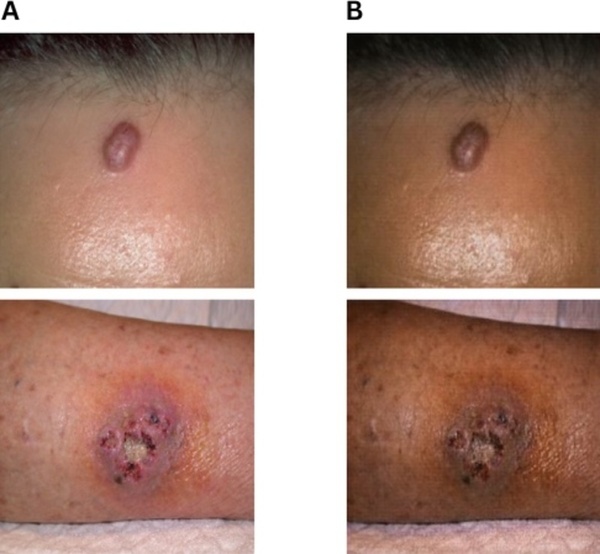
This study investigates skin tone bias in artificial intelligence models used for dermatological disease classification and evaluates a CycleGAN-based data augmentation approach to improve diagnostic performance on darker skin types. We generated synthetic dark-skinned images to enhance dataset diversity and compared model performance before and after augmentation. The results demonstrate that augmentation with synthetic dermatological images can help reduce disparities in diagnostic performance across skin tones, highlighting a practical strategy for improving fairness in dermatology AI systems.
Algorithmic trading has been increasingly used by Americans. In this work, we tested whether including the opening, closing, and highest prices in three supervised learning models affected their performance. Indeed, we found that including all three prices decreased the error of the prediction significantly.
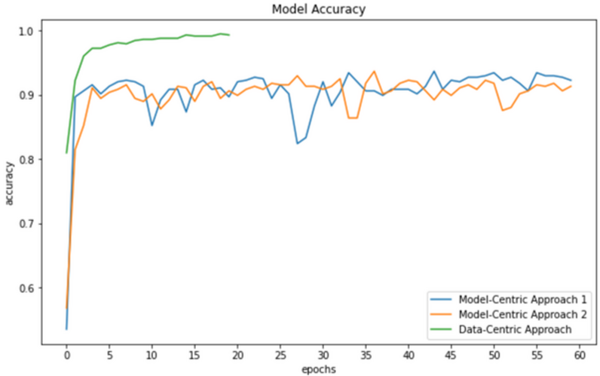
In this study, three models are used to test the hypothesis that data-centric artificial intelligence (AI) will improve the performance of machine learning.
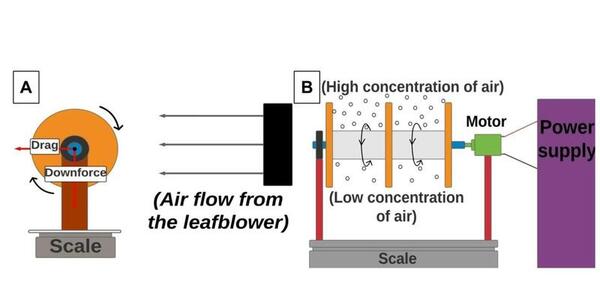
Here, seeking a better solution to produce downforce that keeps a vehicle grounded at high speeds than wings which tend to result in degraded car performance due to increased air resistance, the authors considered using the Magnus effect as a replacement. The authors found that a spinning cylinder generated significantly more downforce through the Magnus effect than a standard wing at all wind speeds as simulated through the use of a leaf blower. They suggest that a cylinder could be a potential replacement for a wing when downforce is a priority.
Machine learning systems are often expected to make fair decisions, yet the most widely used fairness criteria—independence, separation, and sufficiency—cannot generally be satisfied at the same time. In this study, students tested these criteria using a logistic regression model on a real-world student performance dataset and found that each criterion was met only at different prediction thresholds, with no threshold satisfying all three simultaneously. These results illustrate the inherent trade-offs in algorithmic fairness and highlight why achieving perfectly fair machine learning models is often impossible in practice.
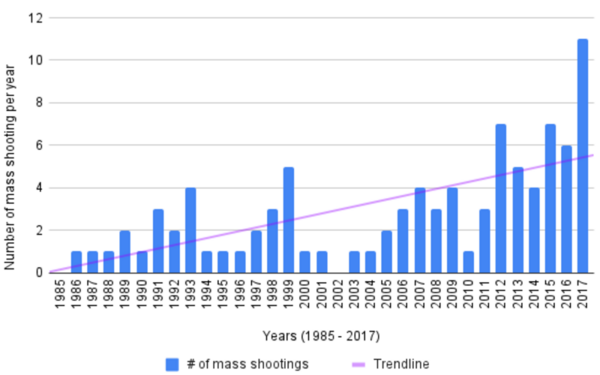
Researching gun violence and mass shootings in the U.S. is difficult due to the lack of consistent data collection. Some studies have linked mass shootings to personal financial stress, but little formal research exists on the impact of broader economic conditions. This study hypothesized an inverse relationship between mass shootings and economic performance, using the S&P 500 and unemployment rate as indicators.
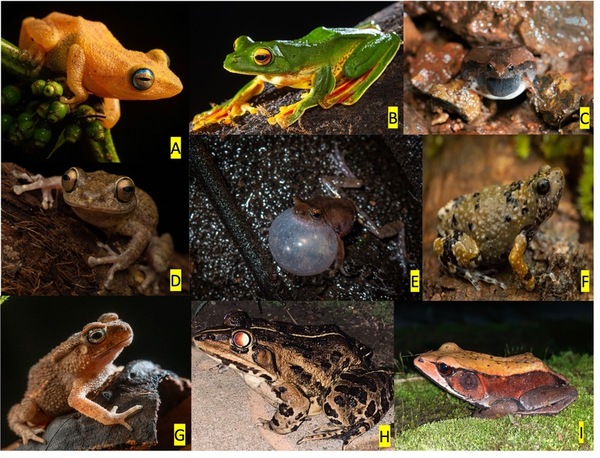
The mountain chain of the Western Ghats on the Indian peninsula, a UNESCO World Heritage site, is home to about 200 frog species, 89 of which are endemic. Distinctive to each frog species, their vocalizations can be used for species recognition. Manually surveying frogs at night during the rain in elephant and big cat forests is difficult, so being able to autonomously record ambient soundscapes and identify species is essential. An effective machine learning (ML) species classifier requires substantial training data from this area. The goal of this study was to assess data augmentation techniques on a dataset of frog vocalizations from this region, which has a minimal number of audio recordings per species. Consequently, enhancing an ML model’s performance with limited data is necessary. We analyzed the effects of four data augmentation techniques (Time Shifting, Noise Injection, Spectral Augmentation, and Test-Time Augmentation) individually and their combined effect on the frog vocalization data and the public environmental sounds dataset (ESC-50). The effect of combined data augmentation techniques improved the model's relative accuracy as the size of the dataset decreased. The combination of all four techniques improved the ML model’s classification accuracy on the frog calls dataset by 94%. This study established a data augmentation approach to maximize the classification accuracy with sparse data of frog call recordings, thereby creating a possibility to build a real-world automated field frog species identifier system. Such a system can significantly help in the conservation of frog species in this vital biodiversity hotspot.
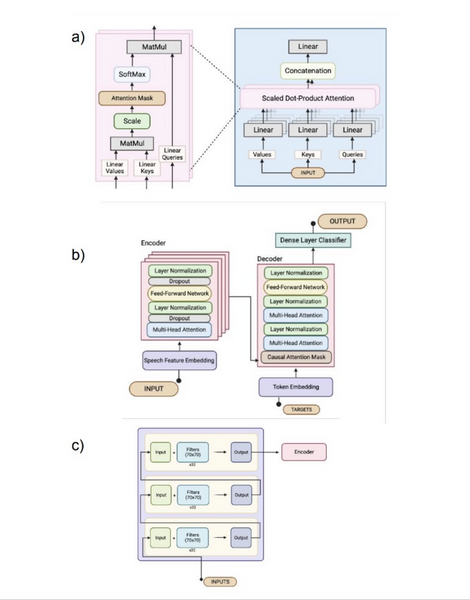
Brain-Computer Interface (BCI) allows users, especially those with paralysis, to control devices through brain activity. This study explored using a custom transformer model to decode neural signals into handwritten text for individuals with limited motor skills, comparing its performance to a traditional RNN-based BCI.
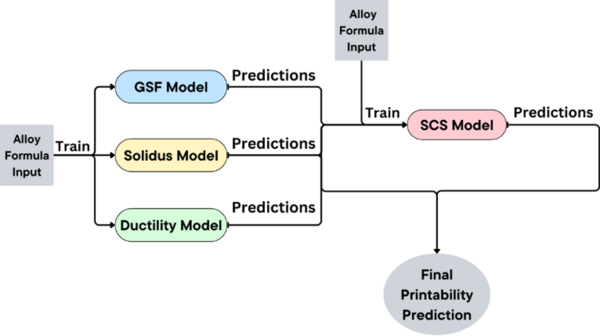
Additive manufacturing (AM) is transforming the production of complex metal parts, but challenges like internal cracking can arise, particularly in critical sectors such as aerospace and automotive. Traditional methods to assess cracking susceptibility are costly and time-consuming, prompting the use of machine learning (ML) for more efficient predictions. This study developed a multi-model ML pipeline that predicts solidification cracking susceptibility (SCS) more accurately by considering secondary alloy properties alongside composition, with Random Forest models showing the best performance, highlighting a promising direction for future research into SCS quantification.