Browse Articles

A machine learning approach for abstraction and reasoning problems without large amounts of data

Isik et al. | Jun 25, 2022

A machine learning approach for abstraction and reasoning problems without large amounts of data

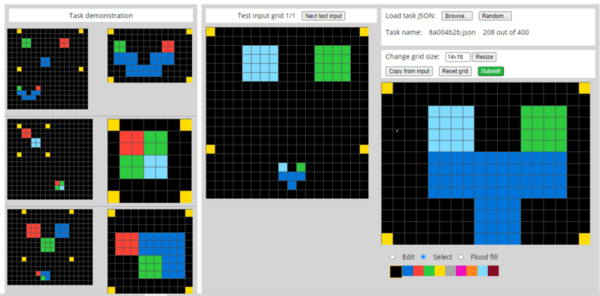
While remarkable in its ability to mirror human cognition, machine learning and its associated algorithms often require extensive data to prove effective in completing tasks. However, data is not always plentiful, with unpredictable events occurring throughout our daily lives that require flexibility by artificial intelligence utilized in technology such as personal assistants and self-driving vehicles. Driven by the need for AI to complete tasks without extensive training, the researchers in this article use fluid intelligence assessments to develop an algorithm capable of generalization and abstraction. By forgoing prioritization on skill-based training, this article demonstrates the potential of focusing on a more generalized cognitive ability for artificial intelligence, proving more flexible and thus human-like in solving unique tasks than skill-focused algorithms.

Read More...

Impact of Kindles4Covid Virtual Reading Buddies Program on reading frequency and social connections

Pandey et al. | Jun 25, 2022

Impact of Kindles4Covid Virtual Reading Buddies Program on reading frequency and social connections

With the COVID-19 pandemic necessitating the transition to remote learning, disruption to daily school routine has impacted educational experiences on a global scale. As a result, it has potentially worsened reading achievement gaps typically exacerbated by long summer months. To address literacy skill retention and pandemic-induced social isolation, the non-profit organization ByKids4Kids has created a reading program, “Kindles4Covid Virtual Reading Buddies Program,” to instill a structure for youth to read together and connect with the convenience of Amazon Kindle devices. In this article, the authors determine the efficacy of their invaluable program by assessing changes in reading frequency and self-reported connectedness among program participants.

Read More...

Machine learning on crowd-sourced data to highlight coral disease

Narayan et al. | Jul 26, 2021

Machine learning on crowd-sourced data to highlight coral disease

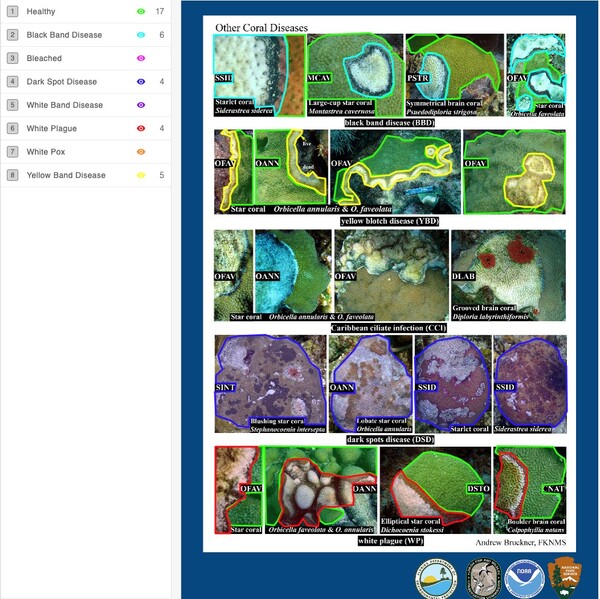
Triggered largely by the warming and pollution of oceans, corals are experiencing bleaching and a variety of diseases caused by the spread of bacteria, fungi, and viruses. Identification of bleached/diseased corals enables implementation of measures to halt or retard disease. Benthic cover analysis, a standard metric used in large databases to assess live coral cover, as a standalone measure of reef health is insufficient for identification of coral bleaching/disease. Proposed herein is a solution that couples machine learning with crowd-sourced data – images from government archives, citizen science projects, and personal images collected by tourists – to build a model capable of identifying healthy, bleached, and/or diseased coral.

Read More...

Effects of an Informational Waste Management App on a User’s Waste Disposal Habits

Rao et al. | Apr 28, 2021

Effects of an Informational Waste Management App on a User’s Waste Disposal Habits

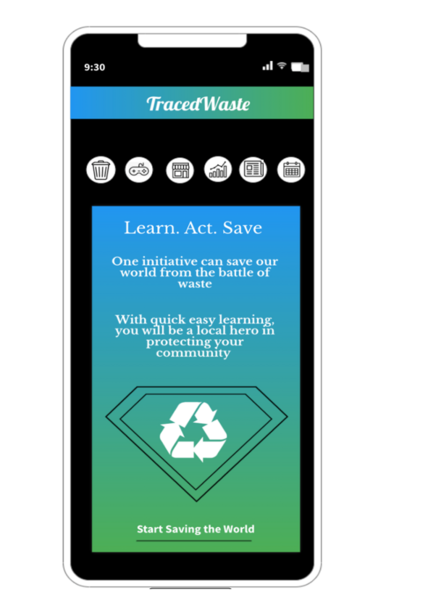
While 75% of waste in the United States is stated to be recyclable, only about 34% truly is. This project takes a stance to combat the pillars of mismanaged waste through a modern means of convenience: the TracedWaste app. The purpose of this study was to identify how individuals' waste disposal habits improved and knowledge increased (i.e. correctly disposing of waste, understanding negative incorrect waste disposal) due to their use of an informational waste management app as measured by a survey using a 1-5 Likert Scale. The results showed that the TracedWaste app helped conserve abundant resources such as energy and wood, decrease carbon emissions, and minimize financial toll all through reducing individual impact.

Read More...

Analysis of Monotherapy and Combination Therapy on Helicobacter felis

Custodio et al. | Apr 28, 2020

Analysis of Monotherapy and Combination Therapy on <em>Helicobacter felis</em>

Heliobacter felis causes gastritis which is accompanied by a range of unpleasant symptoms in small animals such as cats. In order to identify effective antibiotics for treating H. felis infections, the researchers investigate whether a combination of different antibiotics is more effective than the use of individual antibiotics alone. Of the antibiotics they selected, Streptomycin alone was better than any other single antibiotic or in combination. Their results have not yet been validated in live animals, but suggest that Streptomycin alone might be an effective treatment of H. felis-induced gastritis in cats.

Read More...

Bacteroides thetaiotaomicron Growth Numbers Are Unchanged in the Presence of Yogurt

Phan et al. | Dec 29, 2016

<i>Bacteroides thetaiotaomicron</i> Growth Numbers Are Unchanged in the Presence of Yogurt

Disruptions to the microbiome, specifically the imbalance in the two major phyla, the Firmicutes and the Bacteroidetes, have been linked to the development of obesity. This study explored whether or not Fage plain total 0% Greek yogurt, which contains live and active bacterial cultures belonging to the Firmicute phylum, could decrease the numbers of Bacteroides thetaiotaomicron, an organism found in the human gut that belongs to the Bacteroidetes phylum.

Read More...

An Investigative Analysis of Climate Change Using Historical and Modern Weather Data

Han et al. | Dec 02, 2013

An Investigative Analysis of Climate Change Using Historical and Modern Weather Data

Climate change is an important and contentious issue that has far-reaching implications for our future. The authors here compare primary temperature and precipitation data from almost 200 years ago against the present day. They find that the average annual temperature in Brooklyn, NY has risen significantly over this time, as has the frequency of precipitation, though not the amount of precipitation. These data stress the need for more ecologically-conscious choices in our daily lives.

Read More...

Combinatorial treatment by siNOTCH and retinoic acid decreases A172 brain cancer cell growth

Richardson et al. | Nov 14, 2022

Combinatorial treatment by siNOTCH and retinoic acid decreases A172 brain cancer cell growth

Treatments inhibiting Notch signaling pathways have been explored by researchers as a new approach for the treatment of glioblastoma tumors, which is a fast-growing and aggressive brain tumor. Recently, retinoic acid (RA) therapy, which inhibits Notch signaling, has shown a promising effect on inhibiting glioblastoma progression. RA, which is a metabolite of vitamin A, is very important in embryonic cellular development, which includes the regulation of multiple developmental processes, such as brain neurogenesis. However, high doses of RA treatment caused many side effects such as headaches, nausea, redness around the injection site, or allergic reactions. Therefore, we hypothesized that a combination treatment of RA and siRNA targeting NOTCH1 (siNOTCH1), the essential gene that activates Notch signaling, would effectively inhibit brain cancer cell proliferation. The aim of the study was to determine whether inhibiting NOTCH1 would inhibit the growth of brain cancer cells by cell viability assay. We found that the combination treatment of siNOTCH1 and RA in low concentration effectively decreased the NOTCH1 expression level compared to the individual treatments. However, the combination treatment condition significantly decreased the number of live brain cancer cells only at a low concentration of RA. We anticipate that this novel combination treatment can provide a solution to the side effects of chemotherapy.

Read More...

Shortage of Black physicians: Florida Black medical student enrollment from 2013 to 2021

Khan et al. | Sep 18, 2024

Shortage of Black physicians: Florida Black medical student enrollment from 2013 to 2021

Black patients tend to have better health outcomes when cared for by Black physicians, yet Black doctors make up only 5% of U.S. physicians, despite Black people comprising 14% of the population. This analysis of data from Florida medical schools showed a higher enrollment of Black first-year students (13.5%) compared to the national average (9%), and a national increase from 6% in 2013 to 9% in 2021, aligning with the rise of social justice movements. Increasing Black medical student enrollment could reduce health disparities and improve outcomes for Black communities.

Read More...