Browse Articles

Optical anisotropy of crystallized vanillin thin film: the science behind the art

Wang et al. | Jul 09, 2024

Optical anisotropy of crystallized vanillin thin film: the science behind the art
Image credit: The authors

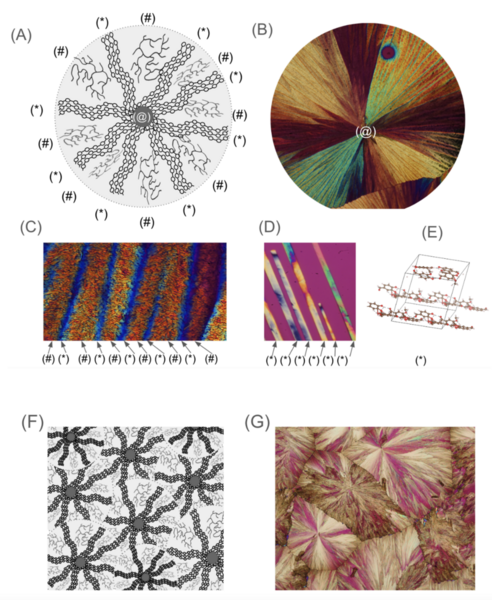
Microscopic beauty is hiding in common kitchen ingredients - even vanillin flavoring can be turned into mesmerizing artwork by crystallizing the vanillin and examining it under a polarizing microscope. Wang and Pang explore this hidden beauty by determining the optimal conditions to grow crystalline vanillin films and by creating computer simulations of chemical interactions between vanillin molecules.

Read More...

Automated classification of nebulae using deep learning & machine learning for enhanced discovery

Nair et al. | Feb 01, 2024

Automated classification of nebulae using deep learning & machine learning for enhanced discovery

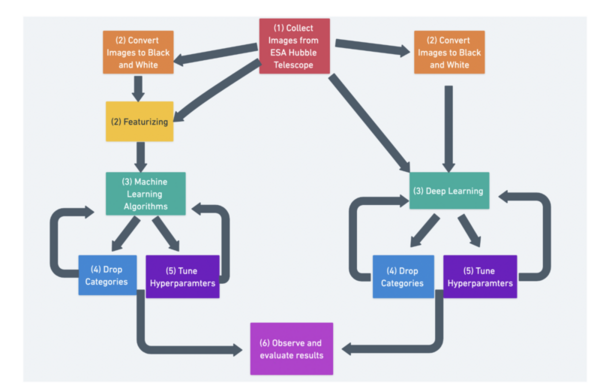
There are believed to be ~20,000 nebulae in the Milky Way Galaxy. However, humans have only cataloged ~1,800 of them even though we have gathered 1.3 million nebula images. Classification of nebulae is important as it helps scientists understand the chemical composition of a nebula which in turn helps them understand the material of the original star. Our research on nebulae classification aims to make the process of classifying new nebulae faster and more accurate using a hybrid of deep learning and machine learning techniques.

Read More...

Hybrid Quantum-Classical Generative Adversarial Network for synthesizing chemically feasible molecules

Sikdar et al. | Jan 10, 2023

Hybrid Quantum-Classical Generative Adversarial Network for synthesizing chemically feasible molecules

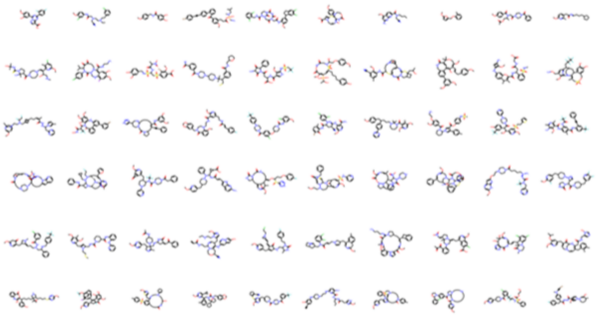
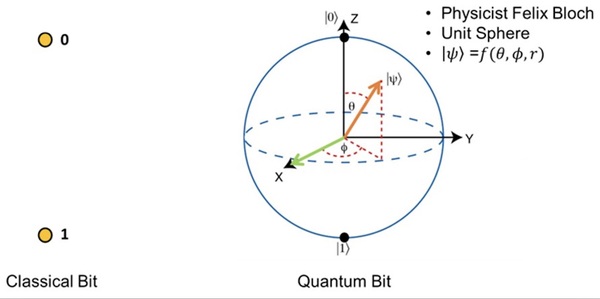
Current drug discovery processes can cost billions of dollars and usually take five to ten years. People have been researching and implementing various computational approaches to search for molecules and compounds from the chemical space, which can be on the order of 1060 molecules. One solution involves deep generative models, which are artificial intelligence models that learn from nonlinear data by modeling the probability distribution of chemical structures and creating similar data points from the trends it identifies. Aiming for faster runtime and greater robustness when analyzing high-dimensional data, we designed and implemented a Hybrid Quantum-Classical Generative Adversarial Network (QGAN) to synthesize molecules.

Read More...

Spectrophotometric comparison of 4-Nitrophenyl carbonates & carbamates as base-labile protecting groups

Kocalar et al. | Dec 12, 2022

Spectrophotometric comparison of 4-Nitrophenyl carbonates & carbamates as base-labile protecting groups

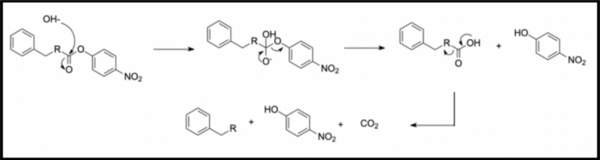
In organic synthesis, protecting groups are derivatives of reactive functionalities that play a key role in ensuring chemoselectivity of chemical transformations. To protect alcohols and amines, acid-labile tert-butyloxycarbonyl protecting groups are often employed but are avoided when the substrate is acid-sensitive. Thus, orthogonal base-labile protecting groups have been in demand to enable selective deprotection and to preserve the reactivity of acid-sensitive substrates. To meet this demand, we present 4-nitrophenyl carbonates and carbamates as orthogonal base-labile protecting group strategies.

Read More...

Buttermilk and baking soda increase pancake fluffiness by liberating carbon dioxide

Rojas et al. | Sep 18, 2022

Buttermilk and baking soda increase pancake fluffiness by liberating carbon dioxide

Here, seeking a better understanding of what determines the fluffiness of a pancake, the authors began by considering a chemical reaction that results in the production of carbon dioxide gas from recipe ingredients, specifically sodium bicarbonate or baking soda. The substitution of homemade buttermilk for milk and adding more baking soda was found to result in significantly fluffier pancakes.

Read More...

Effects of spices on rice spoilage

Govindaraj et al. | Aug 15, 2022

Effects of spices on rice spoilage

In this work, based on centuries of history where spices have been used and thought to have antimicrobial properties that prolong the shelf life of food, the authors investigated if several spices used in Indian cooking could delay the spoilage of cooked white rice. Based on changed in appearance and smell, as well as growth on agar plates, they found that cinnamon was the most effective in delaying spoilage, followed by cumin, pepper, garlic, and ginger. Their findings suggest the ability to use spices rather than chemical food preservatives to prolong the shelf life of foods.

Read More...

A potentially underestimated source of CO2 and other greenhouse gases in agriculture

Corcimaru et al. | May 18, 2022

A potentially underestimated source of CO<sub>2</sub> and other greenhouse gases in agriculture

Here the authors investigated the role of agricultural fertilizers as potential contributors to greenhouse gas emissions. In contrast to the typical investigations that consider microbiological processes, the authors considered purely chemical processes. Based on their results they found that as much as 20.41% of all CO2 emission from land-based activities could be a result of mineral nitrogen fertilizers.

Read More...

The effect of wild orange essential oil on ascorbic acid decay in freshly squeezed orange juice

Sebek et al. | Feb 25, 2022

The effect of wild orange essential oil on ascorbic acid  decay in freshly squeezed orange juice

The goal of this project was to see if the addition of wild orange essential oil to freshly squeezed orange juice would help to slow down the decay of ascorbic acid when exposed to various temperatures, allowing vital nutrients to be maintained and providing a natural alternative to the chemical additives in use in industry today. The authors hypothesized that the addition of wild orange essential oil to freshly squeezed orange juice would slow down the rate of oxidation when exposed to various temperatures, reducing ascorbic acid decay. On average, wild orange EO slowed down ascorbic acid decay in freshly squeezed orange juice by 15% at the three highest temperatures tested.

Read More...

Impact of Soil Productivity on the Growth of Two Meyer Lemon Trees

Shen et al. | Dec 14, 2020

Impact of Soil Productivity on the Growth of Two Meyer Lemon Trees

Here, the authors aimed to apply home soil testing to identify the cause of the growth differences between two lemon trees. They hypothesized that differences in physical and chemical soil characteristics were influencing differences in soil productivity and plant growth. Overall, the study demonstrated the effectiveness of home soil testing to characterize soils and help homeowners solve common gardening problems.

Read More...