
The authors explore how similar exoplanets are to Earth and whether they could be inhabited by humans and other living organisms.
Read More...Studying habitability of the exoplanents Kepler-504 b, Kepler-315 b, and Kepler-315 c
The authors explore how similar exoplanets are to Earth and whether they could be inhabited by humans and other living organisms.
Read More...The effects of COVID-19 pandemic social isolation on the mental and physical health of the general population

Here, seeking to better understand on the effects of social isolation during the COVID-19 pandemic, the authors used a survey during April and May of 2020 of participants primarily in Long Island, NY to assess the physical and mental health of the general population. They found negative impacts to physical health and increases in depressive symptoms and feelings of loneliness across all groups. More significant increases in negative mental health symptoms were observed in younger age groups and amongst women.
Read More...Myrtaceaes as antimicrobial agents against Staphylococcus aureus and Pseudomonas aeruginosa
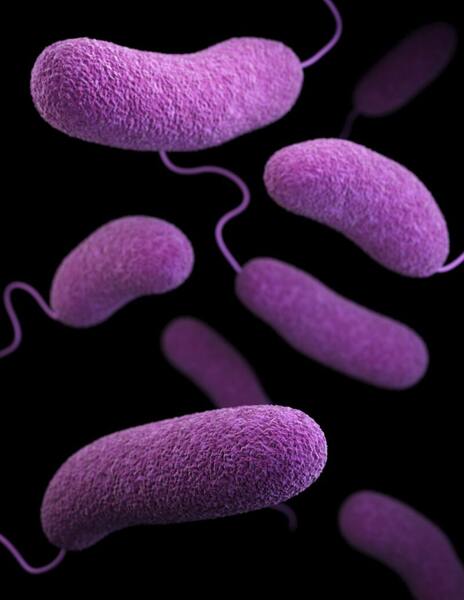
In this study, the authors test new antimicrobials by measuring the ability of extracts from Australian-native Myrtaceae species to induce death of two bacteria S. aureus and P. aeruginosa.
Read More...Impact of simple vs complex carbohydrates under time constraint before anaerobic and aerobic exercise

The goal of this study was to determine the if carbohydrates or complex carbohydrates are better for athlete's performance in anaerobic and aerobic exercise. Ultimately, we found that, when one’s schedule only allows for 30 minutes to eat before a workout, the best pre-workout meal for optimal glycogen levels to prompt muscle hypertrophy, strength increases, and better endurance is one that is simple carbohydrate-heavy.
Read More...Risk assessment modeling for childhood stunting using automated machine learning and demographic analysis
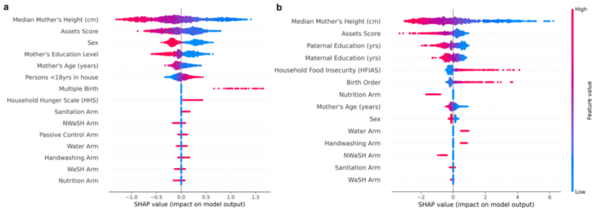
Over the last few decades, childhood stunting has persisted as a major global challenge. This study hypothesized that TPTO (Tree-based Pipeline Optimization Tool), an AutoML (automated machine learning) tool, would outperform all pre-existing machine learning models and reveal the positive impact of economic prosperity, strong familial traits, and resource attainability on reducing stunting risk. Feature correlation plots revealed that maternal height, wealth indicators, and parental education were universally important features for determining stunting outcomes approximately two years after birth. These results help inform future research by highlighting how demographic, familial, and socio-economic conditions influence stunting and providing medical professionals with a deployable risk assessment tool for predicting childhood stunting.
Read More...Attitudes towards mental health in Indians who practice yoga regularly and those who do not

Whether it is through implicit association or intentional practice, yoga has been known to help individuals maintain good mental health. However, many communities, such as South Asian communities, often project the stereotype that embodies neglecting topics such as mental health and considering them taboo. In this online survey-based study, the authors focused on examining whether yoga would alter individuals’ attitudes toward mental health. They hypothesized that 1) participants who regularly practiced yoga would be more familiar with the term mental health, 2) participants who practiced yoga would value their mental health more, and 3) participants who practiced yoga regularly would be more open about their mental health and be more likely to reach out for professional help if needed. They did not find a statistical significance for any of our hypotheses which suggests that yoga may not have an effect on perceptions of mental health in yoga-practicing Indian adults.
Read More...Disruptions in protein-protein interactions between HTT, PRPF40B, and MECP2 are involved in Lopes-Maciel-Rodan syndrome
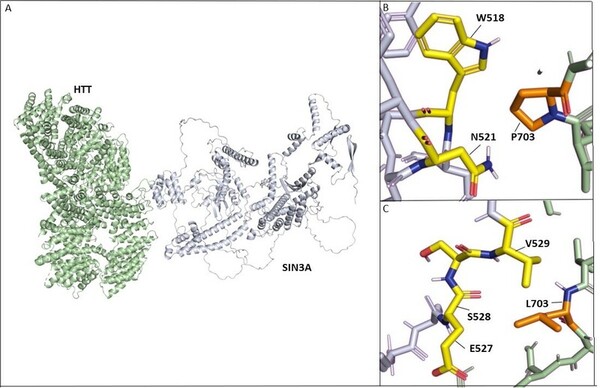
In an extensive study of gene mutations, and their resulting effect on protein-protein interactions, Desai and Stork found that HTT-PRPF40B-MECP2 interactions are weakened with progression of Lopes-Maciel-Rodan syndrome.
Read More...A novel filtration model for microplastics using natural oils and its application to the environment
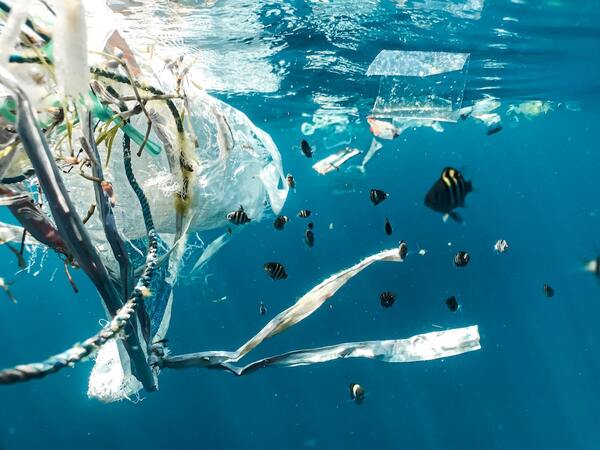
Recognizing the need for a method to filter microplastics from polluted water the authors sought to use nonpolar solvents, palm oil and palm kernel oil, to filter microplastics out of model seawater. By relying on the separation of polar and nonpolar solvents followed by freezing the nonpolar solvent, they reported that microplastics could be extracted with percentages ranging from 96.2% to 94.2%. They also provided an estimation to use this method as part of container ships to clean the Pacific Ocean of microplastics.
Read More...Impact of Kindles4Covid Virtual Reading Buddies Program on reading frequency and social connections

With the COVID-19 pandemic necessitating the transition to remote learning, disruption to daily school routine has impacted educational experiences on a global scale. As a result, it has potentially worsened reading achievement gaps typically exacerbated by long summer months. To address literacy skill retention and pandemic-induced social isolation, the non-profit organization ByKids4Kids has created a reading program, “Kindles4Covid Virtual Reading Buddies Program,” to instill a structure for youth to read together and connect with the convenience of Amazon Kindle devices. In this article, the authors determine the efficacy of their invaluable program by assessing changes in reading frequency and self-reported connectedness among program participants.
Read More...Indoor near-field target detection characteristics under radio and radar joint operation at 2.4 GHz ISM band
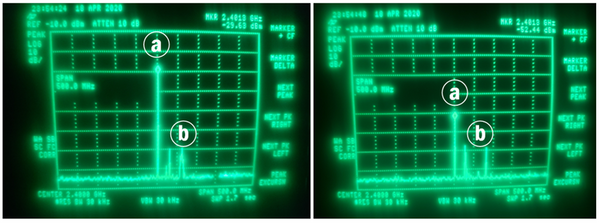
In our modern age, the burgeoning use of radios and radars has resulted in competition for electromagnetic spectrum resources. With recent research highlighting solutions to radio and radar mutual interference, there is a desperate need for a cost-effective configuration that permits a radar-radio joint system. In this study, the authors have set out to determine the feasibility of using single-tone continuous-wave radars in a radar-joint system. With this system, they aim to facilitate cost-effective near-field target detection by way of the popularized 2.4-GHz industrial, scientific, and medical (ISM) band.
Read More...