Browse Articles

Quantifying natural recovery of dopamine deficits induced by chronic stress

Josyula et al. | Oct 27, 2025

Quantifying natural recovery of dopamine deficits induced by chronic stress
Image credit: Shawn Day

Here the authors investigated the natural recovery of stress-induced dopamine-related gene deficits in C. elegans by measuring the expression of cat-2 (dopamine biosynthesis) and sod-2 (oxidative stress) following exposure to starvation or hydrocortisone. They found that the reversibility of sod-2 and the expression of cat-2 were highly dependent on the type and severity of the stressor, suggesting that the body's natural ability to recover from dopamine dysfunction has biological limitations.

Read More...

Reddit v. Wall Street: Why Redditors beat Wall Street at its own game

Bhakar et al. | Sep 13, 2022

Reddit v. Wall Street: Why Redditors beat Wall Street at its own game

Here the authors investigated the motivation of a short squeeze of GameStop stock where users of the internet forum Reddit drove a sudden increase in GameStop stock price during the start of 2021. They relied on both qualitative and quantitative analyses where they tracked activity on the r/WallStreetBets subreddit in relation to mentions of GameStop. With these methods they found that while initially the short squeeze was driven by financial motivations, later on emotional motivations became more important. They suggest that social phenomena can be dynamic and evolve necessitating mixed method approaches to study them.

Read More...

Examining the impact of consecutive losses on gambling: When do we decide to quit?

Kim et al. | Apr 28, 2026

Examining the impact of consecutive losses on gambling: When do we decide to quit?
Image credit: Kim, Cragun, and Kim

This article explored the question of when do people decide to stop gambling and further tries to extrapolate why people stop gambling at that point. Their study showed that people tend to quit gambling after 4 consecutive losses, significantly more than 1-3 consecutive losses or a win previous to quitting. They also found that participants commonly quit at a point value approximately 5 points greater than or less than their starting balance. The authors concluded that these results may be important in understanding how to cut down on excessive gambling or in creating policies that make it easier for people to disengage from gambling.

Read More...

Automated classification of nebulae using deep learning & machine learning for enhanced discovery

Nair et al. | Feb 01, 2024

Automated classification of nebulae using deep learning & machine learning for enhanced discovery

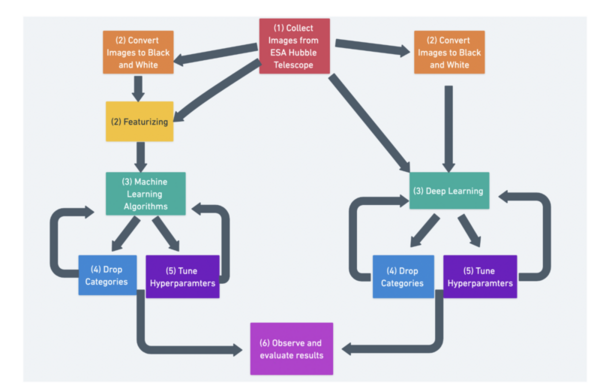
There are believed to be ~20,000 nebulae in the Milky Way Galaxy. However, humans have only cataloged ~1,800 of them even though we have gathered 1.3 million nebula images. Classification of nebulae is important as it helps scientists understand the chemical composition of a nebula which in turn helps them understand the material of the original star. Our research on nebulae classification aims to make the process of classifying new nebulae faster and more accurate using a hybrid of deep learning and machine learning techniques.

Read More...

Interleukin family (IL-2 and IL-1β) as predictive biomarkers in Indian cancer patients: A proof of concept study

Parthasarathy et al. | Apr 03, 2023

Interleukin family (IL-2 and IL-1β) as predictive biomarkers in Indian cancer patients: A proof of concept study
Image credit: National Cancer Institute

Here, recognizing that the immune response to cancer results in biomarkers that can be used to assess the immune status of cancer patients, the authors investigated the concentrations of key cytokines (TH1 and TH2 cytokines) in healthy controls and cancer patients. They identified significant changes in resting and activated cytokine profiles, suggesting that data of biomarkers such as these could serve as a starting point for further treatment with regard to a patient's specific immune profile.

Read More...

Presence of Vegetation in Relation to Slope in Yosemite Valley, California

Saltzgaber et al. | Sep 11, 2021

Presence of Vegetation in Relation to Slope in Yosemite Valley, California

This study examined the relationship between the slope of a terrain and vegetation, measured by the normalized difference vegetation index (NDVI). It was hypothesized that lower slope ranges would be more supportive of vegetation growth than higher slope ranges. Analysis showed that no slope (even as extreme as 85–90°) prohibits the growth of vegetation completely; even the steepest slopes examined contain plant life. Knowing that steep slopes can still support plant life, agriculturalists can begin to explore and start planting additional crops and plants at these extreme slopes.

Read More...

The Role of Corresponding Race, Gender, and Species as Incentives for Charitable Giving

Antonides-Jensen et al. | Jul 31, 2019

The Role of Corresponding Race, Gender, and Species as Incentives for Charitable Giving

Inherent bias is often the unconscious driver of human behavior, and the first step towards overcoming these biases is our awareness of them. In this article the authors investigate whether race, gender or species affect the choice of charity by middle class Spaniards. Their conclusions serve as a starting point for further studies that could help charities refine their campaigns in light of these biases effectively transcending them or taking advantage of them to improve their fundraising attempts.

Read More...

Optimizing data augmentation to improve machine learning accuracy on endemic frog calls

Anand et al. | Mar 09, 2025

Optimizing data augmentation to improve machine learning accuracy on endemic frog calls
Image credit: Anand and Sampath 2025

The mountain chain of the Western Ghats on the Indian peninsula, a UNESCO World Heritage site, is home to about 200 frog species, 89 of which are endemic. Distinctive to each frog species, their vocalizations can be used for species recognition. Manually surveying frogs at night during the rain in elephant and big cat forests is difficult, so being able to autonomously record ambient soundscapes and identify species is essential. An effective machine learning (ML) species classifier requires substantial training data from this area. The goal of this study was to assess data augmentation techniques on a dataset of frog vocalizations from this region, which has a minimal number of audio recordings per species. Consequently, enhancing an ML model’s performance with limited data is necessary. We analyzed the effects of four data augmentation techniques (Time Shifting, Noise Injection, Spectral Augmentation, and Test-Time Augmentation) individually and their combined effect on the frog vocalization data and the public environmental sounds dataset (ESC-50). The effect of combined data augmentation techniques improved the model's relative accuracy as the size of the dataset decreased. The combination of all four techniques improved the ML model’s classification accuracy on the frog calls dataset by 94%. This study established a data augmentation approach to maximize the classification accuracy with sparse data of frog call recordings, thereby creating a possibility to build a real-world automated field frog species identifier system. Such a system can significantly help in the conservation of frog species in this vital biodiversity hotspot.

Read More...