Browse Articles

More efficient sources of water distribution for agricultural and general usage

Jung et al. | Nov 11, 2022

More efficient sources of water distribution for agricultural and general usage

Here, the authors investigated alternative methods to irrigate plants based on the their identification that current irrigation systems waste a large amount of fresh water. They compared three different delivery methods for water: conventional sprinkler, underground cloth, and a perforated pipe embedded in the soil. They found the cloth method to save the most water, although plant growth was slightly less in comparison to plants watered with the sprinkler method or pipe method.

Read More...

Impact of salinity and phosphorus on growth of Phaseolus Vulgaris inoculated with Arbuscular Mycorrhizal Fungi

Matanachai et al. | Jun 16, 2022

Impact of salinity and phosphorus on growth of <em>Phaseolus Vulgaris</em> inoculated with Arbuscular Mycorrhizal Fungi

Here, recognizing a declining supply of rock phosphate, as well as its role in crop fertilization, the authors investigated a fungus that forms a symbiotic relationship with many crops. They found that symbiosis between the fungus and common bean plant increased the affinity of the plant towards absorbing nutrients as evidenced by lower root-to-shoot ratios in beans planted in soil with various concentrations of phosphorous and salinity.

Read More...

The external presence of running water influences the root growth of pea plants (Phaselous vulgaris)

Shu et al. | Nov 10, 2020

The external presence of running water influences the root growth of pea plants (Phaselous vulgaris)

Each year, invasive tree roots cause large amounts of damage to underground pipes. While this is usually due to leaks and cracks, tree roots can also invade pipes that are structurally sound. We are interested in investigating whether plant roots have an affinity towards flowing water, measured through mass, even when the running water is not in direct contact with soil. We tested this by creating a choice chamber with water running under one end and no stimulus on the other end. Overall, the masses of the roots growing towards flowing water were greater than the masses of the roots growing towards the end with no stimulus, showing that plant roots did have an affinity towards flowing water.

Read More...

Analysis of biofertilization impacts on Pisum sativum

Holden et al. | May 18, 2023

Analysis of biofertilization impacts on <i>Pisum sativum</i>
Image credit: David Boozer

This study explored the various effects of three different produce-based biofertilizers on pea plant growth, using red apple, pear, strawberry, and control treatments. It was hypothesized that the application of fruit biomatter would increase the growth of pea plants, with the application of strawberry biomatter having the most significant effect due to strawberries containing a higher nutrient content compared to pears and apples. Analysis confirmed the hypothesis. The application of strawberry biomatter could prove to be an effective way to increase plant growth in commercial agriculture.

Read More...

A Scientific Investigation of Alternative Growing Methods to Cultivate Lactuca sativa

Fishback et al. | Apr 23, 2020

A Scientific Investigation of Alternative Growing Methods to Cultivate Lactuca sativa

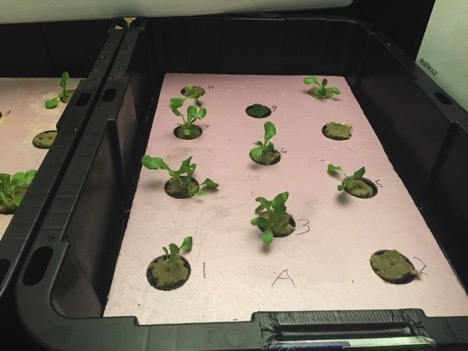
In this article, the authors compare different resource-efficient farming methods for the vegetable Lactuca sativa. They compared hydroponics (solid growth medium with added nutrients) to aquaponics (water with fish waste to provide nutrients) and determined efficacy by measuring plant height over time. While both systems supported plant growth, the authors concluded that aquaponics was the superior method for supporting Lactuca sativa growth. These findings are of great relevance as we continue to find the most sustainable and efficient means for farming.

Read More...

Genetic Bioaugmentation of Oryza sativa to Facilitate Self-Detoxification of Arsenic In-Situ

Bhat et al. | Dec 03, 2024

Genetic Bioaugmentation of Oryza sativa to Facilitate Self-Detoxification of Arsenic In-Situ

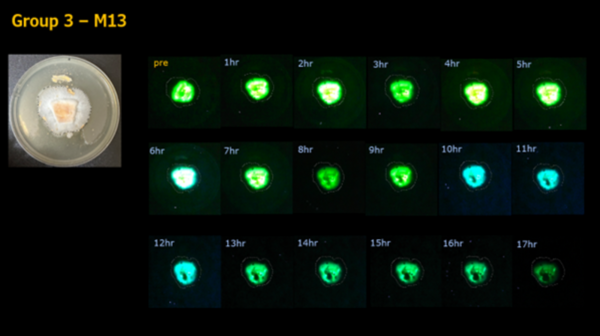
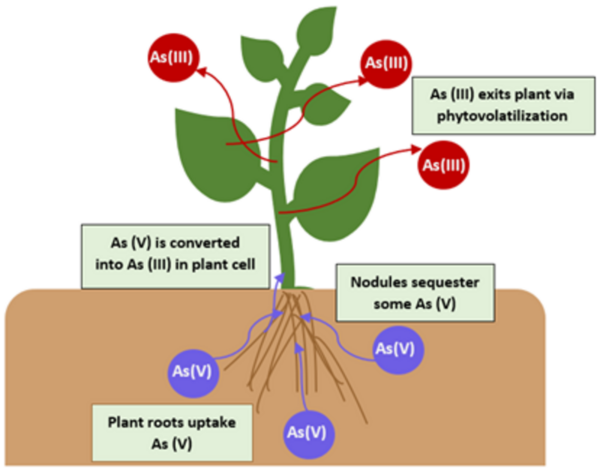
Arsenic contamination in rice, caused by the use of arsenic-laden groundwater for irrigation, is a growing global concern, affecting over 150 million people. To address this, researchers hypothesized that genetically modifying rice plants with arsenic-resistant genes could reduce arsenic uptake and allow the plants to detoxify arsenic, making them safer to consume.

Read More...