Browse Articles

Impact of carbon number and atom number on cc-pVTZ Hartree-Fock Energy and program runtime of alkanes

Pan et al. | Mar 06, 2024

Impact of carbon number and atom number on cc-pVTZ Hartree-Fock Energy and program runtime of alkanes
Image credit: The authors

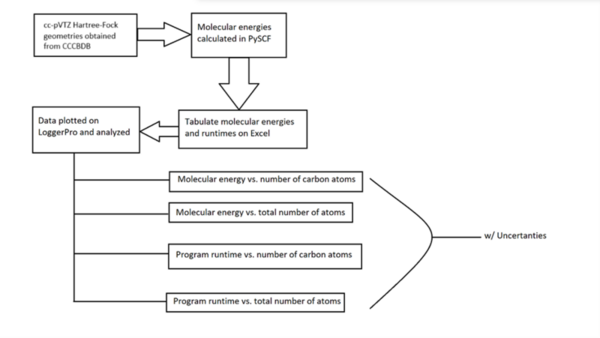
It's time-consuming to complete the calculations that are used to study nuclear reactions and energy. To uncover which computational chemistry tools are useful for this challenge, Pan, Vaiyakarnam, Li, and McMahan investigated whether the Python-based Simulations of Chemistry Framework’s Hartree-Fock (PySCF) method is an efficient and accurate way to assess alkane molecules.

Read More...

Contribution of environmental factors to genetic variation in the Pacific white-sided dolphin

Talwar et al. | Jan 23, 2024

Contribution of environmental factors to genetic variation in the Pacific white-sided dolphin
Image credit: Flavio

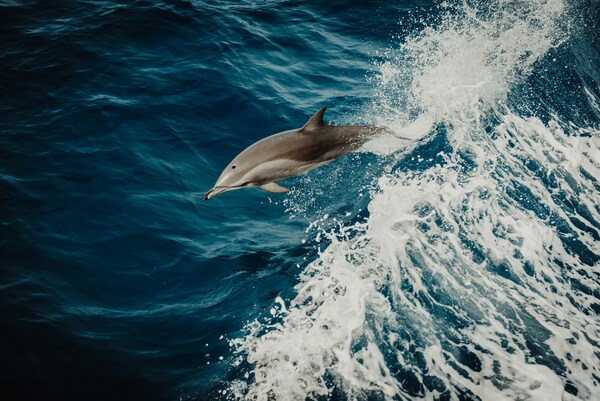
Here the authors sought to understand the effects of different variables that may be tied to pollution and climate change on genetic variation of Pacific white-sided dolphins, a species that is currently threatened by water pollution. Based on environmental data collected alongside a genetic distance matrix, they found that ocean currents had the most significant impact on the genetic diversity of Pacific white-sided dolphins along the Japanese coast.

Read More...

The effect of joint angle differences on blade velocity in elite and novice saber fencers: A kinematic study

Greene et al. | Mar 02, 2023

 The effect of joint angle differences on blade velocity in elite and novice saber fencers: A kinematic study

Here, recognizing that years of training in saber fencing could expectedly result in optimized movements that result in elite skill levels, the authors used motion tracking and statistical analysis to assess the difference in velocity and blade tip velocity of novice and elite fencers during a vertical blade thrust. They found statistically significant differences in blade tip velocity and elbow joint angle kinematics.

Read More...

Hybrid Quantum-Classical Generative Adversarial Network for synthesizing chemically feasible molecules

Sikdar et al. | Jan 10, 2023

Hybrid Quantum-Classical Generative Adversarial Network for synthesizing chemically feasible molecules

Current drug discovery processes can cost billions of dollars and usually take five to ten years. People have been researching and implementing various computational approaches to search for molecules and compounds from the chemical space, which can be on the order of 1060 molecules. One solution involves deep generative models, which are artificial intelligence models that learn from nonlinear data by modeling the probability distribution of chemical structures and creating similar data points from the trends it identifies. Aiming for faster runtime and greater robustness when analyzing high-dimensional data, we designed and implemented a Hybrid Quantum-Classical Generative Adversarial Network (QGAN) to synthesize molecules.

Read More...

Assessing grass water use efficiency through smartphone imaging and ImageJ analysis

Shen et al. | Jul 27, 2022

Assessing grass water use efficiency through smartphone imaging and ImageJ analysis

Overwatering and underwatering grass are widespread issues with environmental and financial consequences. This study developed an accessible method to assess grass water use efficiency (WUE) combining smartphone imaging with open access color unmixing analysis. The method can be applied in automated irrigation systems or apps, providing grass WUE assessment for regular consumer use.

Read More...

Indoor near-field target detection characteristics under radio and radar joint operation at 2.4 GHz ISM band

Koh et al. | Apr 29, 2022

Indoor near-field target detection characteristics under radio and radar joint operation at 2.4 GHz ISM band

In our modern age, the burgeoning use of radios and radars has resulted in competition for electromagnetic spectrum resources. With recent research highlighting solutions to radio and radar mutual interference, there is a desperate need for a cost-effective configuration that permits a radar-radio joint system. In this study, the authors have set out to determine the feasibility of using single-tone continuous-wave radars in a radar-joint system. With this system, they aim to facilitate cost-effective near-field target detection by way of the popularized 2.4-GHz industrial, scientific, and medical (ISM) band.

Read More...

Machine learning on crowd-sourced data to highlight coral disease

Narayan et al. | Jul 26, 2021

Machine learning on crowd-sourced data to highlight coral disease

Triggered largely by the warming and pollution of oceans, corals are experiencing bleaching and a variety of diseases caused by the spread of bacteria, fungi, and viruses. Identification of bleached/diseased corals enables implementation of measures to halt or retard disease. Benthic cover analysis, a standard metric used in large databases to assess live coral cover, as a standalone measure of reef health is insufficient for identification of coral bleaching/disease. Proposed herein is a solution that couples machine learning with crowd-sourced data – images from government archives, citizen science projects, and personal images collected by tourists – to build a model capable of identifying healthy, bleached, and/or diseased coral.

Read More...

The effects of early probiotic supplementation on the germination of Arabidopsis thaliana

Gambino et al. | Oct 25, 2020

The effects of early probiotic supplementation on the germination of <em>Arabidopsis thaliana</em>

The use of fertilizers is associated with an increase in soil degradation, which is predicted to lead to a decrease in crop production within the next decade. Thus, it is critical to find solutions to support crop production to sustain the robust global population. In this study, the authors investigate how probiotic bacteria, like Rhizobium leguminosarum, Bacillus subtilis and Pseudomonas fluorescens, can impact the growth of Arabidopsis thaliana when applied to the seeds.They hypothesized that solutions with multiple bacterial species compared to those with only a single bacterial species would promote seed germination more effectively.

Read More...