Browse Articles

Efficacy of Rotten and Fresh Fruit Extracts as the Photosensitive Dye for Dye-Sensitized Solar Cells

Jayasankar et al. | Jan 16, 2019

Efficacy of Rotten and Fresh Fruit Extracts as the Photosensitive Dye for Dye-Sensitized Solar Cells

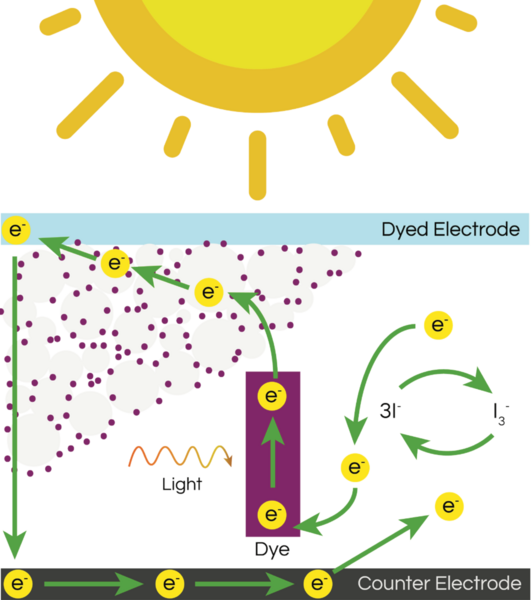
Dye-sensitized solar cells (DSSC) use dye as the photoactive material, which capture the incoming photon of light and use the energy to excite electrons. Research in DSSCs has centered around improving the efficacy of photosensitive dyes. A fruit's color is defined by a unique set of molecules, known as a pigment profile, which changes as a fruit progresses from ripe to rotten. This project investigates the use of fresh and rotten fruit extracts as the photoactive dye in a DSSC.

Read More...

Is Cloud Cover One of the Effects of Climate Change?

Crair et al. | Mar 27, 2014

Is Cloud Cover One of the Effects of Climate Change?

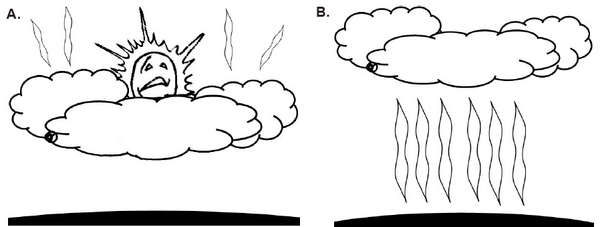
Climate change is one of the most controversial challenges humans face. Here the authors investigate the dual role of clouds - to reflect incoming light away from the Earth and to reflect heat energy back toward the Earth's surface. They find that the amount of incident light energy and surface temperature decreases as the sky becomes cloudier. These results will inform longer-term studies that may compare against the amount of energy clouds reflect back toward the Earth.

Read More...

Changing the surface properties of the backside of a silicon wafer to repel oil and prevent particle binding

Choi et al. | Feb 14, 2025

Changing the surface properties of the backside of a silicon wafer to repel oil and prevent particle binding

Wafers, essential in microchip production, can develop issues like leveling problems and wafer slip due to the formation of silanol bonds on their backside, which attract silica particles and oil. Authors tested addressing this issue with a coating of [acetoxy(polyethyleneoxy)propyl]triethoxysilane (APTS) applied to the wafer’s backside, preventing particle binding and oil adherence.

Read More...