
In this study, potential physiological effects of Red 40 food dye, found in many different food products, are tested using Daphnia magna, a small freshwater crustacean.
Read More...The impact of Red 40 artificial food dye on the heart rate of Daphnia magna
In this study, potential physiological effects of Red 40 food dye, found in many different food products, are tested using Daphnia magna, a small freshwater crustacean.
Read More...Optical anisotropy of crystallized vanillin thin film: the science behind the art
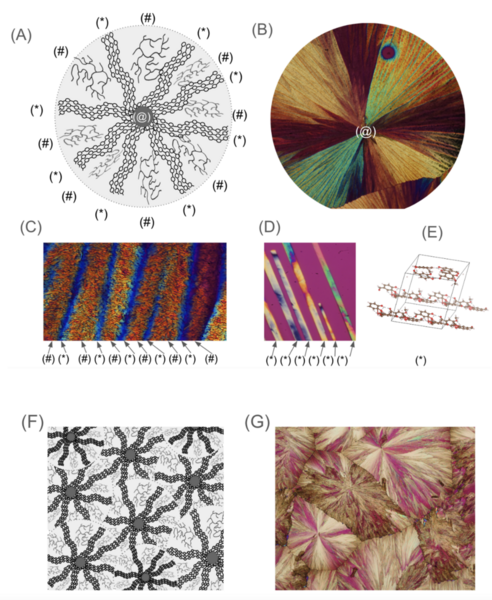
Microscopic beauty is hiding in common kitchen ingredients - even vanillin flavoring can be turned into mesmerizing artwork by crystallizing the vanillin and examining it under a polarizing microscope. Wang and Pang explore this hidden beauty by determining the optimal conditions to grow crystalline vanillin films and by creating computer simulations of chemical interactions between vanillin molecules.
Read More...Analysis of Patterns in the Harmonics of a String with Artificially Enforced Nodes
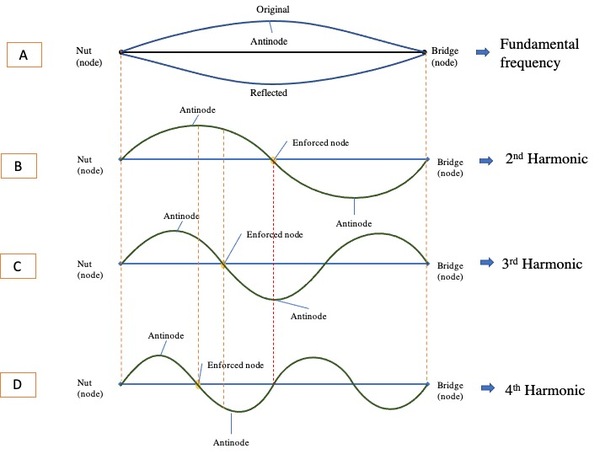
This study examines the higher harmonics in an oscillating string by analyzing the sound produced by a guitar with a spectrum analyzer. The authors mathematically hypothesized that the higher harmonics in the series of the directly excited 2nd harmonic contain the alternate frequencies of the fundamental series, the higher harmonics of the directly excited 3rd harmonic series contain every third frequency of fundamental series, and so on. To test the hypotheses, they enforced artificial nodes to excite the 2nd, 3rd, and 4th harmonics directly, and analyzed the resulting spectrum to verify the mathematical hypothesis. The data analysis corroborates both hypotheses.
Read More...Machine Learning Algorithm Using Logistic Regression and an Artificial Neural Network (ANN) for Early Stage Detection of Parkinson’s Disease
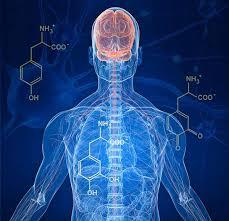
Despite the prevalence of PD, diagnosing PD is expensive, requires specialized testing, and is often inaccurate. Moreover, diagnosis is often made late in the disease course when treatments are less effective. Using existing voice data from patients with PD and healthy controls, the authors created and trained two different algorithms: one using logistic regression and another employing an artificial neural network (ANN).
Read More...A Novel Method for Auto-Suturing in Laparoscopic Robotic-Assisted Coronary Artery Bypass Graft (CABG) Anastomosis
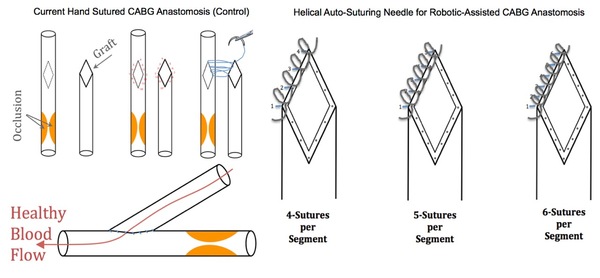
Levy & Levy tackle the optimization of the coronary artery bypass graft, a life-saving surgical technique that treats artery blockage due to coronary heart disease. The authors develop a novel auto-suturing method that saves time, allows for an increased number of sutures, and improves graft quality over hand suturing. The authors also show that increasing the number of sutures from four to five with their new method significantly improves graft quality. These promising findings may help improve outcomes for patients undergoing surgery to treat coronary heart disease.
Read More...The Clinical Accuracy of Non-Invasive Glucose Monitoring for ex vivo Artificial Pancreas
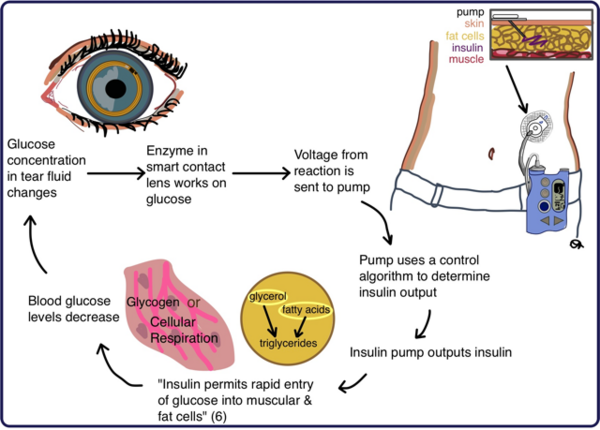
Diabetes is a serious worldwide epidemic that affects a growing portion of the population. While the most common method for testing blood glucose levels involves finger pricking, it is painful and inconvenient for patients. The authors test a non-invasive method to measure glucose levels from diabetic patients, and investigate whether the method is clinically accurate and universally applicable.
Read More...Comparing the Effect of Stent Geometry on Blood Flow Rate of Curved Coronary Artery Stenosis
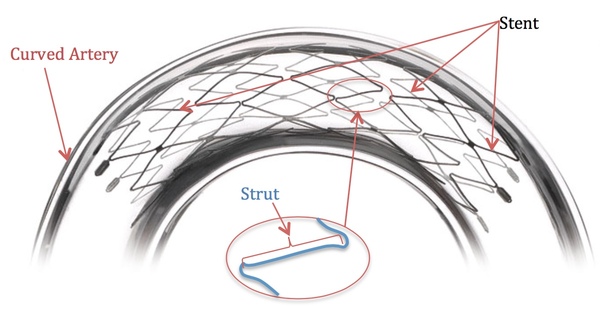
Coronary heart disease (CHD) is a global disease that causes fatal buildup of plaque in the arteries. Currently stents are placed in the artery for many patients with CHD to support proper blood flow. Here, the authors build a system to explore how the shape of the stent affects blood flow rate, a finding that can help optimize stents for patients.
Read More...An Analysis of the Mathematical Accuracy of Perspective in Paintings
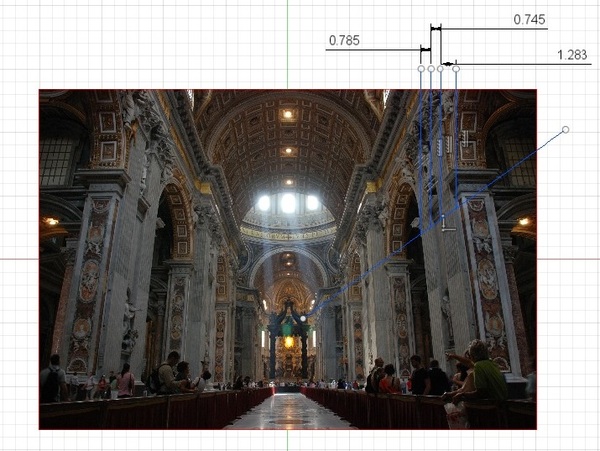
Here the authors investigate whether there are mathematical inaccuracies of perspective in artists' paintings that are undetectable with our naked eyes. Using the cross-ratio method, they find that there are three significant errors in various famous paintings which increase as the structures in the paintings recede from the viewer.
Read More...Using two-stage deep learning to assist the visually impaired with currency differentiation

Here, recognizing the difficulty that visually impaired people may have differentiating United States currency, the authors sought to use artificial intelligence (AI) models to identify US currencies. With a one-stage AI they reported a test accuracy of 89%, finding that multi-level deep learning models did not provide any significant advantage over a single-level AI.
Read More...A machine learning approach for abstraction and reasoning problems without large amounts of data
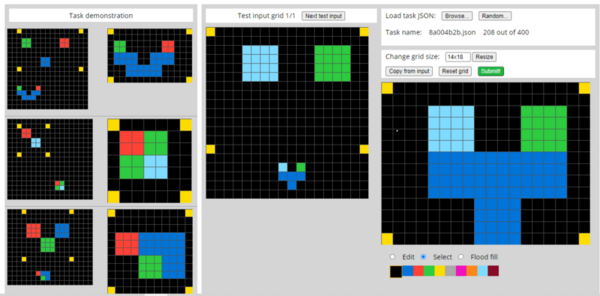
While remarkable in its ability to mirror human cognition, machine learning and its associated algorithms often require extensive data to prove effective in completing tasks. However, data is not always plentiful, with unpredictable events occurring throughout our daily lives that require flexibility by artificial intelligence utilized in technology such as personal assistants and self-driving vehicles. Driven by the need for AI to complete tasks without extensive training, the researchers in this article use fluid intelligence assessments to develop an algorithm capable of generalization and abstraction. By forgoing prioritization on skill-based training, this article demonstrates the potential of focusing on a more generalized cognitive ability for artificial intelligence, proving more flexible and thus human-like in solving unique tasks than skill-focused algorithms.
Read More...