The authors use the Lanczos algorithm to computationally solve the Schrodinger equation for 2D potentials with a Python program
Read More...Solving the Schrödinger equation computationally using the Lanczos algorithm
The authors use the Lanczos algorithm to computationally solve the Schrodinger equation for 2D potentials with a Python program
Read More...Evaluating the feasibility of SMILES-based autoencoders for drug discovery
The authors investigate the ability of machine learning models to developing new drug-like molecules by learning desired chemical properties versus simply generating molecules that similar to those in the training set.
Read More...Ramifications of natural and artificial sweeteners on the gastrointestinal system
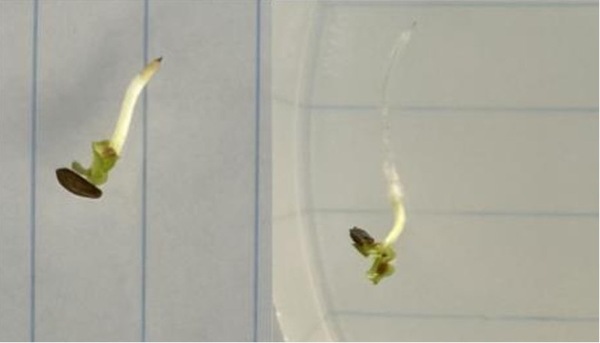
This study aimed to determine whether artificial sweeteners are harmful to the human microbiome by investigating two different bacteria found to be advantageous to the human gut, Escherichia coli and Bacillus coagulans. Results showed dramatic reduction in bacterial growth for agar plates containing two artificial sweeteners in comparison to two natural sweeteners. This led to the conclusion that both artificial sweeteners inhibit the growth of the two bacteria and warrants further study to determine if zero-sugar sweeteners may be worse for the human gut than natural sugar itself.
Read More...The effect of sports on teenagers’ depression symptoms during the COVID-19 pandemic
Here, seeking to identify the possible role of sports in helping teenagers navigate the troubles associated with societal changes during a pandemic, the authors surveyed 50 adolescents to collect Beck Depression Inventory scores. They found that 9 out of students with severe depressions did not do sports, while no significant relationship between depressive symptoms and either gender or place of exercise was observed.
Read More...A novel encoding technique to improve non-weather-based models for solar photovoltaic forecasting
Several studies have applied different machine learning (ML) techniques to the area of forecasting solar photovoltaic power production. Most of these studies use weather data as inputs to predict power production; however, there are numerous practical issues with the procurement of this data. This study proposes models that do not use weather data as inputs, but rather use past power production data as a more practical substitute to weather-based models. Our proposed models demonstrate a better, cheaper, and more reliable alternatives to current weather models.
Read More...Efficient synthesis of superabsorbent beads using photopolymerization with a low-cost method
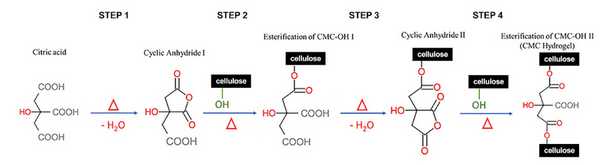
Superabsorbent beads are remarkable, used throughout our daily lives for various practical applications. These beads, as suggested by their name, possess a unique ability to absorb and retain large quantities of liquids. This characteristic of absorbency makes them essential throughout the medical field, agriculture, and other critical industries as well as in everyday products. To create these beads, the process of photopolymerization is fast growing in favor with distinct advantages of cost efficiency, speed, energy efficiency, and mindfulness towards the environment. In this article, researchers explore the pairing of cheap monomers with accessible equipment for creation of superabsorbent beads via the photopolymerization process. This research substantially demonstrates the successful application of photopolymerization in producing highly absorbent beads in a low-cost context, thereby expanding the accessibility of this process for creating superabsorbent beads in both research and practical applications.
Read More...Measuring the efficiency of greenhouse gases to absorb heat
In the age of global warming, these authors studied which of the four major greenhouse gases (water vapor, carbon dioxide, and nitrous oxide) change the most with increased temperature.
Read More...Cytotoxicity evaluation of Amaranthus extracts compared with AS20 on MCF-7 cancer cells
The authors test the antiproliferative and apoptosis-inducing properties of an extract created from a traditional Indian medicinal plant of the Amaranthus genus.
Read More...Analyzing aerosol variation during the COVID-19 pandemic lockdown using satellite data
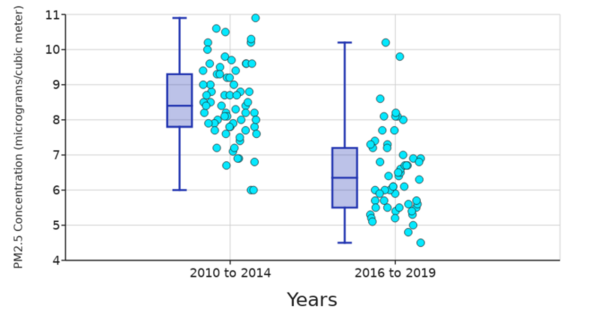
In this study, the authors use aerosol optical depth data to determine if aerosol levels were lower in major metropolitan areas around the world during the COVID-19 pandemic.
Read More...Testing antimicrobial properties of common household spices in a real-world scenario
In this article the authors look at the ability of spices to reduce microbial load on a cutting surface by comparing growth of bacteria cultured before and after cleaning with various spice mixtures.
Read More...