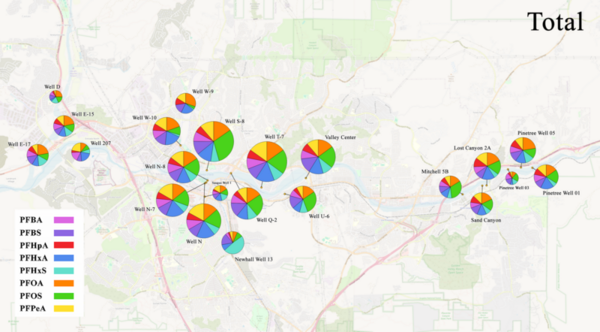
The authors analyzed biosolids from five Wisconsin wastewater treatment plants and suggest using KBr pellet FTIR as a simple and rapid method to start characterizing P species in biosolids.
Read More...Fourier-Transform Infrared (FTIR) spectroscopy analysis of seven wisconsin biosolids
The authors analyzed biosolids from five Wisconsin wastewater treatment plants and suggest using KBr pellet FTIR as a simple and rapid method to start characterizing P species in biosolids.
Read More...Effects of airport runoff pollution on water quality in bay area sites near San Francisco and Oakland airports
In this study, the authors sample water at different points closer and closer to two different airports to determine if these airports may be contributing to water pollution, specifically by measuring metals, nitrates, and pH.
Read More...The Effect of Wind Mitigation Devices on Gabled Roofs
The purpose of this study was to test devices installed on a gabled roof to see which reduced the actual uplift forces best. Three gabled birdhouse roofs were each modified with different mitigation devices: a rounded edge, a barrier shape, or an airfoil. The barrier edge had no significant effect on the time for the roof to blow off. The addition of airfoil devices on roofs, specifically in areas that are prone to hurricanes such as Florida, could keep roofs in place during hurricanes, thus reducing insurance bills, overall damage costs, and the loss of lives.
Read More...Impact of Soil Productivity on the Growth of Two Meyer Lemon Trees
Here, the authors aimed to apply home soil testing to identify the cause of the growth differences between two lemon trees. They hypothesized that differences in physical and chemical soil characteristics were influencing differences in soil productivity and plant growth. Overall, the study demonstrated the effectiveness of home soil testing to characterize soils and help homeowners solve common gardening problems.
Read More...Dune flora can emerge from seed islands (Concon, Chile)
In the field of ecology, little is known about how plant communities originate. Through the process of characterizing dunes, mounds of sand formed by the wind, and their plant communities we can get to know the physiognomy and floristic composition of the territory. Based on the hypothesis that dune flora can emerge from seed islands: holes in the sand 6 cm deep containing a mixture of seeds, broken branches of shrubbery, and rabbit feces, during spring, the authors determined the composition of 20 seed islands in the sand dunes of Concon, Chile and measured how many seeds germinated in each one.
Read More...The effects of early probiotic supplementation on the germination of Arabidopsis thaliana
The use of fertilizers is associated with an increase in soil degradation, which is predicted to lead to a decrease in crop production within the next decade. Thus, it is critical to find solutions to support crop production to sustain the robust global population. In this study, the authors investigate how probiotic bacteria, like Rhizobium leguminosarum, Bacillus subtilis and Pseudomonas fluorescens, can impact the growth of Arabidopsis thaliana when applied to the seeds.They hypothesized that solutions with multiple bacterial species compared to those with only a single bacterial species would promote seed germination more effectively.
Read More...Ladder Fuel Treatments Effect Burn Area of Forest Fires in Semi-Arid High Elevation Climates
In this study, the authors investigate a timely and important topic: forest fires. More specifically, they use a wildfire simulator to test how ladder fuels effect the burn area of a forest fire. Ladder fuels are fuels that cause a forest fire to rise up from the forest floor to the canopy, which may affect the overall spread. They simulated fire spread with different levels of ladder fuel treatment and found that the spread of a burn area would indeed decrease with increased ladder fuel treatment. These findings have important implications for forest and forest fire management.
Read More...Variations in Heat Absorption and Release of Earth Surfaces During Fall in Laramie, Wyoming
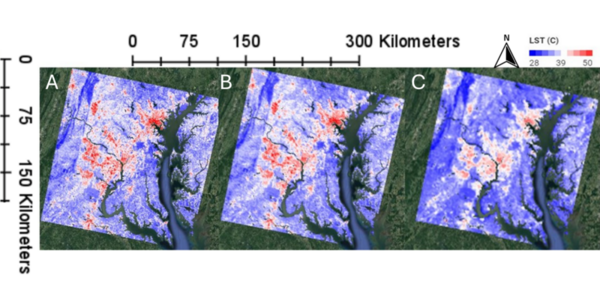
Here the authors investigate the contributions of man-made surfaces in Laramie, Wyoming to the Urban Heat Island (UHI) effect. Heat absorption and release by five surfaces were measured in the autumn of 2018. By recording temperatures of man-made and natural surfaces at early morning, mid-afternoon, and evening using an infrared thermometer, the authors determined that man-made surfaces retained more heat in fall than natural surfaces.
Read More...Presoaking Seeds with Vinegar Improves Seed Development and Drought Tolerance in Maize Plants
Climate change has contributed to the increasing annual temperatures around the world and poses a grave threat to Maize crops. Two methods proven to help combat plant drought stress effects are presoaking seeds (seeds are soaked in a liquid before planting) and the application of Acetic Acid (vinegar) to soil. The purpose of this experiment was to explore if combining these two methods by presoaking seeds with a vinegar solution can improve the seed development and plant drought tolerance of Maize plants during drought conditions.
Read More...Banana-based Biofuels for Combating Climate Change: How the Composition of Enzyme Catalyzed Solutions Affects Biofuel Yield
The authors investigate whether amylase or yeast had a more prominent role in determining the bioethanol concentration and bioethanol yield of banana samples. They hypothesized that amylase would have the most significant impact on the bioethanol yield and concentration of the samples. They found that while yeast is an essential component for producing bioethanol, the proportion of amylase supplied through a joint amylase-yeast mixture has a more significant impact on the bioethanol yield. This study provides a greater understanding of the mechanisms and implications involved in enzyme-based biofuel production, specifically of those pertaining to amylase and yeast.
Read More...