Browse Articles

Development of novel biodegradable bioplastics for packaging film using mango peels

Wang et al. | Apr 06, 2025

Development of novel biodegradable bioplastics for packaging film using mango peels
Image credit: JACQUELINE BRANDWAYN

Here the authors explored the development of biodegradable bioplastic films derived from mango peels as a sustainable solution to plastic pollution and greenhouse gas emissions from fruit waste. They optimized the film's mechanical properties and water resistance through adjusting processing conditions and incorporating plasticizers and a hydrophobic coating, ultimately demonstrating its potential as a bacteriostatic and biodegradable alternative to conventional plastic food wrap.

Read More...

Wind Resistance and Automobile Shapes

Neelakantan et al. | Jan 25, 2019

Wind Resistance and Automobile Shapes

Energy efficiency is becoming more important as we struggle to find better, more sustainable energy sources to power our planet; the car industry is no exception. In this article, the authors examine the effect of shape on automobile aerodynamics By finding the shape that makes cars less resistant to wind, and therefore more energy efficient, can help the automobile industry make better, more eco-friendly cars that are also cheaper to operate.

Read More...

Utilizing a Wastewater-Based Medium for Engineered Saccharomyces cerevisiae for the Biological Production of Fatty Alcohols and Carboxylic Acids to Replace Petrochemicals

Ramesh et al. | Oct 02, 2019

Utilizing a Wastewater-Based Medium for Engineered <em>Saccharomyces cerevisiae</em> for the Biological Production of Fatty Alcohols and Carboxylic Acids to Replace Petrochemicals

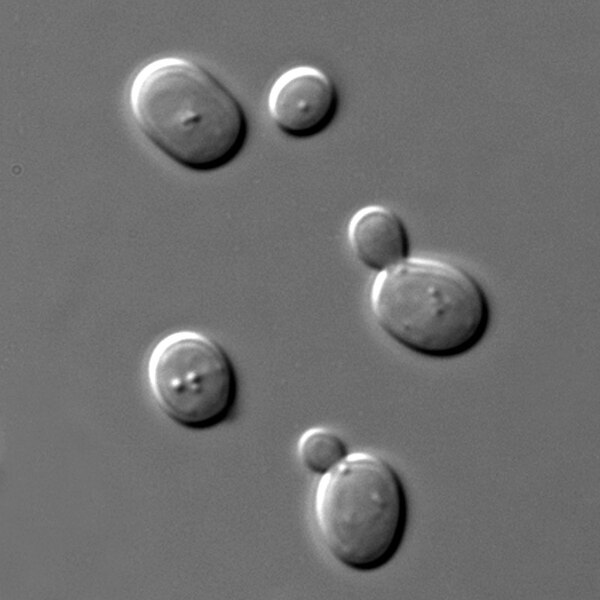
Saccharomyces cerevisiae yeast is used to produce bioethanol, an alternative to fossil fuels. In this study, authors take advantage of this well studied yeast by genetically engineering them to increase fatty acid biosynthesis and culturing in a cost-effective wastewater based medium; potentially providing a sustainable alternative to petrochemicals.

Read More...

Mathematical modeling of plant community composition for urban greenery plans

Fang et al. | Jul 05, 2023

Mathematical modeling of plant community composition for urban greenery plans
Image credit: CHUTTERSNAP

Here recognizing the importance of urban green space for the health of humans and other organisms, the authors investigated if mathematical modeling can be used to develop an urban greenery management plan with high eco-sustainability by calculating the composition of a plant community. They optimized and tested their model against green fields in a Beijing city park. Although the compositions predicted by their models differed somewhat from the composition of testing fields, they conclude that by using a mathematical model such as this urban green space can be finely designed to be ecologically and economically sustainable.

Read More...

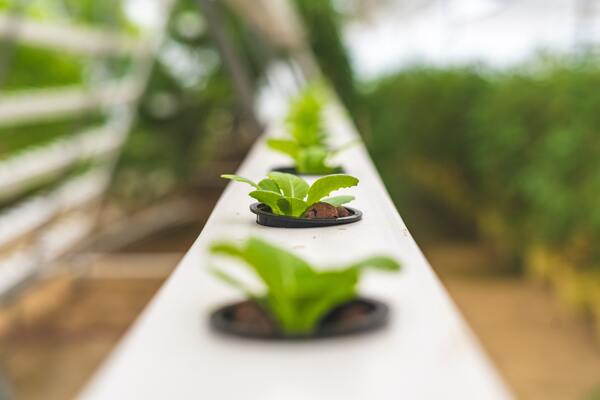
A Scientific Investigation of Alternative Growing Methods to Cultivate Lactuca sativa

Fishback et al. | Apr 23, 2020

A Scientific Investigation of Alternative Growing Methods to Cultivate Lactuca sativa

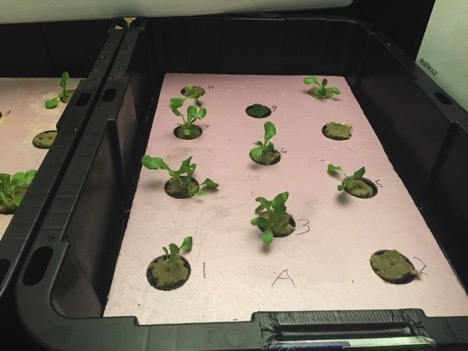
In this article, the authors compare different resource-efficient farming methods for the vegetable Lactuca sativa. They compared hydroponics (solid growth medium with added nutrients) to aquaponics (water with fish waste to provide nutrients) and determined efficacy by measuring plant height over time. While both systems supported plant growth, the authors concluded that aquaponics was the superior method for supporting Lactuca sativa growth. These findings are of great relevance as we continue to find the most sustainable and efficient means for farming.

Read More...

Vineyard vigilance: Harnessing deep learning for grapevine disease detection

Mandal et al. | Aug 21, 2024

Vineyard vigilance: Harnessing deep learning for grapevine disease detection

Globally, the cultivation of 77.8 million tons of grapes each year underscores their significance in both diets and agriculture. However, grapevines face mounting threats from diseases such as black rot, Esca, and leaf blight. Traditional detection methods often lag, leading to reduced yields and poor fruit quality. To address this, authors used machine learning, specifically deep learning with Convolutional Neural Networks (CNNs), to enhance disease detection.

Read More...

An exploration of western mosquitofish as the animal component in an aquaponic farming system

Medina et al. | Dec 03, 2024

An exploration of western mosquitofish as the animal component in an aquaponic farming system
Image credit: The authors

Aquaponics (the combination of aquatic plant farming with fish production) is an innovative farming practice, but the fish that are typically used, like tilapia, are expensive and space-consuming to cultivate. Medina and Alvarez explore other options test if mosquitofish are a viable option in the aquaponic cultivation of herbs and microgreens.

Read More...

Groundwater prediction using artificial intelligence: Case study for Texas aquifers

Sharma et al. | Apr 19, 2024

Groundwater prediction using artificial intelligence: Case study for Texas aquifers

Here, in an effort to develop a model to predict future groundwater levels, the authors tested a tree-based automated artificial intelligence (AI) model against other methods. Through their analysis they found that groundwater levels in Texas aquifers are down significantly, and found that tree-based AI models most accurately predicted future levels.

Read More...