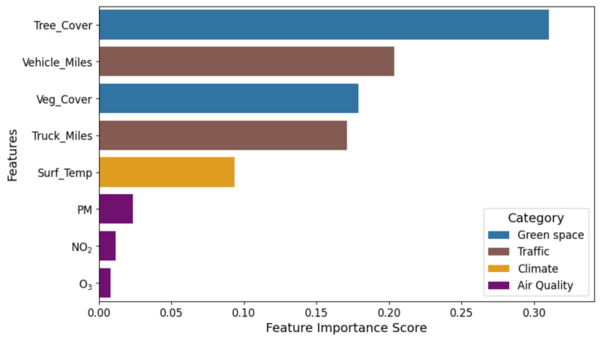
This study explored how green spaces, climate, traffic, and air quality (GCTA) collectively influence asthma-related emergency department visits in the U.S using machine learning models and explainable AI.
Read More...Environmental contributors of asthma via explainable AI: Green spaces, climate, traffic & air quality
This study explored how green spaces, climate, traffic, and air quality (GCTA) collectively influence asthma-related emergency department visits in the U.S using machine learning models and explainable AI.
Read More...Photometric analysis of Type Ia Supernova 2023jvj
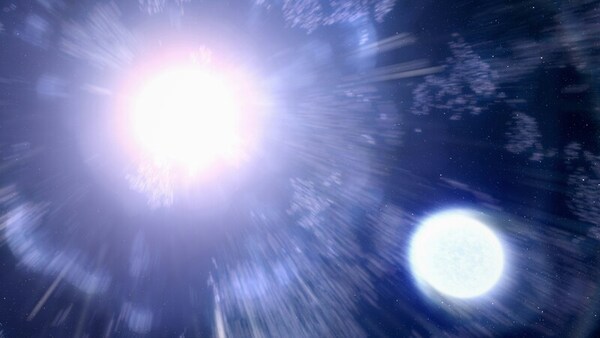
Here the authors conducted a photometric analysis of Supernova (SN) 20234jvj. Through generating a light curve, they determined SN 2023jvj to be a Type Ia supernova located approximately 1.246e8 parasecs away from Earth.
Read More...Assessing the accuracy and efficiency of simplified gridded ion thruster simulations
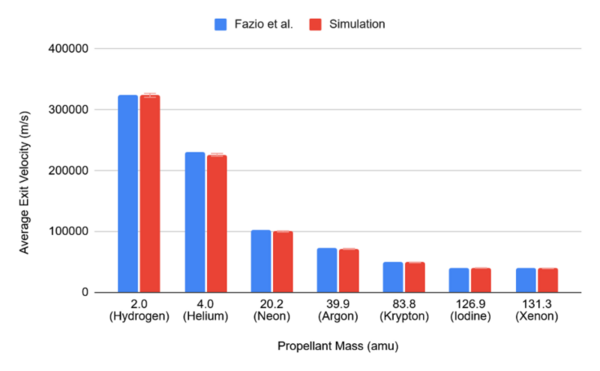
The authors used a particle-in-cell simulation to determine the effects on extensive and intensive metrics. They found that preliminary simulations could be run quickly with much lower particle counts before more technically demanding and comprehensive simulations are performed.
Read More...School sustainability: The implications of implementing living walls at schools for air purification
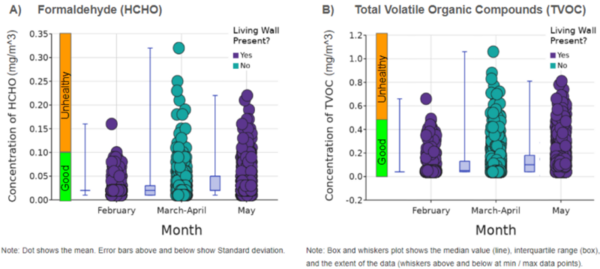
The authors compare air quality in the presence and absence of a living wall in a high school hallway in Brooklyn, NY.
Read More...Automated classification of nebulae using deep learning & machine learning for enhanced discovery
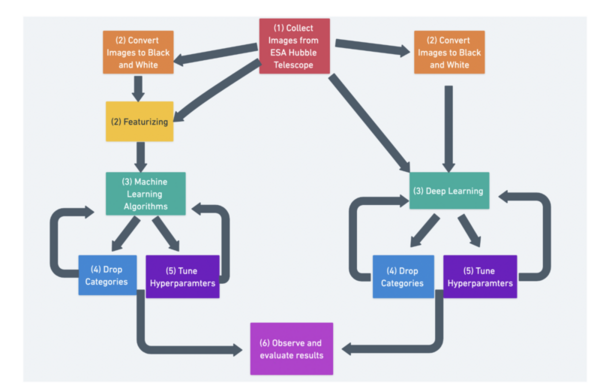
There are believed to be ~20,000 nebulae in the Milky Way Galaxy. However, humans have only cataloged ~1,800 of them even though we have gathered 1.3 million nebula images. Classification of nebulae is important as it helps scientists understand the chemical composition of a nebula which in turn helps them understand the material of the original star. Our research on nebulae classification aims to make the process of classifying new nebulae faster and more accurate using a hybrid of deep learning and machine learning techniques.
Read More...Simulation of cosmic rays in the presence of a magnetic field
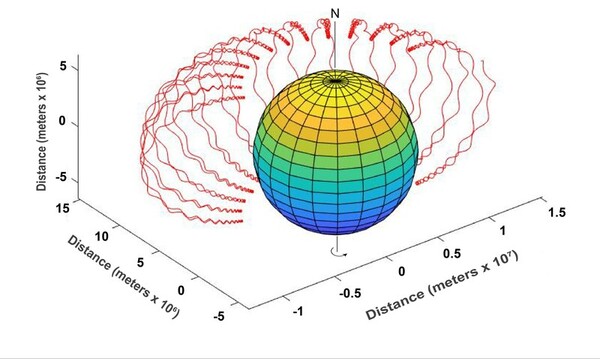
In this study the authors looked the trajectories of cosmic rays moving through a dipole field. They found that the trajectories of cosmic rays are determined by a particle's energy and interaction with Earth's B field.
Read More...Lack of correlation between odor composition and neuron response in the olfactory cortex of mice
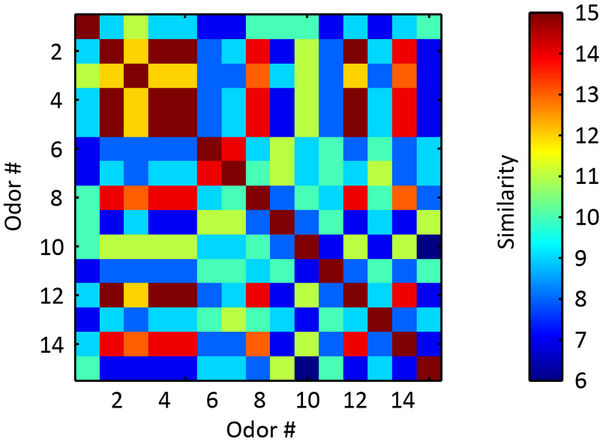
To address whether odor sensory circuits are organized topographically, the authors investigate whether the neuronal responses to similar odors amongst different mice mapped similarly in brain.
Read More...Understanding the battleground of identity fraud
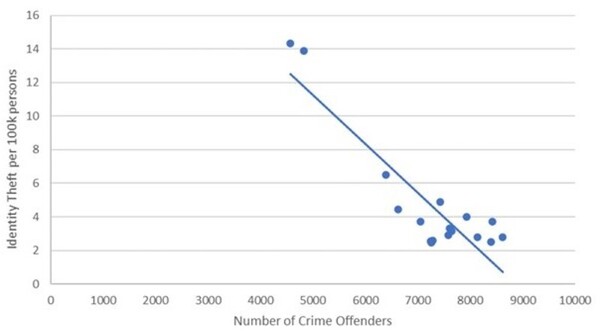
The authors looked at variables associated with identity fraud in the US. They found that national unemployment rate and online banking usage are among significant variables that explain identity fraud.
Read More...Analysis of Milorganite’s ability to sustain growth of Ocimum basilicum in simulated Martian soil
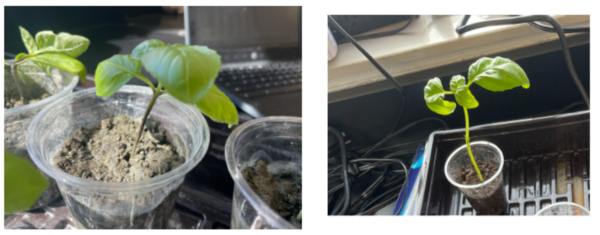
The authors test whether basil can grow in a simulated Martian soil improved with a waste-based fertilizer called Milorganite.
Read More...Effects of microconvection on bubble displacement during water electrolysis under microgravity
The authors looked at the effect of microconvection on displacing bubbles during electrolysis. They found that microconvection does have a role in bubble displacement in water electrolysis which can be applied in the production of hydrogen.
Read More...