
The authors propose and test a method that would allow for the generation of a magnetic field on Mars sufficient to support future colonization.
Read More...Generation of a magnetic field on Mars
The authors propose and test a method that would allow for the generation of a magnetic field on Mars sufficient to support future colonization.
Read More...Use of drone with sodium hydroxide carriers to absorb carbon dioxide from ambient air
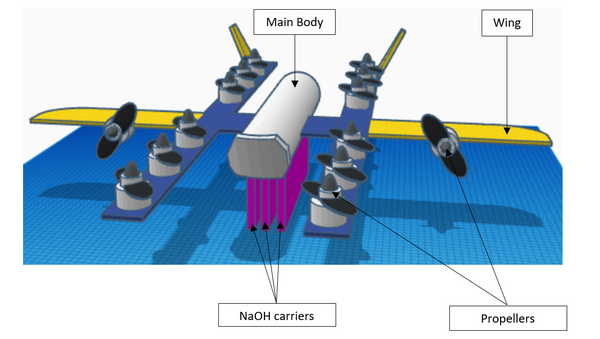
In this study, the authors address the current climate concern of high CO2 levels by testing solid forms of hydroxide for CO2 reduction and designing a drone to fly it in ambient air!
Read More...Differentiating characteristics in exoplanet host stars
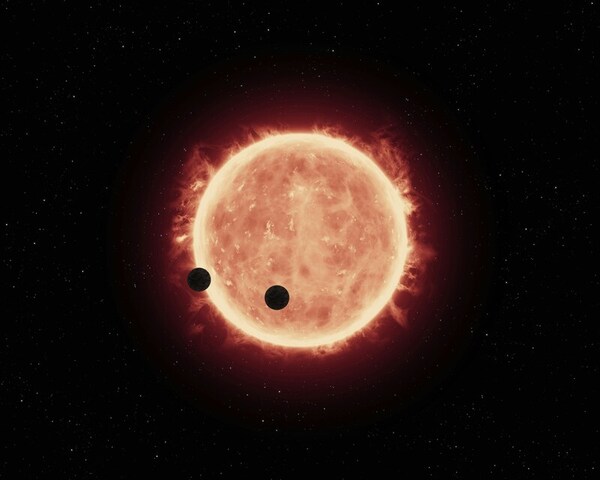
The authors looked at what conditions with host stars favor development of exoplanets.
Read More...Modelling effects of alkylamines on sea salt aerosols using the Extended Aerosols and Inorganics Model

With monitoring of climate change and the evolving properties of the atmosphere more critical than ever, the authors of this study take sea salt aerosols into consideration. These sea salt aerosols, sourced from the bubbles found at the surface of the sea, serve as cloud condensation nuclei (CCN) and are effective for the formation of clouds, light scattering in the atmosphere, and cooling of the climate. With amines being involved in the process of CCN formation, the authors explore the effects of alkylamines on the properties of sea salt aerosols and their potential relevance to climate change.
Read More...Examining Heat Recovery from Electric Light Bulbs Using Thermoelectric Generators
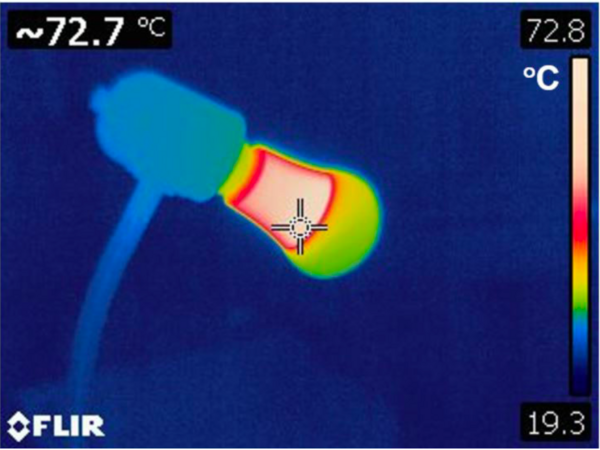
Here the author investigates how much heat energy is output and recovered from a conventional electric light bulb.
Read More...Determining the Habitable Zone Around a Star
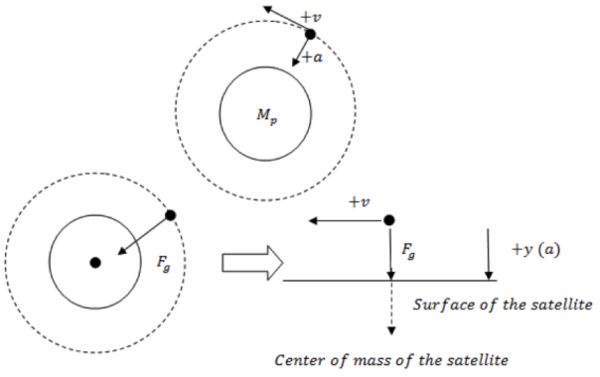
Life requires many things, including a hospitable temperature, elements, and energy. Here the authors utilize Newton's laws of physics and information relating a star's luminosity and temperature to determine the minimum and maximum masses and luminosities of planets and stars that would support life as we know it. This work can be used to determine the likelihood of a planet being able to support life based on attributes we can measure from here on Earth.
Read More...A low-cost, Arduino-based system for real-time abiotic monitoring of a local watershed
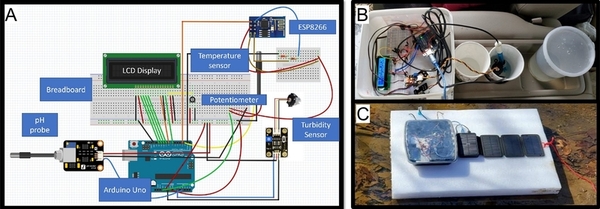
The authors monitored water quality over time looking for influences from construction and deforestation.
Read More...Building an affordable model wave energy converter using a magnet and a coil

Here, seeking to identify a method to locally produce and capture renewable energy in Hawai'i and other island communities, the authors built and tested a small-scale model wave energy converter. They tested various configurations of a floated magnet surrounded by a wire coal, where the motion of the magnet due to a wave results in induction current in the coil. While they identified methods to increase the voltage and current generated, they also found that corrosion results in significant deterioration.
Read More...Optimizing Interplanetary Travel Using a Genetic Algorithm
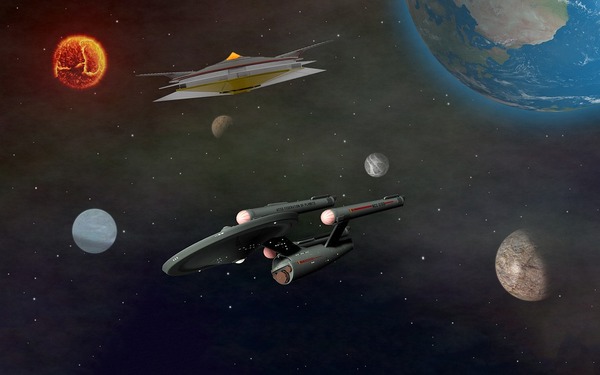
In this work, the authors develop an algorithm that solves the problem of efficient space travel between planets. This is a problem that could soon be of relevance as mankind continues to expand its exploration of outer space, and potentially attempt to inhabit it.
Read More...The impact of political ideologies on renewable energy adoption
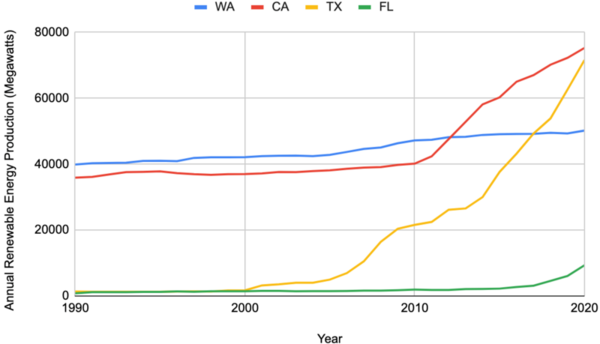
The authors compare rates of renewable energy adoption between states that historically vote for democrats versus republicans in presidential elections.
Read More...