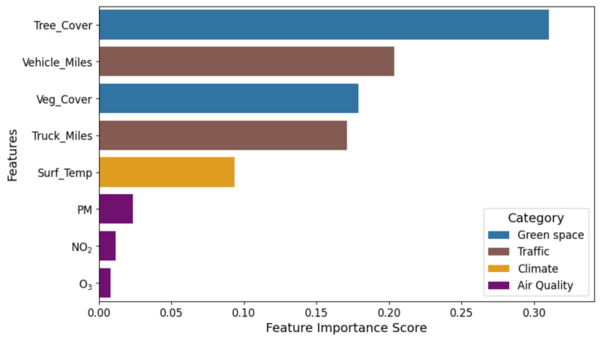
This study explored how green spaces, climate, traffic, and air quality (GCTA) collectively influence asthma-related emergency department visits in the U.S using machine learning models and explainable AI.
Read More...Environmental contributors of asthma via explainable AI: Green spaces, climate, traffic & air quality
This study explored how green spaces, climate, traffic, and air quality (GCTA) collectively influence asthma-related emergency department visits in the U.S using machine learning models and explainable AI.
Read More...Behavioral Longevity: The Impact of Smoking, Alcohol Consumption, and Obesity on Life Expectancy
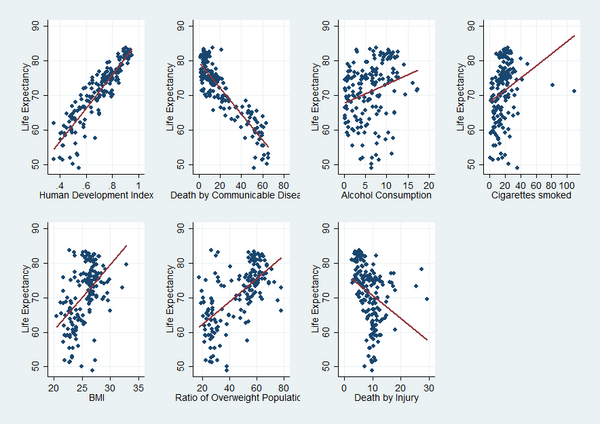
In this article, the authors look into what is already known about the factor affecting longevity and determine the importance of behavioral factors including alcohol consumption, smoking, and obesity on longevity. The authors quantify data from over 150 countries and, interestingly, find that the impact each factor has on longevity is at least in part dependent on the country's economic development status. Overall, they conclude that an average person’s life expectancy can increase by more than 3 years if smoking and alcohol consumption is reduced by a half and weight is decreased by 10%.
Read More...Effects of Various Environmental Factors on Stomatal Density, Area, and Potential Conductance Index

In this study, the authors investigate the combinatorial effects of CO2 plus other environmental factors including salinity, temperature, acidity, and drought on how effectively plants can transport water and carbon through their stomata.
Read More...Simulating natural selection via autonomous agents: Environmental factors create unstable equilibria
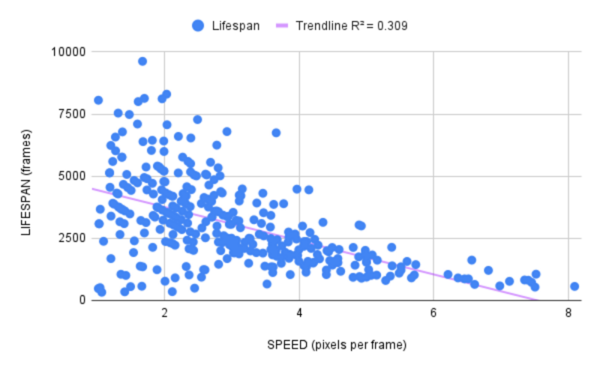
Natural selection shapes the evolution of all organisms, and one question of interest is whether natural selection will reach a "stopping point": a stable, ideal, value for any particular trait. Madhan and Kanagavel tackle this question by building a computer simulation of trait evolution in organisms.
Read More...The impact of greenhouse gases, regions, and sectors on future temperature anomaly with the FaIR model
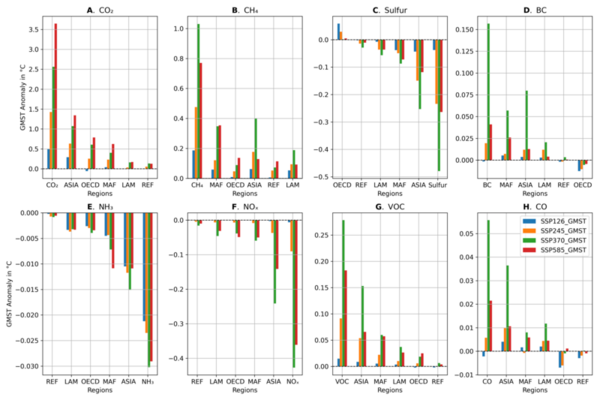
This study explores how different economic sectors, geographic regions, and greenhouse gas types might affect future global mean surface temperature (GMST) anomalies differently from historical patterns. Using the Finite Amplitude Impulse Response (FaIR) model and four Shared Socioeconomic Pathways (SSPs) — SSP126, SSP245, SSP370, and SSP585 — the research reveals that future contributions to GMST anomalies.
Read More...Polluted water tested from the Potomac River affects invasive species plant growth

Here recognizing the potential for pollution to impact the ecosystems of local waterways, the authors investigated the growth of tiger lilies, which are invasive to the Potomac River, in relation to the level of pollution. The authors report that increasing levels of pollution led to increased growth of the invasive species based on their study.
Read More...The impacts of different Al(NO3)3 concentrations on the mitotic index of Allium sativum

Recognizing the increasing threat of acid deposition inn soil through the reaction of NOx and SO2 pollutants with water in Spain, the authors investigates the effects of Al(NO3)3 concentrations on the health of Allium sativum. By tracking its mitotic index, they found a negative exponential correlation between Al(NO3)3 concentrations and the mitotic index of A. sativum.
Read More...A comparison of starches and plasticizers for biopolymer synthesis and degradation
Effects of plant-derived smoke water on germination and growth in stressed plants
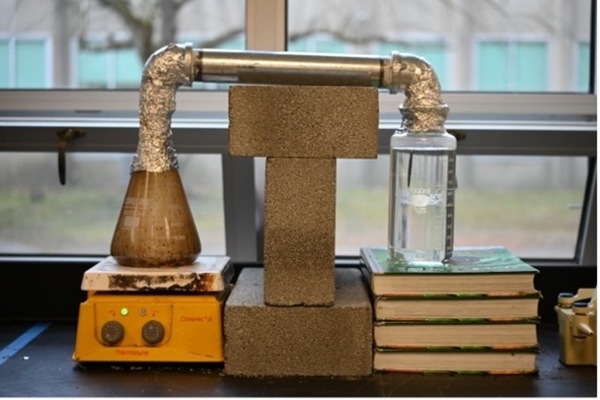
Here the authors investigated the potential of plant-derived smoke water to mitigate the negative impacts of abiotic stressors, such as heat, salinity, and water fluctuations, on the germination and growth of various agricultural crops. Their findings suggest that smoke water, specifically from buckwheat, pea, and radish, significantly improves plant resilience against drought and excessive water stress, offering a viable strategy to bolster food security in the face of climate change.
Read More...Behaviors and attitudes concerning disposable masks and the environment: A D.C. high school case study

The authors looked at student behaviors around disposal of face masks. The goal of the study was to bring awareness to improper mask disposal and how the resulting litter contributes to overall environmental pollution.
Read More...