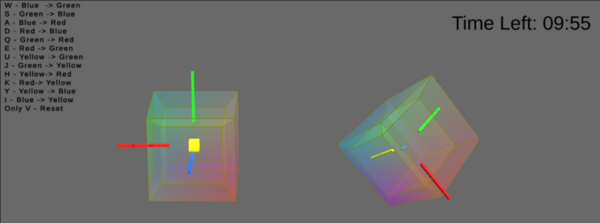
The authors looked at the ability subjects to rotation a 4D cube and how the ability to practice cube rotation impact their ability to understand 4D space.
Read More...Human comprehension of 4-dimensional rotation
The authors looked at the ability subjects to rotation a 4D cube and how the ability to practice cube rotation impact their ability to understand 4D space.
Read More...Initiating astrocyte to neuron transdifferentiation via miR-124a: implications in neurodegenerative disease
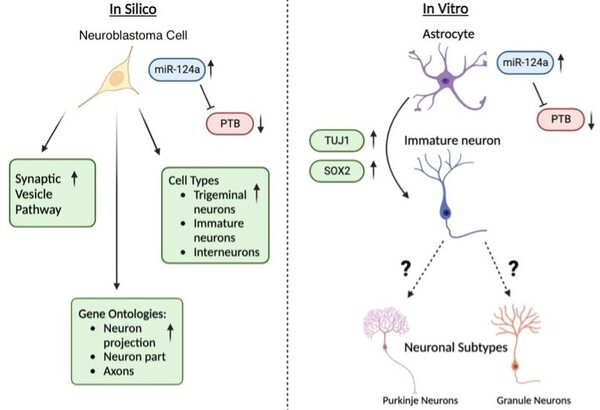
The authors looked at whether they could induce the formation of new neurons from astrocytes via the upregulation of a microRNA (miR-124a). They found that upregulation of miR-124a started transdifferentiation of neurons, but was not enough to lead to full conversion of astrocytes to neurons.
Read More...Understanding the battleground of identity fraud
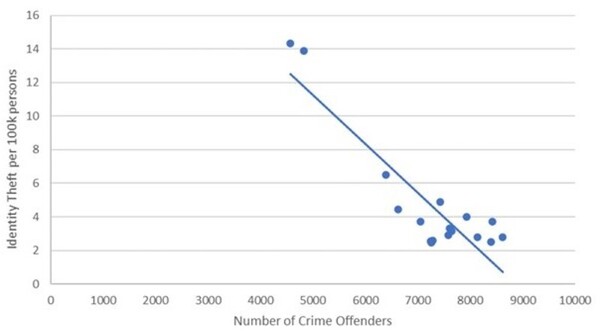
The authors looked at variables associated with identity fraud in the US. They found that national unemployment rate and online banking usage are among significant variables that explain identity fraud.
Read More...EEG study of virtual learning demonstrates worsened learning outcomes and increased mirror neuron activation
In this article, Choi and Rossitto investigated the limitations of virtual learning by examining in-person dance learning compared to virtual dance learning while wearing EEG headsets. They found that in-person learners outperformed virtual learners and that virtual learners had higher mirror neuron activity as assessed by Mu rhythm power.
Read More...The influence of working memory on auditory category learning in the presence of visual stimuli
Here in an effort to better understand how our brains process and remember different categories of information, the authors assessed working memory capacity using an operation span task. They found that individuals with higher working memory capacity had higher overall higher task accuracy regardless of the type of category or the type of visual distractors they had to process. They suggest this may play a role in how some students may be less affected by distracting stimuli compared to others.
Read More...A Crossover Study Comparing the Effect of a Processed vs. Unprocessed Diet on the Spatial Learning Ability of Zebrafish
The authors compared the short-term effects of processed versus unprocessed food on spatial learning and survival in zebrafish, given the large public concern regarding processed foods. By randomly assigning zebrafish to a diet of brine shrimp flakes (processed) or live brine shrimp (unprocessed), the authors show while there is no immediate effect on a fish's decision process between the two diets, there are significant correlations between improved learning and stress response with the unprocessed diet.
Read More...Functional Network Connectivity: Possible Biomarker for Autism Spectrum Disorders (ASD)
Autism spectrum disorder (ASD) is a complex neurodevelopmental disorder and is difficult to diagnose in young children. Here magnetoencephalography was used to compare the brain activity in patients with ASD to patients in a control group. The results show that patients with ASD have a high level of activity in different areas of the brain than those in the control group.
Read More...