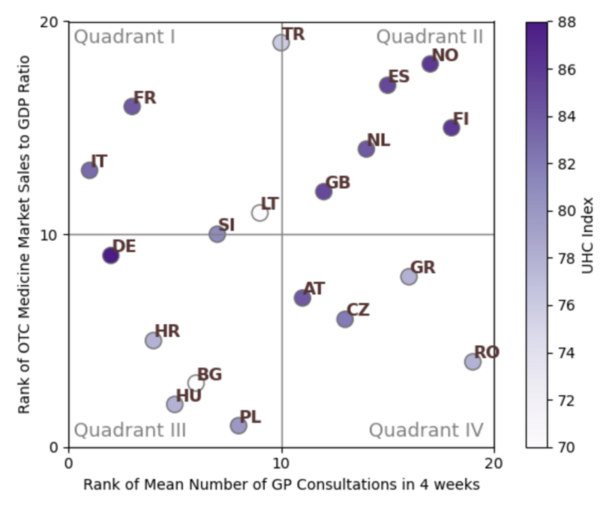
The discussion surrounding self-medication with non-prescription medicines has gained significance in healthcare and public health, particularly given the global increase in consumption of non-prescription drugs. This study aimed to examine the association between the frequency of general practitioner (GP) consultations and the proportion of economic resources spent on OTC medicine.
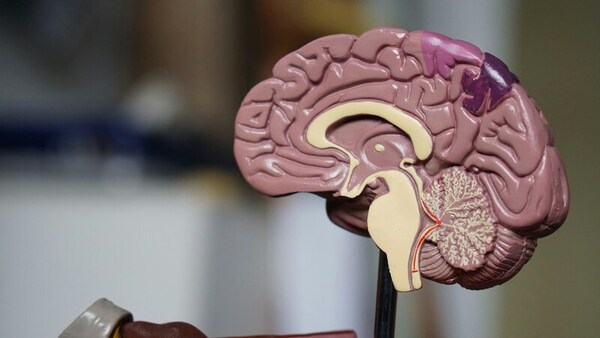
Here the authors sought to investigate whether and how cerebral stroke and other health-related variables are influenced together and amongst each other by using statistical analyses. Their analysis suggested relations between nearly all variables considered, with the strongest association between having heart disease and a cerebral stroke.
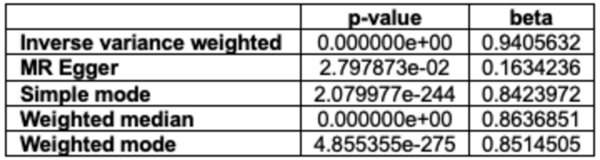
Autism Spectrum Disorder (ASD) and Alzheimer's Disease (AD) are distinct conditions, but research suggests a link, as individuals with ASD are 2.5 times more likely to develop AD. A study employing genome-wide association studies and Mendelian randomization revealed shared genetic factors, particularly in synaptic regulation pathways, that may increase the risk of AD in those with ASD. These findings provide insights into the genetic underpinnings connecting the two disorders.
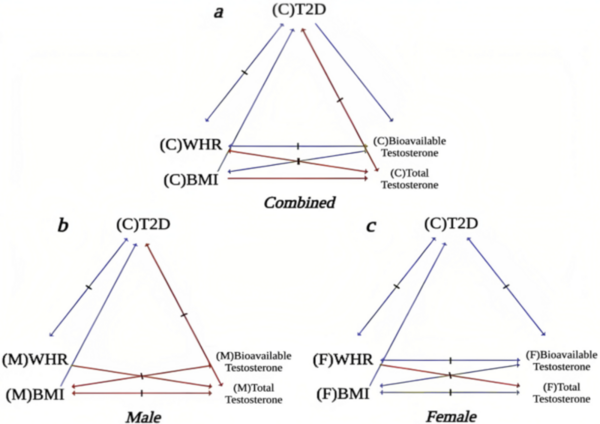
The study explored the role of testosterone beyond its well-established effects on male sex characteristics, focusing on its association with non-communicable diseases (NCDs) like obesity and type 2 diabetes (T2D), using Mendelian randomization (MR) analysis on genomic data.
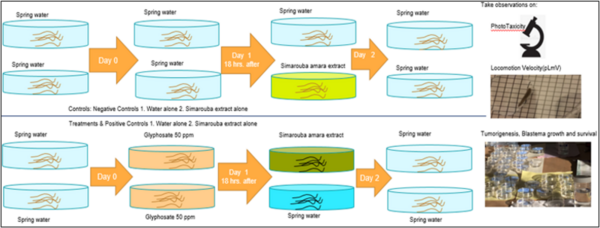
According to the World Health Organization, cancer is a leading cause of death globally. The disease’s prevalence is rapidly increasing in association with factors including the increased use of pesticides and herbicides, such as glyphosate, which is one of the most widely used herbicide ingredients. Natural antioxidants and phytochemicals are being tested as anti-cancer agents due to their antiproliferative, antioxidative, and pro-apoptotic properties. Thus, we aimed to investigate the potential role of S. amara extract as a therapeutic agent against glyphosate-induced toxicity and tumor-like morphologies in regenerating and homeostatic planaria (Dugesia dorotocephala).
The lexical decision task is designed to test aspects of vocabulary retrieval from short-term and long-term memory by prompting the subject to differentiate between words and non-words. From this task, researchers can determine the effects of certain stimuli on linguistic processing. Numerous studies have investigated the effects of music on various cognitive capacities, like memory and vocabulary. In the current study, we hypothesized that participants would show greater accuracy rates on the lexical decision task when exposed to a selected piece of classical music while completing the task, as compared to completing the task in silence. We tested this hypothesis on a group of 25 participants who completed the lexical decision task once in silence and once while listening to Beethoven's “Moonlight Sonata, 1st Movement”. The results suggest a positive association between the effects of classical background music and improved accuracy. Our results indicate that listening to certain types of music may enhance linguistic processes such as reading and writing. Further research with a larger group of participants is necessary to better understand the association between music and linguistic processing abilities.
Breast cancer is the most common cancer in women, with approximately 300,000 diagnosed with breast cancer in 2023. It ranks second in cancer-related deaths for women, after lung cancer with nearly 50,000 deaths. Scientists have identified important genetic mutations in genes like BRCA1 and BRCA2 that lead to the development of breast cancer, but previous studies were limited as they focused on specific populations. To overcome limitations, diverse populations and powerful statistical methods like genome-wide association studies and whole-genome sequencing are needed. Explainable artificial intelligence (XAI) can be used in oncology and breast cancer research to overcome these limitations of specificity as it can analyze datasets of diagnosed patients by providing interpretable explanations for identified patterns and predictions. This project aims to achieve technological and medicinal goals by using advanced algorithms to identify breast cancer subtypes for faster diagnoses. Multiple methods were utilized to develop an efficient algorithm. We hypothesized that an XAI approach would be best as it can assign scores to genes, specifically with a 90% success rate. To test that, we ran multiple trials utilizing XAI methods through the identification of class-specific and patient-specific key genes. We found that the study demonstrated a pipeline that combines multiple XAI techniques to identify potential biomarker genes for breast cancer with a 95% success rate.
Trihalomethanes, probable human carcinogens, are commonly found disinfection by-products (DBPs) in public water systems (PWS). The authors investigated the correlation between trihalomethane concentrations and socioeconomic factors in New York State, finding a negative correlation between median household income and trihalomethane concentrations. The inverse association between trihalomethanes and household income may indicate socioeconomic disparity regarding drinking water quality and the need for improved efforts to assist small- and medium-sized community water systems to lower DBP levels in New York State.
In the United States, there are currently 17.8 million affected by atopic dermatitis (AD), commonly known as eczema. It is characterized by itching and skin inflammation. AD patients are at higher risk for infections, depression, cancer, and suicide. Genetics, environment, and stress are some of the causes of the disease. With the rise of personalized medicine and the acceptance of gene-editing technologies, AD-related variations need to be identified for treatment. Genome-wide association studies (GWAS) have associated the Filaggrin (FLG) gene with AD but have not identified specific problematic single nucleotide polymorphisms (SNPs). This research aimed to refine known SNPs of FLG for gene editing technologies to establish a causal link between specific SNPs and the diseases and to target the polymorphisms. The research utilized R and its Bioconductor packages to refine data from the National Center for Biotechnology Information's (NCBI's) Variation Viewer. The algorithm filtered the dataset by coding regions and conserved domains. The algorithm also removed synonymous variations and treated non-synonymous, frameshift, and nonsense separately. The non-synonymous variations were refined and ordered by the BLOSUM62 substitution matrix. Overall, the analysis removed 96.65% of data, which was redundant or not the focus of the research and ordered the remaining relevant data by impact. The code for the project can also be repurposed as a tool for other diseases. The research can help solve GWAS's imprecise identification challenge. This research is the first step in providing the refined databases required for gene-editing treatment.
Economic disruptions and housing instabilities have for long propelled a homelessness epidemic among adults and youth in the United States. The COVID-19 pandemic has accelerated this phenomenon with a 2.2% increase in the number of homeless individuals and more than 70% of Americans fearing this outcome for themselves. This study aimed to analyze the perception of homelessness in two groups: Those who have previously experienced and overcome homelessness and those who are at-risk for experiencing the same. The study analyzed publicly available Reddit posts by people in both groups and found that at-risk individuals tended to associate primarily fearful emotions with the event, and those who had overcome homelessness tended to view the event in a negative context. These results may encourage the establishment of resources to support the currently homeless and help them transition into society, and services to help them cope with negative emotions, as negative attitudes have been shown to decrease life expectancy.