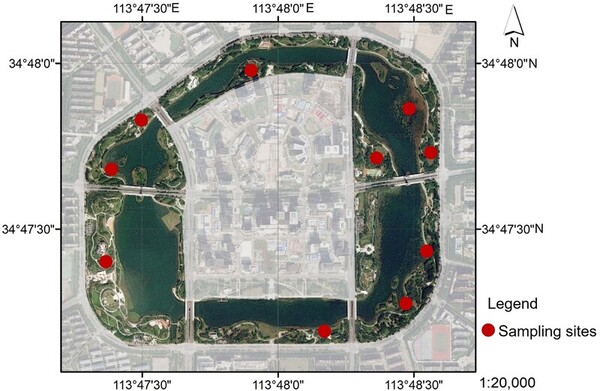
The authors access a panel of leaf traits across ten deciduous tree species to explore adaptive strategies between large and small trees.
Read More...Variation, relationship, and trade-offs of leaf traits in large and small deciduous broadleaf tree species
The authors access a panel of leaf traits across ten deciduous tree species to explore adaptive strategies between large and small trees.
Read More...Evaluating machine learning algorithms to classify forest tree species through satellite imagery

Here, seeking to identify an optimal method to classify tree species through remote sensing, the authors used a few machine learning algorithms to classify forest tree species through multispectral satellite imagery. They found the Random Forest algorithm to most accurately classify tree species, with the potential to improve model training and inference based on the inclusion of other tree properties.
Read More...Effects of common supplements on human platelet aggregation in vitro
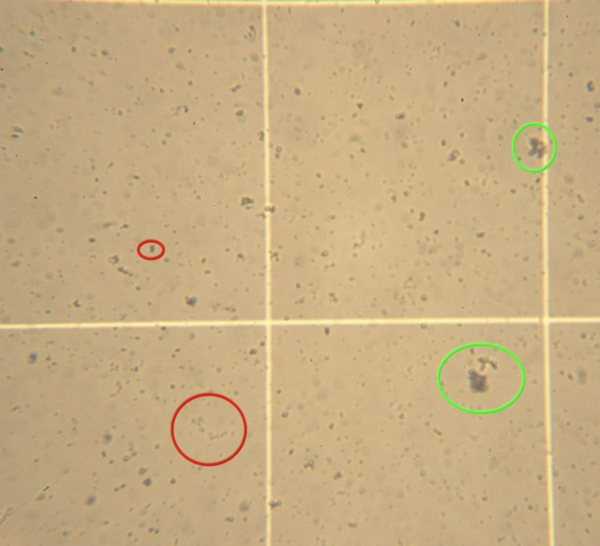
There is a need for safe and effective therapies to prevent platelet aggregation associated with cardiovascular diseases. Prabhakar and Prabhakar test to see whether dietary supplements claiming to reduce cardiovascular disease risk will affect aggregation of human platelets.
Read More...Automated classification of nebulae using deep learning & machine learning for enhanced discovery
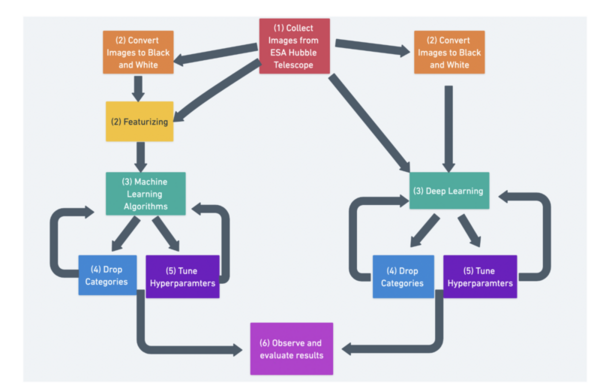
There are believed to be ~20,000 nebulae in the Milky Way Galaxy. However, humans have only cataloged ~1,800 of them even though we have gathered 1.3 million nebula images. Classification of nebulae is important as it helps scientists understand the chemical composition of a nebula which in turn helps them understand the material of the original star. Our research on nebulae classification aims to make the process of classifying new nebulae faster and more accurate using a hybrid of deep learning and machine learning techniques.
Read More...OLED Screens Better Exhibit the Color Black than LCD Screens

There are two types of competing TV screens on the market, organic light emitting diode (OLED) and liquid crystal display (LCD). The better capability to exhibit black results in higher contrast images. Here, authors compared the ability of the two types of screens to show black in an environment eliminating external light.
Read More...Mapping the Electromagnetic Field in Front of a Microwave Oven
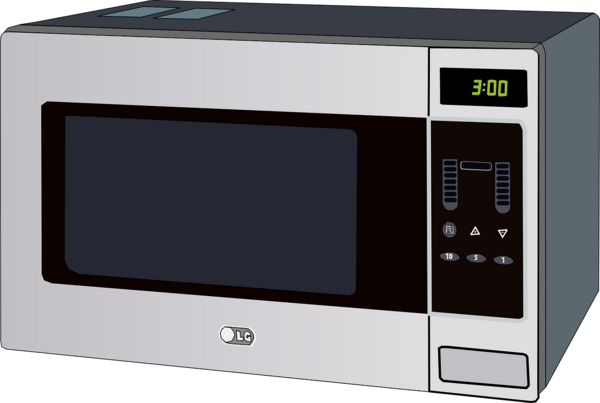
There is limited evidence that extended exposure to an electromagnetic field (EMF) has negative health effects on humans. The authors measured the power density and strength of EMF at different distances and directions in front of a microwave oven, and they discuss the safety of different distances.
Read More...Diamagnetic Solutions Show a Significant Reduction in Flow Rate When Exposed to a Magnetic Field Greater Than or Equal to 0.7 Tesla
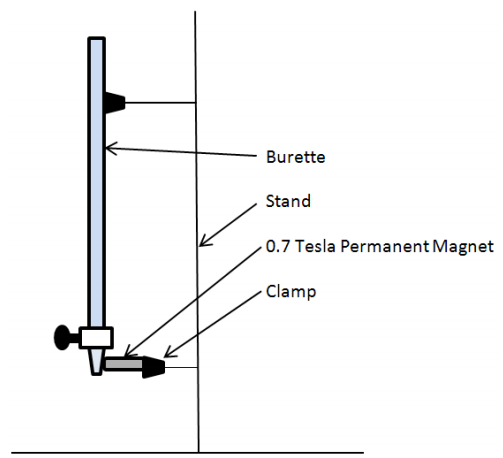
There are complex interactions between water and outside forces such as magnetic fields. This study aims to examine the effects of magnetic forces on the flow rate of water. The alteration of flow rate by magnets could have exciting applications in many fields.
Read More...Gradient boosting with temporal feature extraction for modeling keystroke log data
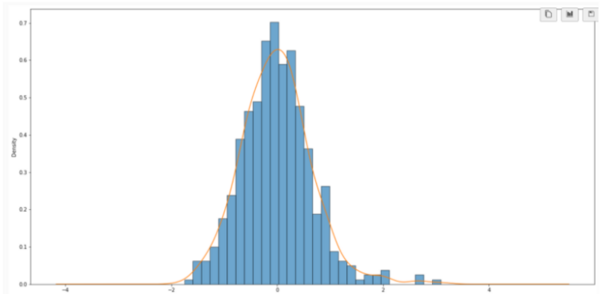
Although there has been great progress in the field of Natural language processing (NLP) over the last few years, particularly with the development of attention-based models, less research has contributed towards modeling keystroke log data. State of the art methods handle textual data directly and while this has produced excellent results, the time complexity and resource usage are quite high for such methods. Additionally, these methods fail to incorporate the actual writing process when assessing text and instead solely focus on the content. Therefore, we proposed a framework for modeling textual data using keystroke-based features. Such methods pay attention to how a document or response was written, rather than the final text that was produced. These features are vastly different from the kind of features extracted from raw text but reveal information that is otherwise hidden. We hypothesized that pairing efficient machine learning techniques with keystroke log information should produce results comparable to transformer techniques, models which pay more or less attention to the different components of a text sequence in a far quicker time. Transformer-based methods dominate the field of NLP currently due to the strong understanding they display of natural language. We showed that models trained on keystroke log data are capable of effectively evaluating the quality of writing and do it in a significantly shorter amount of time compared to traditional methods. This is significant as it provides a necessary fast and cheap alternative to increasingly larger and slower LLMs.
Read More...Copper nanoparticle synthesis using Picea glauca ‘Conica’
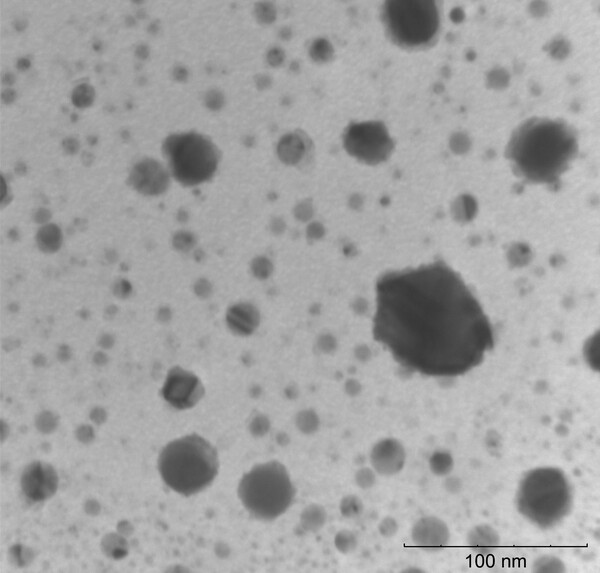
The authors propose a method to recycle Christmas tree needles into a non-toxic reducing agent for synthesizing copper nanoparticles.
Read More...Fluorescein or Green Fluorescent Protein: Is It Possible to Create a Sensor for Dehydration?
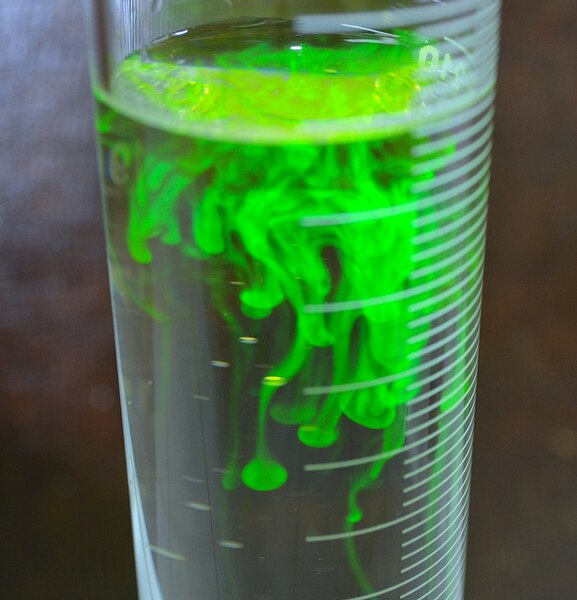
Currently there is no early dehydration detection system using temperature and pH as indicators. A sensor could alert the wearer and others of low hydration levels, which would normally be difficult to catch prior to more serious complications resulting from dehydration. In this study, a protein fluorophore, green fluorescent protein (GFP), and a chemical fluorophore, fluorescein, were tested for a change in fluorescence in response to increased temperature or decreased pH. Reversing the pH change did not restore GFP fluorescence, but that of fluorescein was re-established. This finding suggests that fluorescein could be used as a reusable sensor for a dehydration-related pH change.
Read More...