.jpg)
In this study, the authors look into some of the implications of rising carbon dioxide levels by studying the effects of acidic pH on the ability of T. pyriformis to feed by quantifying phagosome formation and motility.
Read More...Low environmental pH inhibits phagosome formation and motility of Tetrahymena pyriformis
In this study, the authors look into some of the implications of rising carbon dioxide levels by studying the effects of acidic pH on the ability of T. pyriformis to feed by quantifying phagosome formation and motility.
Read More...Phytochemical analysis of Annona Reticulata extract and an in-vitro study on its anti-proliferative effects
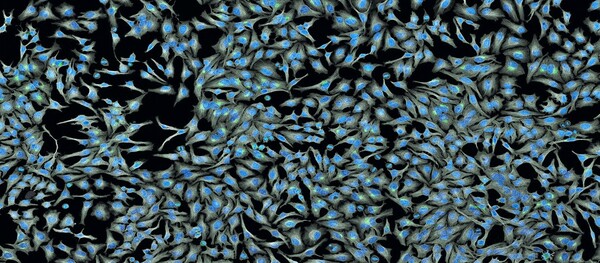
In this study, the authors investigate the anti-cancer effects of Annona Reticulata (Ramphal or custard apple) by testing whether its extract could inhibit HeLa cell viability.
Read More...Effects of Various Environmental Factors on Stomatal Density, Area, and Potential Conductance Index

In this study, the authors investigate the combinatorial effects of CO2 plus other environmental factors including salinity, temperature, acidity, and drought on how effectively plants can transport water and carbon through their stomata.
Read More...Predicting Orbital Resonance of 2867 Šteins Using the Yarkovsky Effect

In this study, the impact of thermal effects on the orbit of an asteroid is investigated. This included determining if the asteroid's orbit would push into a region devoid of asteroids due to the gravitational pull of Jupiter.
Read More...From Waste to Wealth: Making Millivolts from Microbes!

In this study, the authors report their successful efforts to increase voltage production in a Microbial Fuel Cell (MFC), which is a system in which microorganisms produce electricity while performing their normal metabolism.
Read More...The Development of a Superhydrophobic Surface Using Electrolytic Deposition & Polymer Chains Precipitation

In this study, the authors were interested in developing a hydrophobic surface that will extend the lifespan of metals by reducing water exposure and other damage. The used a zinc coating on steel to pursue this effort.
Read More...Comparing the Dietary Preference of Caenorhabditis elegans for Bacterial Probiotics vs. Escherichia coli.

In this experiment, the authors used C. elegans as a simple model organism to observe the impact of probiotics on the human digestive system. The results of the experiments showed that the C. elegans were, on average, most present in Chobani cultures over other tested yogurts. While not statistically significant, these results still demonstrated that C. elegans might prefer Chobani cultures over other probiotic yogurts, which may also indicate greater gut benefits from Chobani over the other yogurt brands tested.
Read More...Alterations of the [Fe/H] Values Modulate Light Curves by Absolute Magnitude in non-Blazhko RRab Lyraes
![Alterations of the [Fe/H] Values Modulate Light Curves by Absolute Magnitude in non-Blazhko RRab Lyraes](/rails/active_storage/representations/proxy/eyJfcmFpbHMiOnsibWVzc2FnZSI6IkJBaHBBallHIiwiZXhwIjpudWxsLCJwdXIiOiJibG9iX2lkIn19--7d8b84074a7b504657e6acd5ed4f66e4b84daf63/eyJfcmFpbHMiOnsibWVzc2FnZSI6IkJBaDdCem9MWm05eWJXRjBTU0lJY0c1bkJqb0dSVlE2QzNKbGMybDZaVWtpRFRZd01IZzJNREErQmpzR1ZBPT0iLCJleHAiOm51bGwsInB1ciI6InZhcmlhdGlvbiJ9fQ==--33b2b080106a274a4ca568f8742d366d42f20c14/Figure_4.png)
In this study, the authors investigate the relationship between iron/hydrogen ratio [Fe/H] of a type of variable stars commonly used as reference points RR Lyrae stars and their light curves to see if one can determine the composition of these stars solely by measuring their light curve characteristics.
Read More...Comparing Virulence of Three T4 Bacteriophage Strains on Ampicillin-Resistant and Sensitive E. coli Bacteria

In this study, the authors investigate an alternative way to kill bacteria other than the use of antibiotics, which is useful when considering antibiotic-resistance bacteria. They use bacteriophages, which are are viruses that can infect bacteria, and measure cell lysis. They make some important findings that these bacteriophage can lyse both antibiotic-resistant and non-resistant bacteria.
Read More...Effects of Prolonged Azithromycin Therapy on Bacterial Resistance to Functionally Analogous Antibiotics
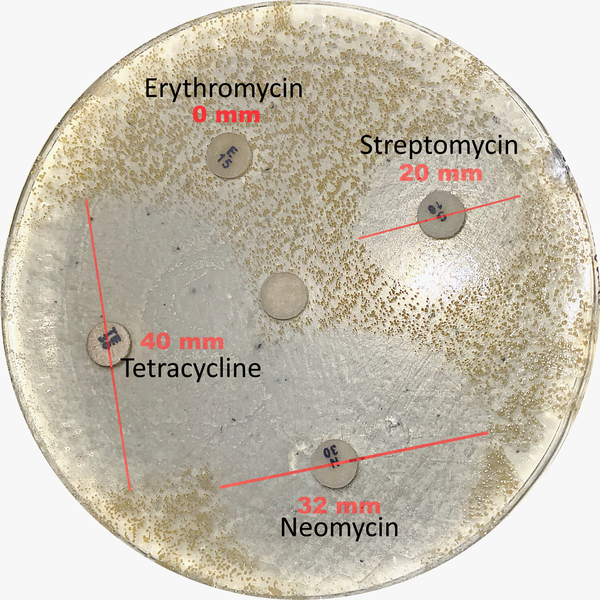
In this study, the authors investigate a potential case of cross antibiotic-resistance. Using swabs from an individual who received long-term treatments of azithromycin, they addressed the question of whether any bacteria in this individual might develop resistance to not only azithromycin, but also other antibiotics with similar structures. This study cleverly addresses the important issue of antibiotic resistance from a new and thoughtful approach.
Read More...