The authors looked at ways to provide better forecasting on website traffic. They found that deep learning models performed better than statistical models.
Read More...Deep sequential models versus statistical models for web traffic forecasting
The authors looked at ways to provide better forecasting on website traffic. They found that deep learning models performed better than statistical models.
Read More...Parental exposure of cannabinoids THC and CBD reduces reproductive rates in Drosophila melanogaster
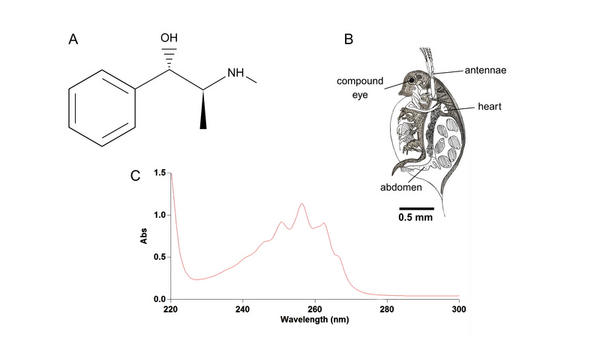
The authors looked at whether CBD and THC would decrease reproductive rates in a Drosophila melanogaster model. They found that CBD had a greater impact on reducing hatching rates than THC, and that THC resulted in unexpected mortalities.
Read More...A Data-Centric Analysis of “Stop and Frisk” in New York City
The death of George Floyd has shed light on the disproportionate level of policing affecting non-Whites in the United States of America. To explore whether non-Whites were disproportionately targetted by New York City's "Stop and Frisk" policy, the authors analyze publicly available data on the practice between 2003-2019. Their results suggest African Americans were indeed more likely to be stopped by the police until 2012, after which there was some improvement.
Read More...Differential physiological response of microalgae exposed to petroleum- and bio-based microplastics
The authors test the effect of petroleum-based and bio-based microplastics on the growth of two microalgae species.
Read More...Part of speech distributions for Grimm versus artificially generated fairy tales
Here, the authors wanted to explore mathematical paradoxes in which there are multiple contradictory interpretations or analyses for a problem. They used ChatGPT to generate a novel dataset of fairy tales. They found statistical differences between the artificially generated text and human produced text based on the distribution of parts of speech elements.
Read More...Scientific project in physics "Carbonated liquids and carbonation level"
In our work we followed the formation of gas bubbles on the surface of the vessel walls in different carbonated liquids, over different time intervals, at different temperatures and in vessels made of different materials. Our results made it possible to identify patterns affecting the process of formation and disappearance of carbon dioxide bubbles.
Read More...Floating aquatic plants form groups faster through current
Here, the authors sought to investigate the effects of water current on the growth of colonies of duckweed, a floating plant that forms colonies in silent ponds, marshes, lakes , and streams in North America. They found that current flow mediates the formation of colonies, disrupting and recreating the colonies which provides the opportunity for reorganizations that were identified as beneficial.
Read More...Idotea balthica comparison: Anatomy, locomotion, and seaweed preference of Massachusetts isopods
Here the authors examined a population of Massachusetts marine isopods, seeking to classify them based on comparison of their morphology, movement, and seaweed preference compared to those of known species. In this process they found that they were most similar to Idotea balthica. The authors suggest that this knowledge combined with monitoring populations of marine biology such as these isopods in different physical and ecological areas can provide useful insight into the effects of climate change.
Read More...Validation of impact-absorbing football helmet facemask for head injury prevention with simulation
Head injuries are common in American football and the facemasks found on football helmets receive a lot of impact during contacts. This study investigates how effective they are at reducing concussion risk.
Read More...Aggression of Carcharhinus leucas and Carcharhinus amblyrhynchos towards humans
This paper presents findings on Carcharhinus leucas (bull shark) and Carcharhinus amblyrhynchos (grey reef shark) aggression towards humans at Beqa Adventure Divers in Shark Reef Marine Reserve, Fiji. We hypothesized that grey reef sharks would receive more prods than bull sharks because grey reef sharks are typically more aggressive than bull sharks. The results supported our hypothesis, as an individual grey reef shark received 2.44 prods on average per feed, while a bull shark had an average of 0.61. These findings are meaningful not only to the world’s general understanding of shark aggression, but also to human protection against grey reef sharks as well as public education on bull sharks and the conservation of the species.
Read More...