The authors looked at different factors, such as age, pre-existing conditions, and geographic region, and their ability to predict what an individual's health insurance premium would be.
Read More...Browse Articles
The effects of cochineal and Allura Red AC dyes on Escherichia coli and Bacillus coagulans growth
Here the authors aimed to compare the effects of artificial Allura Red AC dye and natural cochineal dye on the growth of Escherichia coli and Bacillus coagulans bacteria. Their research found that only Allura Red AC dye significantly affected bacterial growth, specifically amplifying E. coli growth. Based on their results, they suggest that Allura Red AC dye may increase the growth of E. coli bacteria within the human gut.
Read More...Depression detection in social media text: leveraging machine learning for effective screening
Depression affects millions globally, yet identifying symptoms remains challenging. This study explored detecting depression-related patterns in social media texts using natural language processing and machine learning algorithms, including decision trees and random forests. Our findings suggest that analyzing online text activity can serve as a viable method for screening mental disorders, potentially improving diagnosis accuracy by incorporating both physical and psychological indicators.
Read More...Photometric analysis of Type Ia Supernova 2023jvj
Here the authors conducted a photometric analysis of Supernova (SN) 20234jvj. Through generating a light curve, they determined SN 2023jvj to be a Type Ia supernova located approximately 1.246e8 parasecs away from Earth.
Read More...Transcriptomic profiling identifies differential gene expression associated with childhood abuse
Childhood abuse has severe and lasting effects throughout an individual's life, and may even have long-term biological effects on individuals who suffer it. To learn more about the effects of abuse in childhood, Li and Yearwood analyze gene expression data to look for genes differentially expressed genes in individuals with a history of childhood abuse.
Read More...Optical anisotropy of crystallized vanillin thin film: the science behind the art
Microscopic beauty is hiding in common kitchen ingredients - even vanillin flavoring can be turned into mesmerizing artwork by crystallizing the vanillin and examining it under a polarizing microscope. Wang and Pang explore this hidden beauty by determining the optimal conditions to grow crystalline vanillin films and by creating computer simulations of chemical interactions between vanillin molecules.
Read More...Evaluating the clinical applicability of neural networks for meningioma tumor segmentation on 3D MRI
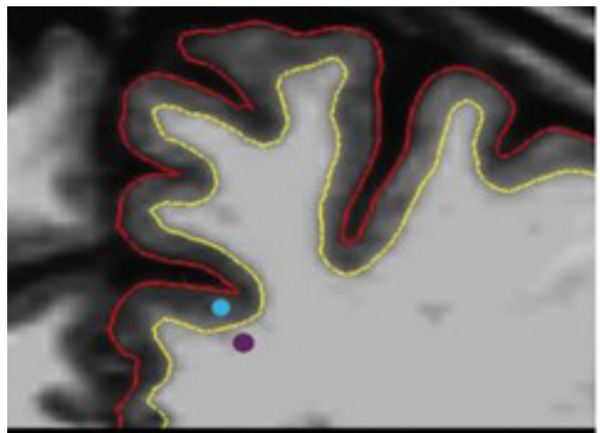
Authors emphasize the challenges of manual tumor segmentation and the potential of deep learning models to enhance accuracy by automatically analyzing MRI scans.
Read More...Evaluating the predicted eruption times of geysers in Yellowstone National Park
The authors compare the predicted versus actual geyser eruption times for the Old Faithful and Beehive Geysers at Yellowstone National Park.
Read More...Star anise and oregano essential oil: A comparative evaluation of antibacterial effect
The authors looked at the antibacterial effects of oregano and star anise essential oils against E. coli or S. epidermis. They found that oregano oil showed antibacterial activity against both E. coli or S. epidermis, and that star anise oil had a larger zone of inhibition in E. coli than tetracycline, a conventional antibiotic.
Read More...Effect of Gram-positive bacteria on antibiotic resistance in Gram-negative bacteria
Antibiotics are one of the most common treatments for bacterial infections, but the emergence of antibiotic resistance is a major threat to the control of infectious diseases. Many factors contribute to the development of antibiotic resistance. One is bacterial conjugation from Gram-positive to Gram-negative bacteria where there is a transfer of resistance genes from Gram-positive to Gram-negative bacteria that could increase antibiotic resistance in the latter. In light of these observations, we decided to test whether Gram-negative bacteria that came into contact with Gram-positive bacteria had a higher resistance to the antimicrobial properties of spices than Gram-negative bacteria that did not come into contact with Gram-positive bacteria.
Read More...