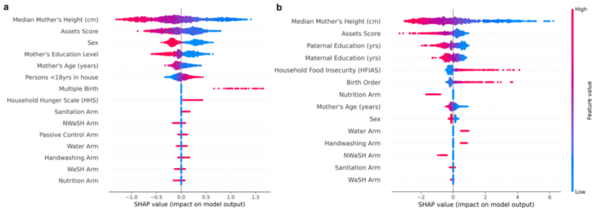
This study explored how green spaces, climate, traffic, and air quality (GCTA) collectively influence asthma-related emergency department visits in the U.S using machine learning models and explainable AI.
Read More...Environmental contributors of asthma via explainable AI: Green spaces, climate, traffic & air quality
This study explored how green spaces, climate, traffic, and air quality (GCTA) collectively influence asthma-related emergency department visits in the U.S using machine learning models and explainable AI.
Read More...Identifying shark species using an AlexNet CNN model
The challenge of accurately identifying shark species is crucial for biodiversity monitoring but is often hindered by time-consuming and labor-intensive manual methods. To address this, SharkNet, a CNN model based on AlexNet, achieved 93% accuracy in classifying shark species using a limited dataset of 1,400 images across 14 species. SharkNet offers a more efficient and reliable solution for marine biologists and conservationists in species identification and environmental monitoring.
Read More...Microbes Cultured from Garden Soil Positively Impact Seed Germination and Plant Growth
In this study, the authors investigate whether the addition of microbes from native soil enhanced the seed germination and growth of mung beans, pumpkins, and pea flower plants.
Read More...The effect of floating plant on water purification: Comparison of the water purification capability of Water Hyacinth, Duckweed, and Azolla
Clean water is a necessity for every household, yet water pollution is a serious problem in many parts of the world and plays a major role in compromising water security in the 21st century. In this paper, the authors address the utility of several plants as natural water purifiers. They estimate the effectiveness of duckweed, hyacinth, and azolla in improving the quality of water from the Mithi river in India by measuring several metrics. They conclude that all three plants are effective in improving water quality, suggesting that these plants as eco-friendly options for water treatment.
Read More...Examining What Causes Perceived Dissonance in Musical Intervals and the Effect of Timbre on Dissonance
Music is an important part of the day for many of us, but what makes some combinations of sound more pleasant to the ear than others? In this article the authors investigate the role of some characteristics of sound on the perception of a pleasant vs harsh musical note.
Read More...Determining the Effects of Fibroblast Growth Factor 2 on the Regenerative Abilities of Echinometra lucunter Sea Urchins
As humans, not all our body organs can adequately regenerate after injury, an ability that declines with age. In some species, however, regeneration is a hallmark response that can occur limitless numbers of time throughout the life of an organism. Understanding how such species can regenerate so efficiently is of central importance to regenerative medicine. Sea urchins, unlike humans, can regenerate their spinal tissue after injury. Here the authors study the effect of a growth factor, FGF2, on sea urchin regeneration but find no conclusive evidence for a pro-regenerative effect after spinal tissue injury.
Read More...Investigating the impact of short-chain fatty acids on myofiber dynamics and insulin sensitivity
The authors looked at the impacts of short-chain fatty acids on muscle fiber formation as well as insulin sensitivity using a model of mouse myoblasts.
Read More...Exploring a new mechanism controlling thermogenesis of adipose tissue
The effect of other neuroendocrine hormones in the regulation of adipose tissue thermogenesis.
Read More...Investigating the impact of the COVID-19 pandemic on the cognitive dissonance of adolescents
The authors survey adolescents about aspects of the COVID-19 pandemic to explore perspectives that may give rise to cognitive dissonance.
Read More...Environmentally-friendly graphene conductive ink using graphene powder, polystyrene, and waste oil
In this article, the authors propose an effective, environmentally-friendly method of producing conductive ink using expired waste oil, polystyrene, and graphene.
Read More...