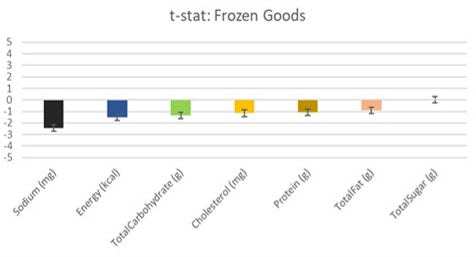
The authors compare nutritional content of foods found in Western versus Asian grocery stores to determine whether one cultural diet is healthier than the other.
Read More...Are Asian foods healthier than Western foods: Evidence collected from St. Louis area grocery stores
The authors compare nutritional content of foods found in Western versus Asian grocery stores to determine whether one cultural diet is healthier than the other.
Read More...Implications of various pure tones on Phaseolus vulgaris and Gaultheria shallon
This study investigated how different sound frequencies (0, 1,000, 5,000, and 15,000 Hz) affect the growth of Phaseolus vulgaris and the transpiration rates of Gaultheria shallon. Although some differences in plant growth were observed, the authors found no consistent evidence that sound frequency enhanced overall growth or transpiration, highlighting the need for further research.
Read More...A multi-dimensional analysis of NFL red zone efficiency
Here the authors investigated the relationship between offensive play-calling styles and scoring success within the NFL's red zone by analyzing play-by-play data and expected points metrics. Their findings suggest that a conservative approach to play design and execution is more strongly associated with maximizing efficiency and point-value gains than aggressive strategies.
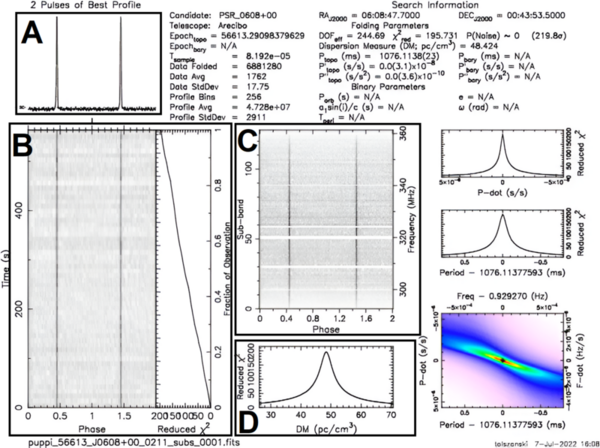
Read More...Deep learning for pulsar detection: Investigating hyperparameter effects on TensorFlow classification accuracy
This study investigates how the hyperparameters epochs and batch size affect the classification accuracy of a convolutional neural network (CNN) trained on pulsar candidate data. Our results reveal that accuracy improves with increasing number of epochs and smaller batch sizes, suggesting that with optimized hyperparameters, high accuracy may be achievable with minimal training. These findings offer insights that could help create more efficient machine learning classification models for pulsar signal detection, with the potential of accelerating pulsar discovery and advancing astrophysical research.
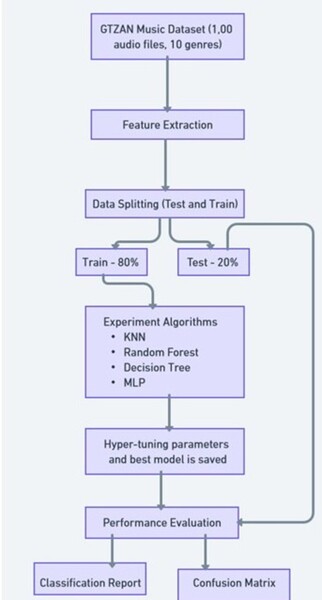
Read More...Impact of length of audio on music classification with deep learning
The authors looked at how the length of an audio clip used of a song impacted the ability to properly classify it by musical genre.
Read More...Training neural networks on text data to model human emotional understanding
The authors train a neural network to detect text-based emotions including joy, sadness, anger, fear, love, and surprise.
Read More...Investigating the inhibition of catabolic enzymes for implications in cardiovascular diseases and diabetes
Enzymes that metabolize carbohydrates and lipids play a key role in our health, including global health challenges like cardiovascular diseases and diabetes. To learn more about these important enzymes, Gandhi and Gandhi test whether various natural substances (ginger, Aloe vera, lemon, and mint leaves) affect the activity of α-amylase and lipase enzymes.
Read More...Using broad health-related survey questions to predict the presence of coronary heart disease
Coronary heart disease (CHD) is the leading cause of death in the U.S., responsible for nearly 700,000 deaths in 2021, and is marked by artery clogging that can lead to heart attacks. Traditional prediction methods require expensive clinical tests, but a new study explores using machine learning on demographic, clinical, and behavioral survey data to predict CHD.
Read More...Identifying factors, such as low sleep quality, that predict suicidal thoughts using machine learning
Sadly, around 800,000 people die by suicide worldwide each year. Dong and Pearce analyze health survey data to identify associations between suicidal ideation and relevant variables, such as sleep quality, hopelessness, and anxious behavior.
Read More...Investigating the potential of zinc oxide nanoparticles and zinc ions as promising approaches to lung cancer
Here, the authors chose to investigate the efficacy of zinc oxide nanoparticles (ZnO NPs) and cisplatin or zinc ions in inducing cancer apoptosis. While both treatments were found to reduce the proliferation of lung cancer cells, the authors suggest that further studies to identify the mechanism are necessary.
Read More...