Browse Articles

Impact of Kindles4Covid Virtual Reading Buddies Program on reading frequency and social connections

Pandey et al. | Jun 25, 2022

Impact of Kindles4Covid Virtual Reading Buddies Program on reading frequency and social connections

With the COVID-19 pandemic necessitating the transition to remote learning, disruption to daily school routine has impacted educational experiences on a global scale. As a result, it has potentially worsened reading achievement gaps typically exacerbated by long summer months. To address literacy skill retention and pandemic-induced social isolation, the non-profit organization ByKids4Kids has created a reading program, “Kindles4Covid Virtual Reading Buddies Program,” to instill a structure for youth to read together and connect with the convenience of Amazon Kindle devices. In this article, the authors determine the efficacy of their invaluable program by assessing changes in reading frequency and self-reported connectedness among program participants.

Read More...

Analysis of Technology Usage of Teens: Correlating Social Media, Technology Use, Participation in Sports, and Popularity

Düzgezen et al. | Mar 27, 2020

Analysis of Technology Usage of Teens: Correlating Social Media, Technology Use, Participation in Sports, and Popularity

Social media usage is predicted to impact teen well-being and emotional status. This study sought to assess the impact of teen technology usage on their social lives. Surveys of 8th and 9th graders were used to assess compare technology usage between males and females as well as and how social media usage impacts the perception of social environment at school.

Read More...

Associations between fentanyl usage and social media use among U.S. teens

Sul et al. | Jun 10, 2025

Associations between fentanyl usage and social media use among U.S. teens
Image credit: freestocks

Here the authors aimed to understand factors influencing adolescent fentanyl exposure, hypothesizing a positive association between social media usage, socioeconomic factors, and fentanyl abuse among U.S. teens. Their analysis of the Monitoring the Future dataset revealed that a history of suspension and use of marijuana or alcohol were linked to higher fentanyl use, and while not statistically significant, a notable positive correlation between social media use and fentanyl frequency was observed.

Read More...

Effects of social support on adolescent identity development

Yim et al. | Nov 12, 2024

Effects of social support on adolescent identity development

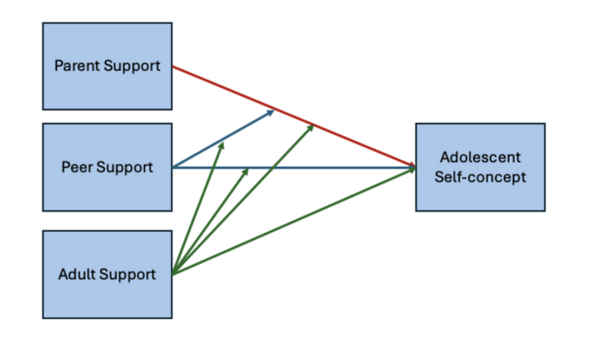
Adolescence is a critical period for self-identity formation, heavily influenced by feedback from social networks. This research examined the interplay between social support from parents and peers and self-concept development in adolescents using data from the National Longitudinal Study of Adolescent to Adult Health. While individual support from parents and peers did not directly impact self-concept, their combined interaction significantly influenced it, highlighting the importance of various social supports in fostering healthy self-concept development and overall adolescent well-being.

Read More...

Fitness social media is positively associated with the use of performance-enhancing drugs among young men

Tamaki et al. | Feb 01, 2024

Fitness social media is positively associated with the use of performance-enhancing drugs among young men
Image credit: Samuel Girven

Here the authors investigated the relationship between fitness-related social media and the high usage of performance-enhancing drugs (PEDs) specifically by men in the US age 18-35. In a survey with 149 participants they identified that young men that use fitness-related social media are more likely to use PEDs. Their results suggest the necessity to consider potential risk behaviors which may be related to social media consumption.

Read More...

Depression detection in social media text: leveraging machine learning for effective screening

Shin et al. | Mar 25, 2025

Depression detection in social media text: leveraging machine learning for effective screening

Depression affects millions globally, yet identifying symptoms remains challenging. This study explored detecting depression-related patterns in social media texts using natural language processing and machine learning algorithms, including decision trees and random forests. Our findings suggest that analyzing online text activity can serve as a viable method for screening mental disorders, potentially improving diagnosis accuracy by incorporating both physical and psychological indicators.

Read More...

Associations between substance misuse, social factors, depression, and anxiety among college students

Kouser et al. | Jun 12, 2023

Associations between substance misuse, social factors, depression, and anxiety among college students
Image credit: Jordan Encarnacao

Here, the authors considered the effects of relationship status and substance use on the mental health of colleges students, where they specifically examined their correlation with depression, anxiety, and the fear of missing out (FoMO). Through a survey of college students they found that those with higher substance misuse had higher levels of anxiety, depression, and FoMO, while those involved in longer-term relationships had lower levels of FoMo and alcohol use.

Read More...