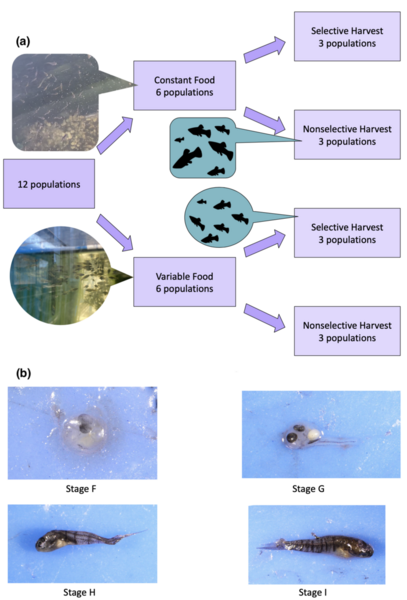
The authors looked at the impact of different harvest and feeding treatments on Heterandria formosa over three generations as a model for changes in marine ecosystems.
Read More...Observing food and density effects on the reproductive strategies of Heterandria formosa
The authors looked at the impact of different harvest and feeding treatments on Heterandria formosa over three generations as a model for changes in marine ecosystems.
Read More...Artificial Intelligence Networks Towards Learning Without Forgetting

In their paper, Kreiman et al. examined what it takes for an artificial neural network to be able to perform well on a new task without forgetting its previous knowledge. By comparing methods that stop task forgetting, they found that longer training times and maintenance of the most important connections in a particular task while training on a new one helped the neural network maintain its performance on both tasks. The authors hope that this proof-of-principle research will someday contribute to artificial intelligence that better mimics natural human intelligence.
Read More...Interleukin family (IL-2 and IL-1β) as predictive biomarkers in Indian cancer patients: A proof of concept study
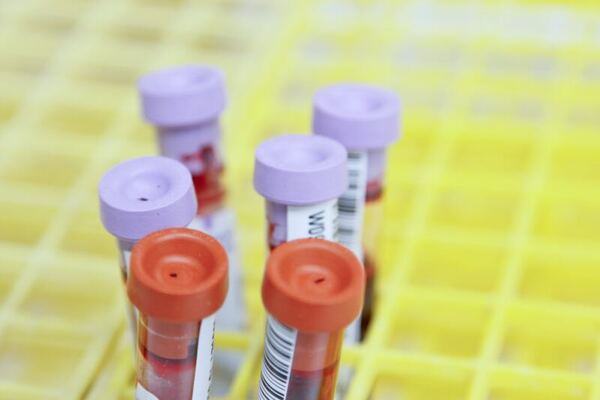
Here, recognizing that the immune response to cancer results in biomarkers that can be used to assess the immune status of cancer patients, the authors investigated the concentrations of key cytokines (TH1 and TH2 cytokines) in healthy controls and cancer patients. They identified significant changes in resting and activated cytokine profiles, suggesting that data of biomarkers such as these could serve as a starting point for further treatment with regard to a patient's specific immune profile.
Read More...Investigating Hydrogen as a Potential Alternative to Kerosene in Fueling Commercial Aircraft
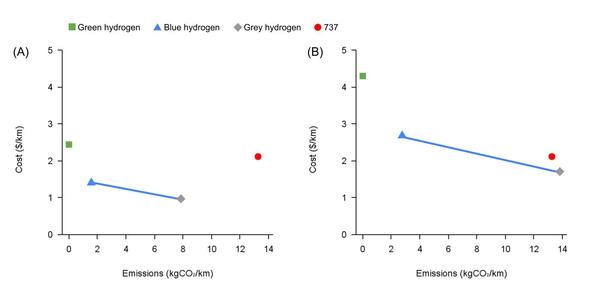
Growing climate concerns have intensified research into zero-emission transportation fuels, notably hydrogen. Hydrogen is considered a clean fuel because its only major by-product is water. This project analyzes how hydrogen compares to kerosene as a commercial aircraft fuel with respect to cost, CO2 emissions, and flight range.
Read More...Testing antimicrobial properties of common household spices in a real-world scenario
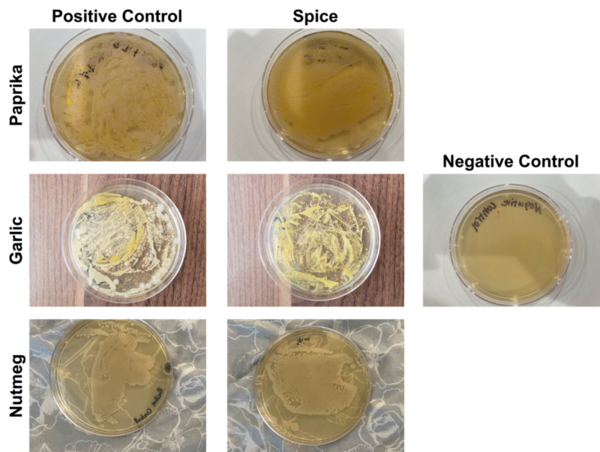
In this article the authors look at the ability of spices to reduce microbial load on a cutting surface by comparing growth of bacteria cultured before and after cleaning with various spice mixtures.
Read More...The Effects of Atmospheric Attenuation on Cosmic Ray Muons: How is Surface Level Cosmic Ray Muon Flux Affected by Atmospheric Attenuation?
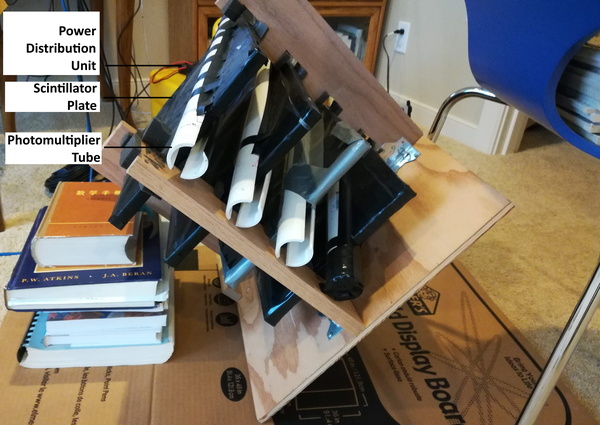
Cosmic rays are high-energy astronomical particles originating from various sources across the universe. Here, The authors sought to understand how surface-level cosmic-ray muon flux is affected by atmospheric attenuation by measuring the variation in relative muon-flux rate relative to zenith angle, testing the hypothesis that muons follow an exponential attenuation model. The attenuation model predicts an attenuation length of 6.3 km. This result implies that only a maximum of 24% of muons can reach the Earth’s surface, due to both decay and atmospheric interactions.
Read More...Efficacy of electrolytic treatment on degrading microplastics in tap water

Here seeking to identify a method to remove harmful microplastics from water, the authors investigated the viability of using electrolysis to degrade microplastics in tap water. Compared to control samples, they found electrolysis treatment to significantly the number of net microplastics, suggesting that this treatment could potentially implemented into homes or drinking water treatment facilities.
Read More...RETRACTED: Effect of Curcumin on Motor Behaviors in Drosophila melanogaster PINK1 Mutant Parkinson’s Model
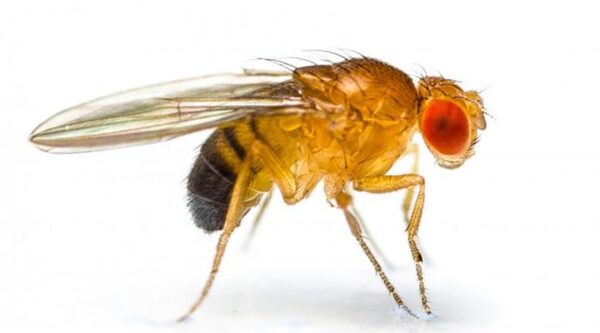
This manuscript was retracted on March 22, 2021 as it did not adhere to JEI's submission requirements with respect to author permissions. All authors on the manuscript agreed to its removal.
Read More...Analysis of the Exoplanet HD 189733b to Confirm its Existence
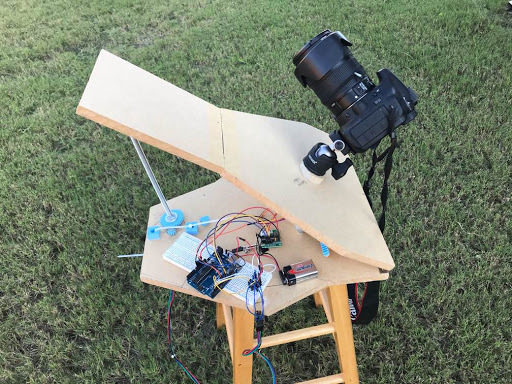
In this study, the authors study features of exoplanet 189733 b. This exoplanet, or planets that orbit stars other than the Sun, is found in the HD star system. Using a DSLR camera, they constructed a high caliber exoplanet transit detection tracker to study the orbital periods, radial velocity, and photometry of 189733 b. They then compared results from their system to data collected by other high precision studies. What they found was that their system produced results supporting previously published studies. These results are exciting results from the solar system demonstrating the importance of validating radial velocity and photometry data using high-precision studies.
Read More...An Experiment to Assess the Usefulness of a Virtual Environment as a Method of Public Speaking Anxiety Exposure

This experiment assessed the effectiveness of a virtual environment as a method of exposure in the treatment of high school students’ public speaking anxiety. The results show that participants’ heartbeat was higher when they wore a VR headset than when they did not.
Read More...