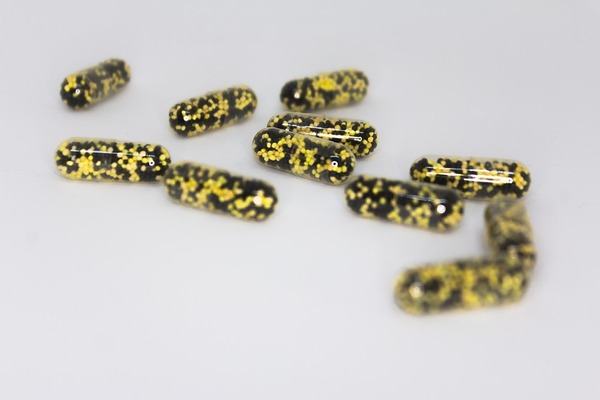
Industrial process are designed to optimize speed, energy use and quality. Some steps involve the translation of product-filled barrels, how far and fast this happens depends on the properties of the product within. This article investigates such properties on a mini-scale, where the roll of bead size, texture and material on the distance travelled by a cylindrical capsule is investigated.
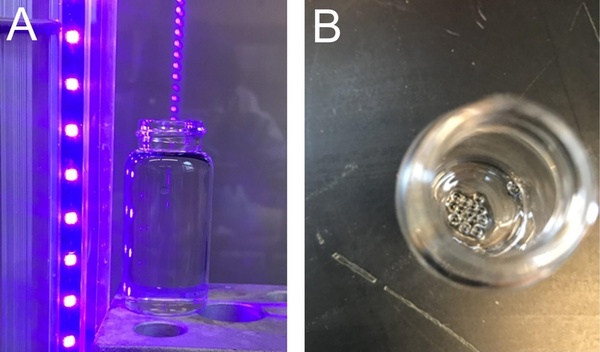
Superabsorbent beads are remarkable, used throughout our daily lives for various practical applications. These beads, as suggested by their name, possess a unique ability to absorb and retain large quantities of liquids. This characteristic of absorbency makes them essential throughout the medical field, agriculture, and other critical industries as well as in everyday products. To create these beads, the process of photopolymerization is fast growing in favor with distinct advantages of cost efficiency, speed, energy efficiency, and mindfulness towards the environment. In this article, researchers explore the pairing of cheap monomers with accessible equipment for creation of superabsorbent beads via the photopolymerization process. This research substantially demonstrates the successful application of photopolymerization in producing highly absorbent beads in a low-cost context, thereby expanding the accessibility of this process for creating superabsorbent beads in both research and practical applications.
Smartphones are not only becoming an inseparable part of our daily lives, but also a low-cost, powerful optical imaging tool for more and more scientific research applications. In this work, smartphones were used as a low-cost, high-speed, photographic alternative to expensive equipment, such as those typically found in scientific research labs, to accurately perform motion tracking and analysis of fast-moving objects. By analyzing consecutive images, the speed and flight trajectory of water droplets in the air were obtained, thereby enabling us to estimate the area of the water droplets landing on the ground.
Although there has been great progress in the field of Natural language processing (NLP) over the last few years, particularly with the development of attention-based models, less research has contributed towards modeling keystroke log data. State of the art methods handle textual data directly and while this has produced excellent results, the time complexity and resource usage are quite high for such methods. Additionally, these methods fail to incorporate the actual writing process when assessing text and instead solely focus on the content. Therefore, we proposed a framework for modeling textual data using keystroke-based features. Such methods pay attention to how a document or response was written, rather than the final text that was produced. These features are vastly different from the kind of features extracted from raw text but reveal information that is otherwise hidden. We hypothesized that pairing efficient machine learning techniques with keystroke log information should produce results comparable to transformer techniques, models which pay more or less attention to the different components of a text sequence in a far quicker time. Transformer-based methods dominate the field of NLP currently due to the strong understanding they display of natural language. We showed that models trained on keystroke log data are capable of effectively evaluating the quality of writing and do it in a significantly shorter amount of time compared to traditional methods. This is significant as it provides a necessary fast and cheap alternative to increasingly larger and slower LLMs.
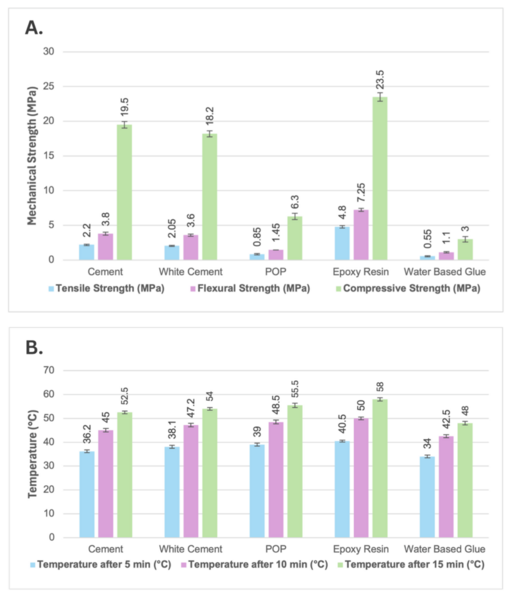
Textile waste from the fashion industry is a major environmental pollutant, but recycling waste into novel building material is a strategy to reduce the negative effects. This manuscript characterized five different binders that can be used to repurpose textile waste into bricks for construction purposes. Water-based glue, cement, white cement, plaster of Paris, and epoxy resin were mixed with shredded textile waste, and the mechanical characteristics and thermal insulation of each brick type were measured. Bricks with increased mechanical strength had the poorest thermal resistance, and the contrasting properties would suit different building purposes. This work provides a first step in generating recycled textile bricks for construction in a circular economy framework.
This paper discusses how the conditions at the center of stars affects the nuclear reactions that happen inside these stars. We focused on the effect of temperature and density and found that these two properties interacted to create a greater effect when combined than when separate.
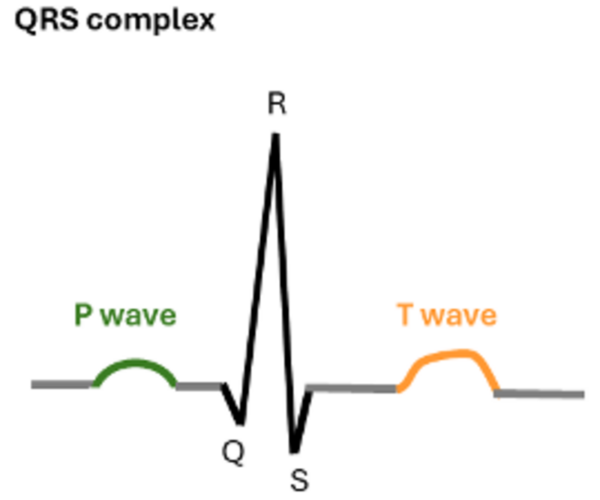
Arrhythmias vary in type and treatment, and ECGs are used to detect them, though human interpretation can be inconsistent. The researchers tested four tree-based algorithms (gradient boosting, random forest, decision tree, and extra trees) on ECG data from over 10,000 patients.
Here recognizing the potential for pollution to impact the ecosystems of local waterways, the authors investigated the growth of tiger lilies, which are invasive to the Potomac River, in relation to the level of pollution. The authors report that increasing levels of pollution led to increased growth of the invasive species based on their study.

.png)
.png)