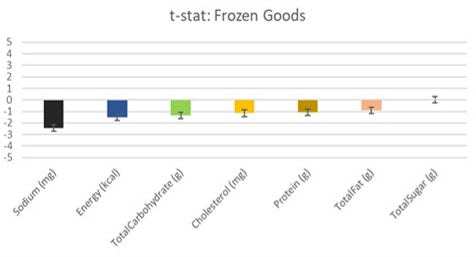
The authors compare nutritional content of foods found in Western versus Asian grocery stores to determine whether one cultural diet is healthier than the other.
Read More...Are Asian foods healthier than Western foods: Evidence collected from St. Louis area grocery stores
The authors compare nutritional content of foods found in Western versus Asian grocery stores to determine whether one cultural diet is healthier than the other.
Read More...Breast cancer mammographic screening by different guidelines among women of different races/ethnicities
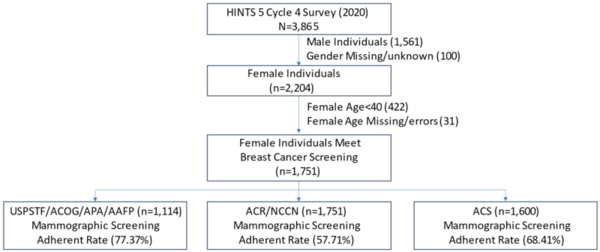
Mammographic screening is a common diagnostic tool for breast cancer among average-risk women. The authors hypothesized that adherence rates for mammographic screening may be lower among minorities (non-Hispanic black (NHB) and Hispanic/Latino) than among non-Hispanic whites (NHW) regardless of the guideline applied. The findings support other studies’ results that different racial/ethnic and socio-demographic factors can affect screening adherence. Therefore, healthcare providers should promote breast cancer screening especially among NHW/Hispanic women and women lacking insurance coverage.
Read More...Maternal mortality rates in the United States correlated with social determinants of health

This article helps in understanding the effect of various social determinants on maternal mortality in the United States. It explains the relationship between maternal mortality rates and factors like race, income, education, and health insurance access.
Read More...High school students’ attitudes towards diverse cultures and ethnicities
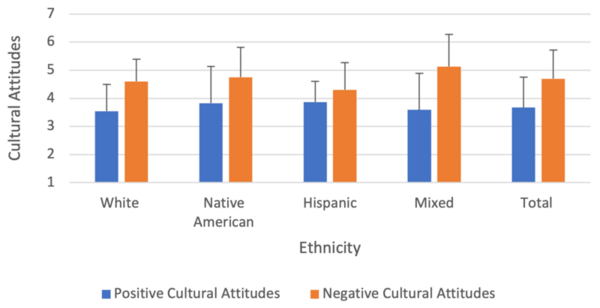
The authors looked at how a student's own background influence their attitude towards integration of diverse cultures and ethnicities. While overall students viewed other groups positively, the authors found that groups still indicated they felt judged by their peers.
Read More...Sri Lankan Americans’ views on U.S. racial issues are influenced by pre-migrant ethnic prejudice and identity
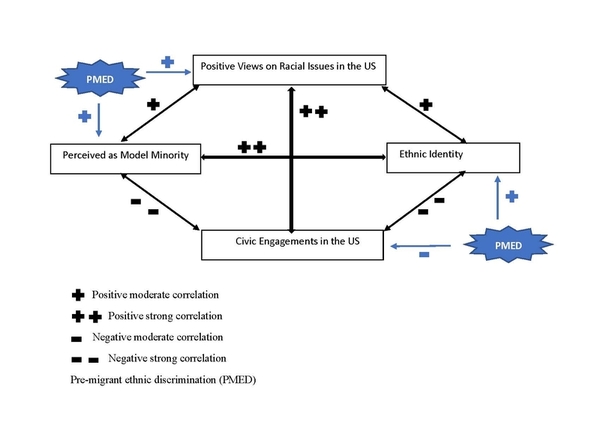
In this study, the authors examined how Sri Lankan Americans (SLAs) view racial issues in the U.S. The main hypothesis is that SLAs, as a minority in the U.S., are supportive of the Black Lives Matter movement and its political goal, challenging the common notion that SLAs are anti-Black. The study found that a majority of SLAs believe the U.S. has systemic racism, favor BLM, and favor affirmative action. IT also found that Tamil SLAs have more favorable views of BLM and affirmative action than Sinhalese SLAs.
Read More...Trust in the use of artificial intelligence technology for treatment planning
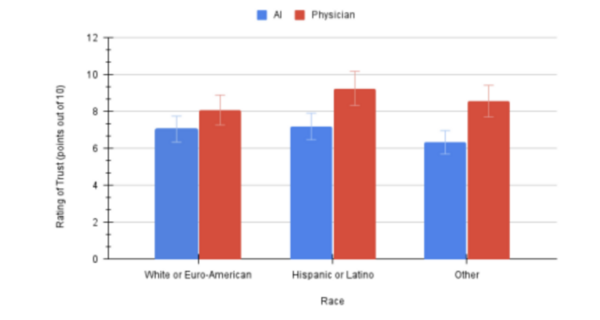
As AI becomes more integrated into healthcare, public trust in AI-developed treatment plans remains a concern, especially for emotionally charged health decisions. In a study of 81 community college students, AI-created treatment plans received lower trust ratings compared to physician-developed plans, supporting the hypothesis. The study found no significant differences in AI trust levels across demographic factors, suggesting overall skepticism toward AI-driven healthcare.
Read More...FCRL3 Gene Association with Asthma and Allergic Rhinitis

This study sought to determine if there is an association between the single nucleotide polymorphism rs7528684 of the Fc receptor-like-3 (FCRL3) gene and asthma or allergic rhinitis (AR). Based on previous studies in an Asian population, we hypothesized that participants with an AA genotype of FCRL3 would be more likely to have asthma and/or allergic rhinitis. To test the hypothesis, surveys were administered to participants, and genotyping was performed on spit samples via PCR, restriction digest, and gel electrophoresis.
Read More...