Browse Articles

Peptidomimetics Targeting the Polo-box Domain of Polo-like Kinase 1

Jang et al. | Aug 19, 2016

Peptidomimetics Targeting the Polo-box Domain of Polo-like Kinase 1

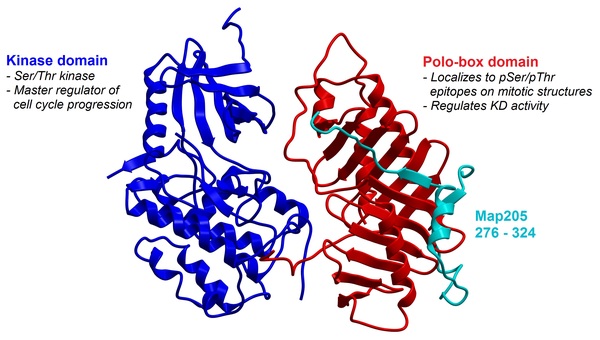
Polo-like kinase 1 (Plk1) is a master regulator of mitosis, initiating key steps of cell cycle regulation, and its overexpression is associated with certain types of cancer. In this study, the authors carefully designed peptides that were able to bind to Plk1 at a location that is important for its proper localization and function. Future studies could further develop these peptides to selectively target Plk1 in cancer cells and induce mitotic arrest.

Read More...

The ecological mysteries of Opheodesoma spectabilis : Seasonal trends, habitat preferences, and climate responses

Watson et al. | Jul 26, 2026

The ecological mysteries of <i>Opheodesoma spectabilis</i>	: Seasonal trends, habitat preferences, and climate responses

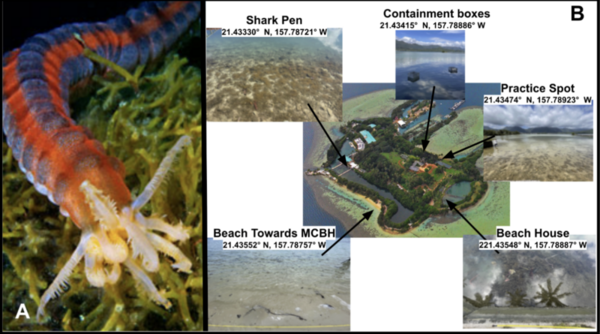
This study examines how environmental conditions influence the abundance and ecological role of the sea cucumber Opheodesoma spectabilis in Kāneʻohe Bay. Field observations and laboratory experiments showed that the species is more common in algae-dominated sandy habitats, where it improves water clarity and increases dissolved oxygen through bioturbation. However, exposure to very high temperatures caused rapid mortality, suggesting that marine heat waves could threaten this species and the ecological functions it provides.

Read More...

Integration of iron oxide nanoparticles into high-density polyethylene for sustainable cup coatings

Atmadja et al. | Jul 08, 2026

Integration of iron oxide nanoparticles into high-density polyethylene for sustainable cup coatings

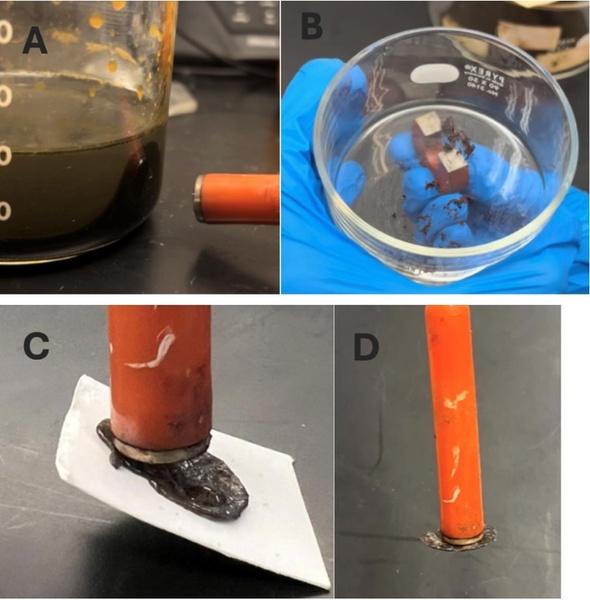
Here the authors propose integrating magnetic iron (II) oxide nanoparticles into the high-density polyethylene linings of disposable paper cups to create a waterproof, magnetically responsive composite liner. Their findings demonstrate that these nanoparticles successfully bond with the plastic layer without disrupting its structural integrity, offering a viable method to improve plastic recovery through magnetic recycling and mitigate global microplastic pollution.

Read More...

The impact of genetic analysis on the early detection of colorectal cancer

Agrawal et al. | Aug 24, 2023

The impact of genetic analysis on the early detection of colorectal cancer

Although the 5-year survival rate for colorectal cancer is below 10%, it increases to greater than 90% if it is diagnosed early. We hypothesized from our research that analyzing non-synonymous single nucleotide variants (SNVs) in a patient's exome sequence would be an indicator for high genetic risk of developing colorectal cancer.

Read More...

Efficient synthesis of superabsorbent beads using photopolymerization with a low-cost method

Wang et al. | Jun 09, 2023

Efficient synthesis of superabsorbent beads using photopolymerization with a low-cost method

Superabsorbent beads are remarkable, used throughout our daily lives for various practical applications. These beads, as suggested by their name, possess a unique ability to absorb and retain large quantities of liquids. This characteristic of absorbency makes them essential throughout the medical field, agriculture, and other critical industries as well as in everyday products. To create these beads, the process of photopolymerization is fast growing in favor with distinct advantages of cost efficiency, speed, energy efficiency, and mindfulness towards the environment. In this article, researchers explore the pairing of cheap monomers with accessible equipment for creation of superabsorbent beads via the photopolymerization process. This research substantially demonstrates the successful application of photopolymerization in producing highly absorbent beads in a low-cost context, thereby expanding the accessibility of this process for creating superabsorbent beads in both research and practical applications.

Read More...

Photometric analysis and light curve modeling of apparent transient 2020pni

Arora et al. | Oct 07, 2022

Photometric analysis and light curve modeling of apparent transient 2020pni

Supernovas are powerful explosions that result from gravitational collapse of a massive star. Using photometric analysis Arora et al. set out to investigate whether 2020pni (located in galaxy UGC 9684) was a supernova. They were ultimately able to identify 2020pni as a Type II-L supernova and determine it's distance from earth.

Read More...