Browse Articles

Artificial Intelligence-Based Smart Solution to Reduce Respiratory Problems Caused by Air Pollution

Bhardwaj et al. | Dec 14, 2021

Artificial Intelligence-Based Smart Solution to Reduce Respiratory Problems Caused by Air Pollution

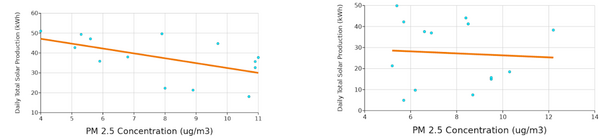
In this report, Bhardwaj and Sharma tested whether placing specific plants indoors can reduce levels of indoor air pollution that can lead to lung-related illnesses. Using machine learning, they show that plants improved overall indoor air quality and reduced levels of particulate matter. They suggest that plant-based interventions coupled with sensors may be a useful long-term solution to reducing and maintaining indoor air pollution.

Read More...

Detection and Control of Spoilage Fungi in Refrigerated Vegetables and Fruits

Chari et al. | May 16, 2021

Detection and Control of Spoilage Fungi in Refrigerated Vegetables and Fruits

Food spoilage leads to a significant loss in agricultural produce each year. Here, the authors investigate whether certain essential oils can protect against fungus-mediated spoilage of fruits and vegetables. Their results suggest that the compounds they tested might indeed inhibit fungal growth, at various temperatures, a promising result that could reduce food wasting.

Read More...

Effect of Increasing Concentrations of Cannabidiol (CBD) on Hatching, Survival and Development of Artemia salina

Rabbani et al. | Jul 27, 2020

Effect of Increasing Concentrations of Cannabidiol (CBD) on Hatching, Survival and Development of <em>Artemia salina</em>

Cannabidiol, or CBD, is a widely available over the counter treatment used for various medical conditions. However, CBD exerts its effects on the endocannabinoid system, which is involved in neural maturation, and could potentially have adverse effects on brain development. Here, the impact of CBD on the development of brine shrimp (Artemia salina) was assessed. Differences in dose responses were observed.

Read More...

Developing a Portable, Reusable, and Inexpensive Magnesium-Air Fuel Cell

Tota et al. | Mar 28, 2019

Developing a Portable, Reusable, and Inexpensive Magnesium-Air Fuel Cell

One of the greatest challenges we face today is the sustainable production, storage, and distribution of electrical power. One emerging technology with great promise in this area is that of metal-air fuel cells—a long-term and reusable electricity storage system made from a reactive metal anode and a saline solution. In this study the authors tested several different types of metal to determine which was the most suitable for this application. They found that a fuel cell with a magnesium anode was superior to fuel cells made from aluminum or zinc, producing a voltage and current sufficient for real-world applications such as charging a mobile phone.

Read More...

Towards an Integrated Solution for Renewable Water and Energy

Chen et al. | Jan 09, 2015

Towards an Integrated Solution for Renewable Water and Energy

An integrated plant that would generate energy from solar power and provide clean water would help solve multiple sustainability issues. The feasibility of such a plant was investigated by looking at the efficacy of several different modules of such a plant on a small scale.

Read More...

Synthesis of sodium alginate composite bioplastic films

Kim et al. | Sep 17, 2024

Synthesis of sodium alginate composite bioplastic films

The authors looked at the development of biodegradable bioplastic and its features compared to PET packaging films. They were able to develop a biodegradable plastic with sodium alginate that dissolved in water and degrade in microbial conditions while also being transparent and flexible similar to current plastic films.

Read More...