Enhanced Iron and Manganese Removal Using Nanocomposite CA/PVP Membranes Doped with CNC, CNF, and HNT
(1) The Koc School, (2) Department of Environmental Engineering, Istanbul University-Cerrahpasa, (3) Department of Environmental Engineering, Nevsehir Haci Bektas Veli University
https://doi.org/10.59720/25-285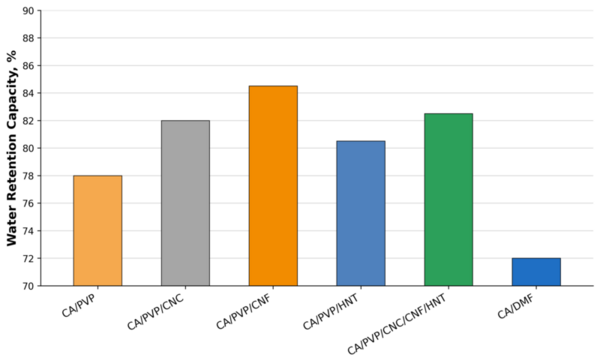
Iron (Fe) and manganese (Mn) are commonly found in groundwater and surface water sources. When present at elevated concentrations, they can negatively affect drinking water quality by causing aesthetic problems and potential health concerns, including neurological and neurodevelopmental effects. Therefore, the development of efficient and sustainable technologies for the removal of these metals is important. In our study, nanocomposite polymeric membranes were developed to improve the removal of Fe and Mn from drinking water. We incorporated cellulose nanocrystals (CNC), cellulose nanofibers (CNF), and halloysite nanotubes (HNT) into cellulose acetate/polyvinylpyrrolidone (CA/PVP) membranes using the phase inversion method. We evaluated the prepared membranes in terms of water retention capacity, water flux behavior, and Fe/Mn removal performance. We then conducted filtration experiments using both pure water and surface water collected from Terkos Lake to investigate membrane performance under different water matrices. We hypothesized that CNC-, CNF-, and HNT-doped CA/PVP membranes would exhibit higher permeability and metal removal efficiency than the undoped control membrane. We found that the nanocomposite membranes outperformed the undoped membrane, with CNC-containing membranes showing the best overall filtration performance, and HNT-containing membranes providing enhanced stability during surface water treatment. Overall, our findings indicate that incorporating cellulose-derived nanomaterials and halloysite nanotubes enhanced both the permeability and metal removal performance of CA/PVP membranes. These nanocomposite membranes show strong potential for sustainable drinking water treatment applications targeting Fe and Mn removal.
This article has been tagged with: