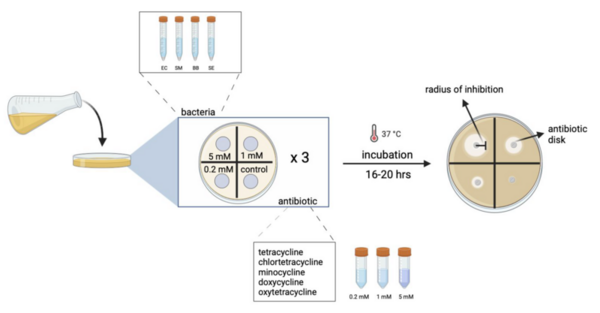
The authors looked at four members of the tetracycline antibiotic family/class against four different species of bacteria.
Read More...Strain selective in vitro and in silico structure activity relationship of tetracycline antibiotics
The authors looked at four members of the tetracycline antibiotic family/class against four different species of bacteria.
Read More...Development of novel biodegradable bioplastics for packaging film using mango peels
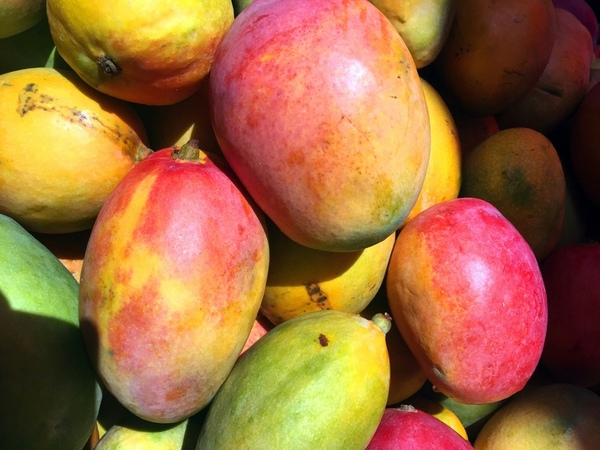
Here the authors explored the development of biodegradable bioplastic films derived from mango peels as a sustainable solution to plastic pollution and greenhouse gas emissions from fruit waste. They optimized the film's mechanical properties and water resistance through adjusting processing conditions and incorporating plasticizers and a hydrophobic coating, ultimately demonstrating its potential as a bacteriostatic and biodegradable alternative to conventional plastic food wrap.
Read More...Obscurity of eyebrows influences recognition of human emotion and impacts older adolescents
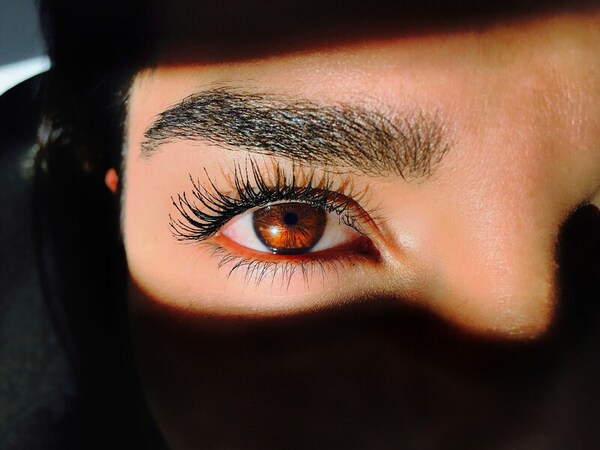
Here, seeking to better understand how facial features provide important visual cues to help convey emotions, the authors evaluated the accuracy and reaction time of participants in regards to experimental photographs where a person's eyebrows were obscured and ones where they were not. Their findings revealed that removing eyebrows resulted in a significant decrease in a participant's ability to recognize anger, with adolescents most likely to misidentify emotions.
Read More...An exploration of western mosquitofish as the animal component in an aquaponic farming system
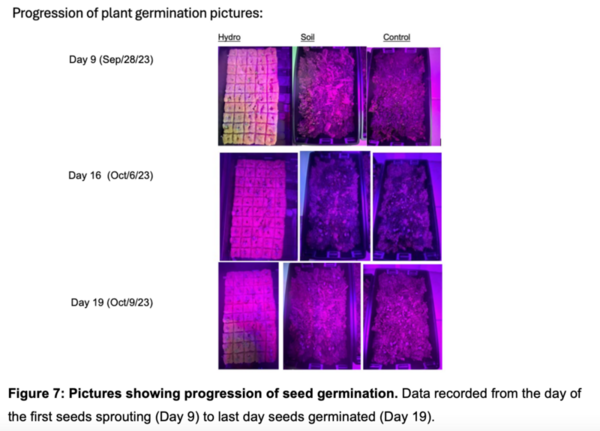
Aquaponics (the combination of aquatic plant farming with fish production) is an innovative farming practice, but the fish that are typically used, like tilapia, are expensive and space-consuming to cultivate. Medina and Alvarez explore other options test if mosquitofish are a viable option in the aquaponic cultivation of herbs and microgreens.
Read More...Anti-inflammatory and pro-apoptotic properties of the polyherbal drug, MAT20, in MCF-7 cells
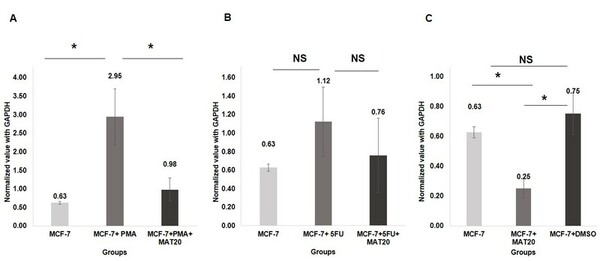
The authors test potential anti-inflammatory and pro-apoptotic effects of a polyherbal extract formulation on cultured breast cancer cells.
Read More...Comparison of spectral subtraction noise reduction algorithms

Here, the authors investigated methods to reduce noise in audio composed of real-word sounds. They specifically used two spectral subtraction noise reduction algorithms: stationary and non-stationary finding notable differences in noise improvements depending on the noise sources.
Read More...Fractal dimensions of crumpled paper

Here, beginning from an interest in fractals, infinitely complex shapes. The authors investigated the fractal object that results from crumpling a sheet of paper. They determined its fractal dimension using continuous Chi-squared analysis, thereby testing and validating their model against the more conventional least squares analysis.
Read More...The anticancer and anti-inflammatory effects of polyherbal drug AS20 on HeLa cells resistant to 5-Fluorouracil
%20final%202-5-23.jpg)
The authors looked at 5-FU resistant HeLa cells and the ability of an herbal extract to show anti-inflammatory properties.
Read More...Evaluation of in vitro anti-inflammatory effect of PLAY® on UC-MSCs: A COX-2 expression study
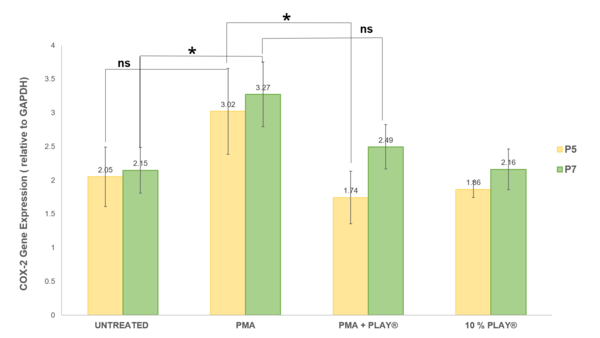
The authors seek to accelerate wound healing by reducing inflammation with a cocktail containing growth factors and bioactive modulators.
Read More...Analysis of ultraviolet light as a bactericide of gram-negative bacteria in Cladophora macroalgae extracts
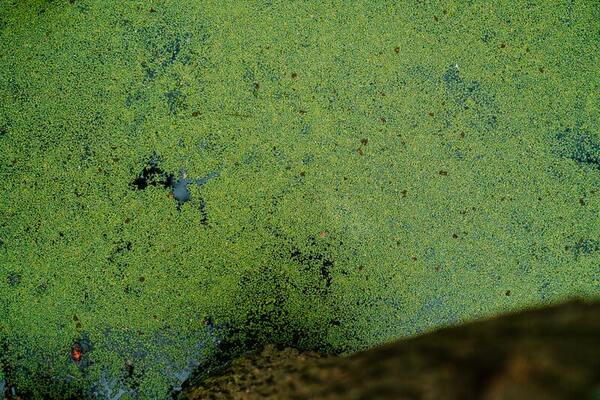
Here, the authors sought to use Cladophora macroalgae as a possible antibiotic to address the growing threat of antibiotic resistance in pathogenic bacteria. However, when they observed algae extracts to be greatly contaminated with gram-negative bacteria, they adapted to explore the ability to use ultraviolet light as a bactericide. They found that treatment with ultraviolet light had a significant effect.
Read More...