The authors studied the chemoreception of moon jellyfish in response to food, and developed an AI tool to identify track and quantify the pulsation of swimming jellyfish.
Read More...Chemoreception in Aurelia aurita studied by AI-enhanced image analysis
The authors studied the chemoreception of moon jellyfish in response to food, and developed an AI tool to identify track and quantify the pulsation of swimming jellyfish.
Read More...Lactic acid bacteria protect the growth of Solanum lycopersicum from Sodium dodecyl sulfate
Sodium dodecyl sulfate (SDS), a detergent component, can harm plant growth when it contaminates soil and waterways. Authors explored the potential of lactic acid bacteria (LAB) to mitigate SDS-induced stress on plants.
Read More...Development of selective RAC1/KLRN inhibitors
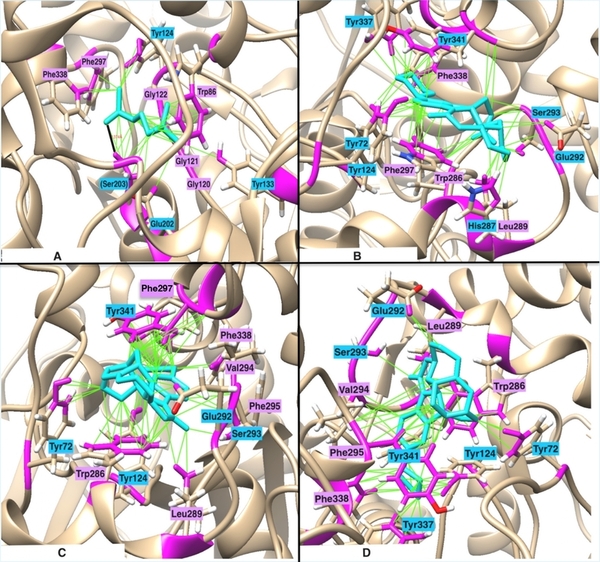
Kalirin is a guanine nucleotide exchange factor (GEF) for the GTPase RAC1, linked to schizophrenia and Alzheimer’s Disease. It plays a crucial role in synaptic plasticity by regulating dendritic spine formation and actin cytoskeleton remodeling, which are essential for creating new synapses. Authors developed two novel compounds targeting kalirin, confirming that predictive modeling can indicate biological activity.
Read More...An alternative to textile dyes: Synthesizing and applying PMMA nanoparticles to create structural coloration
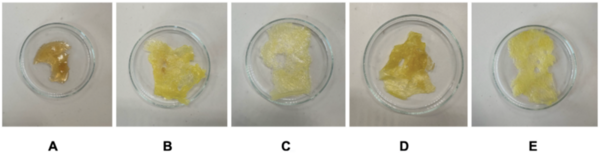
The authors looked at developing a PMMA nanoparticle fabric dye that would be more sustainable compared to traditional fabric dyes. They were able to create PMMA based dyes in different colors that were also durable (i.e., did not fade quickly on fabric).
Read More...Comparison of total flavonoid content and DPPH● sequestration in Arabica, Robusta, and Liberica coffee beans
Here the authors used a free radical assay to characterize the antioxidant capacity of three types of coffee beans. They fond that Robusta coffee presented greater inhibition percentages than other species in their free radical assay, indicating higher antioxidant capacity.
Read More...Heavy metal and bacterial water filtration using Moringa oleifera and coconut shell-activated carbon
One-third of the world's people do not have access to clean drinking water. Nadella and Nadella tackle this issue by testing a low-cost filtration system for removing heavy metal and bacteria from water.
Read More...What is the optimal fuel for space flight? Efficiency, cost, and environmental impact
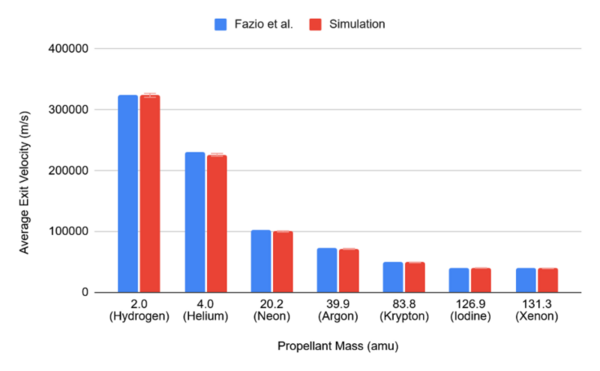
Here, the authors sought to investigate the efficiency, cost, and environmental impact of several possible propellants that are or could be used for space flight. By deriving three novel equations, they identified harm, energy, and cost scores for each fuel, suggesting that considering each factor will be essential to the ongoing growth of the space industry.
Read More...Quantitative NMR spectroscopy reveals solvent effects in the photochemical degradation of thymoquinone
Thymoquinone is a compound of great therapeutic potential and scientific interest. However, its clinical administration and synthetic modifications are greatly limited by its instability in the presence of light. This study employed quantitative 1H nuclear magnetic resonance (NMR) spectroscopy to identify the effect of solvation on the degradation of thymoquinone under ultraviolet light (UV). It found that the rate of degradation is highly solvent dependent occurs maximally in chloroform.
Read More...Effect of pH on the antibacterial properties of turmeric
Some spices have antimicrobial or antibacterial properties that people have already tested. Turmeric has a wide variety of uses and has even been implemented in alternative medicine as a treatment for cancer, inflammation, osteoarthritis, and other diseases. We tested the antimicrobial effects of turmeric under two different pHs to characterize this effect in vitro. Decreasing the pH of a solution of turmeric may increase antibacterial properties.
Read More...The effect of an anthocyanin on the gut permeability of a Type 2 Diabetic Drosophila melanogaster
Anti-diabetic drugs like Metformin are known to increase gut permeability, and this has a negative impact on patient health. These authors hypothesized that this can be mitigated using purple sweet potato extract, which is high anthocyanin content, that feeds bacteria metabolism to decrease gut permeability.
Read More...