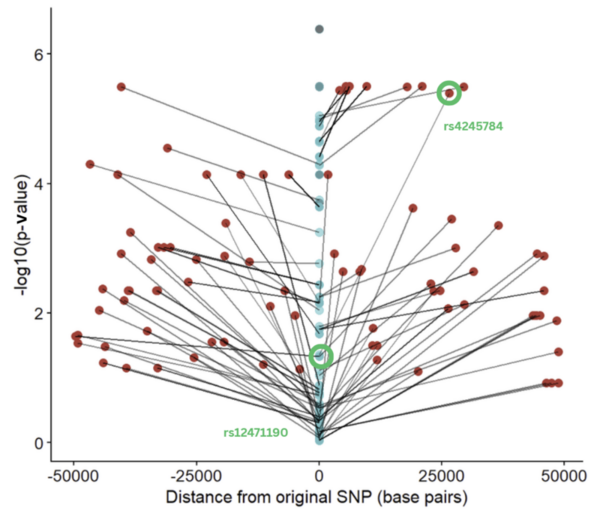
This project investigated whether previously identified genetic risk factors in non-Korean populations were associated with high gastric cancer incidence rates in Koreans.
Read More...Investigating the contribution of genetic risk factors to gastric cancer in Korean-ancestry populations
This project investigated whether previously identified genetic risk factors in non-Korean populations were associated with high gastric cancer incidence rates in Koreans.
Read More...Early detection of student burnout using data science: a study of behavioral and psychological indicators

This study examined behavioral and psychological predictors of burnout among high school and university students in Pakistan using survey data and machine-learning models. Shorter sleep and greater mental fatigue—especially fatigue—were associated with higher burnout risk, while a Random Forest model successfully identified students at risk of burnout.
Read More...A study of Syrian students' migration motivations, destinations, and return intentions in a time of crisis

This study investigates the migration intentions of Syrian high school and university students amid ongoing conflict and economic instability. Drawing on survey data, the research examines how academic stage influences migration motivations, preferred destinations, and return intentions. The findings reveal a widespread desire to emigrate, driven by educational, economic, and security concerns, highlighting significant implications for Syria’s future workforce and post-conflict recovery.
Read More...Detection method of black goji berry anthocyanin content based on colorimetry
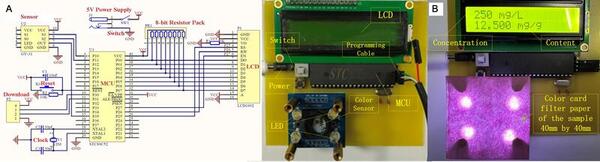
Black goji berries have attracted interest for their high levels of anthocyanin pigment, which believed to have health-boosting effects. Yu and Zhu research a method for measuring goji berry quality by detecting anthocyanin content under different conditions.
Read More...SmartZoo: A Deep Learning Framework for an IoT Platform in Animal Care
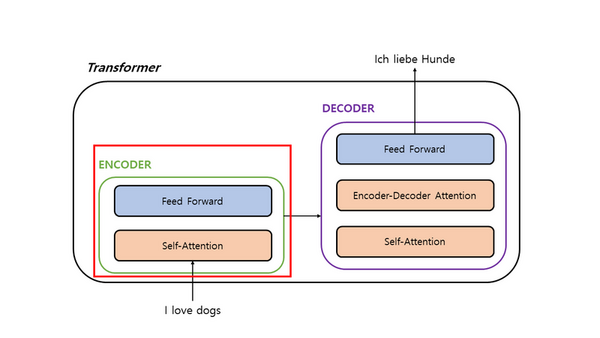
Zoos offer educational and scientific advantages but face high maintenance costs and challenges in animal care due to diverse species' habits. Challenges include tracking animals, detecting illnesses, and creating suitable habitats. We developed a deep learning framework called SmartZoo to address these issues and enable efficient animal monitoring, condition alerts, and data aggregation. We discovered that the data generated by our model is closer to real data than random data, and we were able to demonstrate that the model excels at generating data that resembles real-world data.
Read More...Fitness social media is positively associated with the use of performance-enhancing drugs among young men
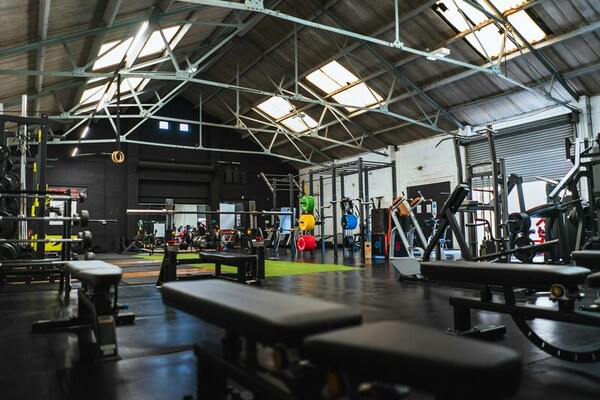
Here the authors investigated the relationship between fitness-related social media and the high usage of performance-enhancing drugs (PEDs) specifically by men in the US age 18-35. In a survey with 149 participants they identified that young men that use fitness-related social media are more likely to use PEDs. Their results suggest the necessity to consider potential risk behaviors which may be related to social media consumption.
Read More...Utilizing the Magnus effect to produce more downforce than a standard wing
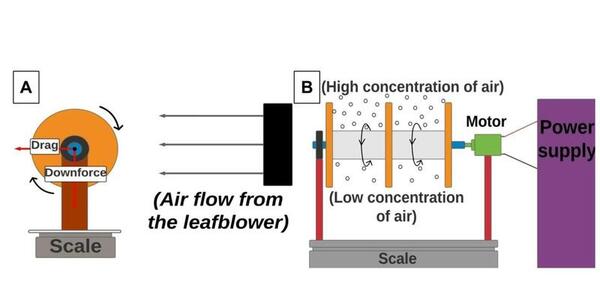
Here, seeking a better solution to produce downforce that keeps a vehicle grounded at high speeds than wings which tend to result in degraded car performance due to increased air resistance, the authors considered using the Magnus effect as a replacement. The authors found that a spinning cylinder generated significantly more downforce through the Magnus effect than a standard wing at all wind speeds as simulated through the use of a leaf blower. They suggest that a cylinder could be a potential replacement for a wing when downforce is a priority.
Read More...Examining the relationship between screen time and achievement motivation in an adolescent population

In this study, the authors conduct a survey of high school students to evaluate the effects of screen time and habits on motivation.
Read More...The comparative effect of remote instruction on students and teachers

In this study, high school students and teachers responded to a survey consisting of Likert-type scale, multiple-choice, and open-ended questions regarding various aspects of remote instruction. After analyzing the data collected, they found that remote learning impacted high school students academically and socially. Students took longer to complete assignments, and both students and teachers felt that students do not learn as much in remote learning compared to in-person instruction. However, most high school students demonstrated a comprehensive understanding of the topics, and an overall negative impact on students' grades was not detected.
Read More...Understanding the Relationship Between Perception and Reality Related to Public Safety: A Case Study of Public Opinion on Local Law Enforcement in Andover, MA

A small town with low crime rates and relatively high education levels usually gives the perception of a safe and comfortable community. This study explored the connection between this perception, as defined by public opinion, and reality, as defined by US Census and FBI crime data.
Read More...