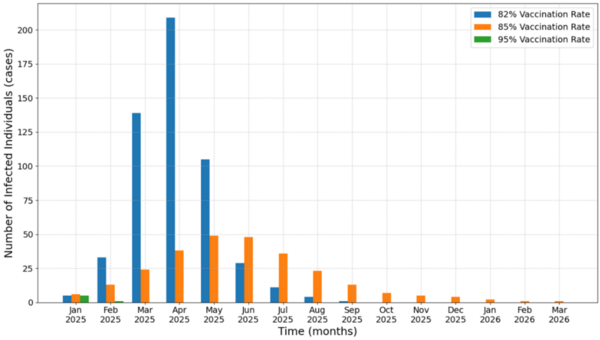
Using county-level epidemiological data from the Texas Department of State Health Services, this study implemented an SIRV model in Python to simulate measles transmission in Gaines County under different vaccination scenarios.
Read More...Increasing MMR vaccination rates substantially reduces measles infections in Gaines County, Texas
Using county-level epidemiological data from the Texas Department of State Health Services, this study implemented an SIRV model in Python to simulate measles transmission in Gaines County under different vaccination scenarios.
Read More...Development of novel biodegradable bioplastics for packaging film using mango peels

Here the authors explored the development of biodegradable bioplastic films derived from mango peels as a sustainable solution to plastic pollution and greenhouse gas emissions from fruit waste. They optimized the film's mechanical properties and water resistance through adjusting processing conditions and incorporating plasticizers and a hydrophobic coating, ultimately demonstrating its potential as a bacteriostatic and biodegradable alternative to conventional plastic food wrap.
Read More...Modeling and optimization of epidemiological control policies through reinforcement learning
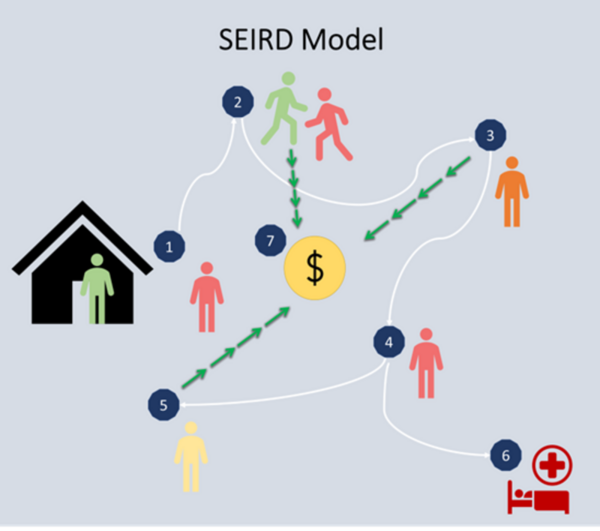
Pandemics involve the high transmission of a disease that impacts global and local health and economic patterns. Epidemiological models help propose pandemic control strategies based on non-pharmaceutical interventions such as social distancing, curfews, and lockdowns, reducing the economic impact of these restrictions. In this research, we utilized an epidemiological Susceptible, Exposed, Infected, Recovered, Deceased (SEIRD) model – a compartmental model for virtually simulating a pandemic day by day.
Read More...Predicting the spread speed of red imported fire ants under different temperature conditions in China

The authors looked at non-natural factors that influenced the spread rate of fire ants in multiple cities in China.
Read More...Development and Implementation of Enzymatic and Volatile Compound-based Approaches for Instantaneous Detection of Pathogenic Staphylococcus aureus
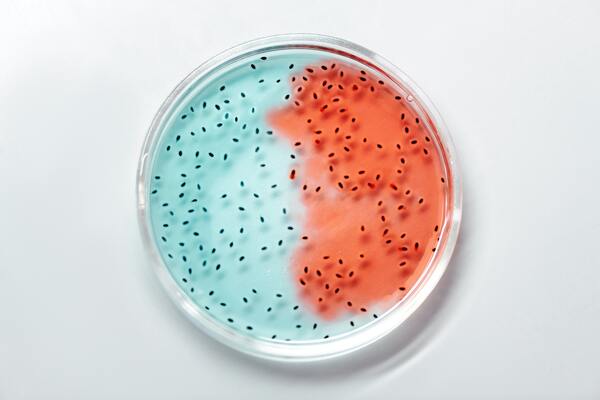
Staphylococcus aureus (S. aureus) has a mortality rate of up to 30% in developing countries. The purpose of this experiment was to determine if enzymatic and volatile compound-based approaches would perform more quickly in comparison to existing S. aureus diagnostic methods and to evaluate these novel methods on accuracy. Ultimately, this device provided results in less than 30 seconds, which is much quicker than existing methods that take anywhere from 10 minutes to 48 hours based on approach. Statistical analysis of accuracy provides preliminary confirmation that the device based on enzymatic and volatile compound-based approaches can be an accurate and time-efficient tool to detect pathogenic S. aureus.
Read More...Enhancing the quantum efficiency of a silicon solar cell using one dimensional thin film interferometry

Here, recognizing the need to improve the efficiency of the conversion of solar energy to electrical energy, the authors used MATLAB to mathematically simulate a multi-layered thin film with an without an antireflective coating. They found that the use of alternating ZnO-SiO2 multilayers enhanced the transmission of light into the solar cell, increasing its efficiency and reducing the reflectivity of the Si-Air interface.
Read More...Substance Abuse Transmission-Impact of Parental Exposure to Nicotine/Alcohol on Regenerated Planaria Offspring
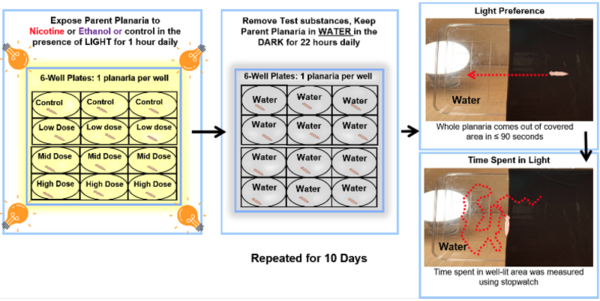
The global mental health crisis has led to increased substance abuse among youth. Prescription drug abuse causes approximately 115 American deaths daily. Understanding intergenerational transmission of substance abuse is complex due to lengthy human studies and socioeconomic variables. Recent FDA guidelines mandate abuse liability testing for neuro-active drugs but overlook intergenerational transfer. Brown planaria, due to their nervous system development similarities with mammals, offer a novel model.
Read More...The analysis of the viral transmission and structural interactions between the HIV-1 envelope glycoprotein and the lymphocyte receptor integrin α4β7
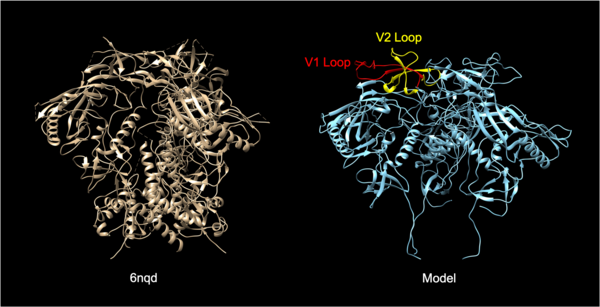
The Human Immunodeficiency Virus (HIV) infects approximately 40 million people globally, and one million people die every year from Acquired Immune Deficiency Syndrome (AIDS)-related illnesses. This study examined the interactions between the HIV-1 envelope glycoprotein gp120 and the human lymphocyte receptor integrin α4β7, the putative first long-range receptor for the envelope glycoprotein of the virus in mucosal tissues. Presented data support the claim that the V1 loop is involved in the binding between α4β7 and the HIV-1 envelope glycoprotein through molecular dockings.
Read More...Impact of Population Density and Elevation on Tuberculosis Spread and Transmission in Maharashtra, India
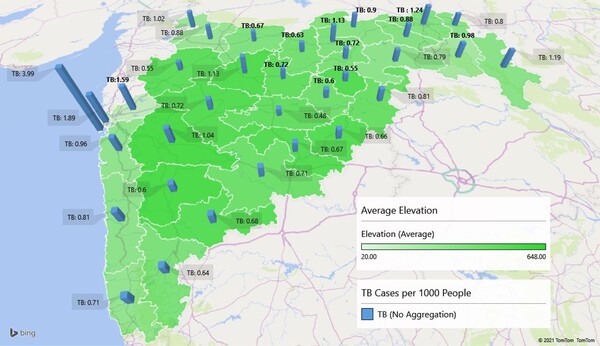
India accounts for over 2.4 million recorded cases of tuberculosis, about 26% of the world’s cases. This research ascertained the bearing of both the population density and the average elevation above mean sea level (MSL) on the number of cases of TB recorded by the districts in Maharashtra, India. The results found a strong positive correlation between the number of TB cases per thousand people and the population density and a strong negative correlation between the number of TB cases per thousand people and the average elevation above MSL.
Read More...The effects of different modes of vocalization and food consumption on the level of droplet transmission of bacteria
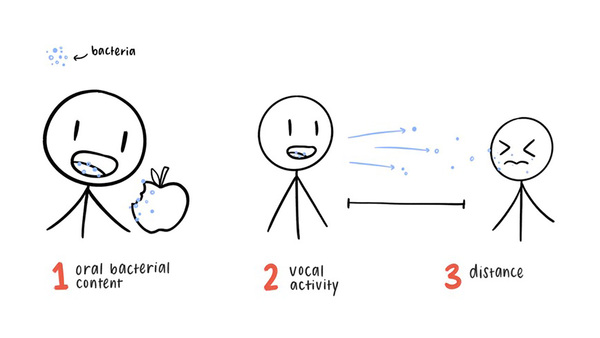
Microbial agents reposnsible for respiratory infections are often carried in spittle, which means they can be easily transmitted. Here, the authors investigate how likely certain activities are to spread microbes carried in spittle. They also investigate whether eating certain types of food might reduce the spread of spittle-borne bacteria too.
Read More...