
The authors access a panel of leaf traits across ten deciduous tree species to explore adaptive strategies between large and small trees.
Read More...Variation, relationship, and trade-offs of leaf traits in large and small deciduous broadleaf tree species
The authors access a panel of leaf traits across ten deciduous tree species to explore adaptive strategies between large and small trees.
Read More...Characterization of Drought Tolerance in Arabidopsis Mutant fry1-6
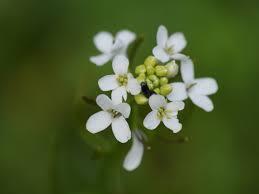
In a world where water shortage is becoming an increasing concern, and where population increase seems inevitable, food shortage is an overwhelming concern for many. In this paper, the authors aim to characterize a drought-resistant strain of A. thaliana, investigating the cause for its water resistance. These and similar studies help us learn how plants could be engineered to improve their ability to flourish in a changing climate.
Read More...A Phylogenetic Study of Conifers Describes Their Evolutionary Relationships and Reveals Potential Explanations for Current Distribution Patterns
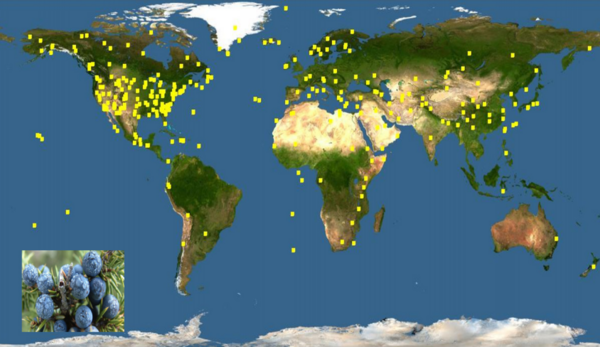
Many species of trees are distributed widely around the world, though not always in a way that makes immediate sense. The authors here use genetic information to help explain the geographic distribution of various conifer species throughout the world.
Read More...Hydrogen Sulfide Inhibits Flowering but Hastens New Leaf Growth in Bok Choy (Chinese Cabbage)
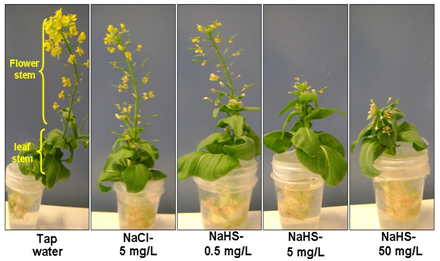
Hydrogen sulfide is toxic at high concentrations, but at low concentrations may be helpful for plant growth. This study characterizes the effect of hydrogen sulfide exposure on leafy plant growth. Bok choy hearts were grown in the presence of hydrogen sulfide, and measured for new leaf growth and flowering.
Read More...Evaluation of Tea Extract as an Inhibitor of Oxidative Stress in Prostate Cells
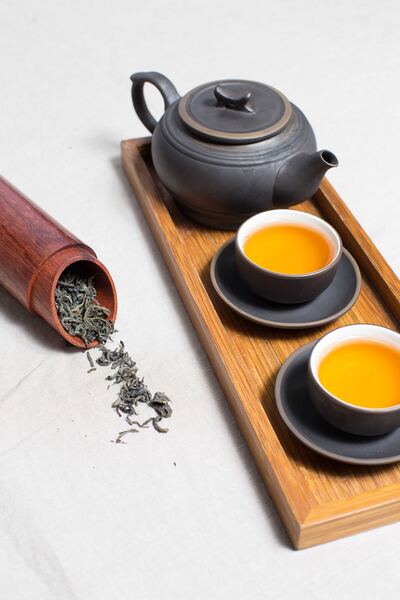
One important factor that contributes to human cancers is accumulated damage to cells' DNA due to the oxidative stress caused by free radicals. In this study, the authors investigate the effects of several different tea leaf extracts on oxidative stress in cultured human prostate cells to see if antioxidants in the tea leaves could help protect cells from this type of DNA damage. They found that all four types of tea extract (as well as direct application of the antioxidant EGCG) improved the outcomes for the cultured cells, with white tea extract having the strongest effect. This research suggests that tea extracts and the antioxidants that they contain may have applications in the treatment of the many diseases associated with cellular DNA damage, including cancer.
Read More...Effects of Paan Extracts on Periodontal Ligament and Osteosarcoma Cells
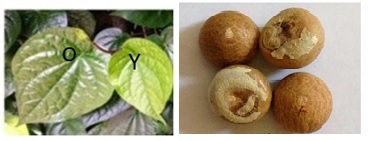
In South Asian countries, the major cause of oral cancer is reported to be chewing paan, which is comprised of betel leaf daubed with slaked lime paste and areca nut. To investigate how paan may contribute to the onset of cancer, the authors treated two immortalized cell lines with extracts of betel leaf, areca nut, and lime and evaluated how these treatments affected cell proliferation and cell death. Initial results indicate that while betel leaf alone may inhibit cell growth, areca nut promoted cancer cell survival and proliferation, even when co-treated with betel leaf. These data suggest that areca nut could exacerbate the progression of oral cancer in humans.
Read More...Vineyard vigilance: Harnessing deep learning for grapevine disease detection
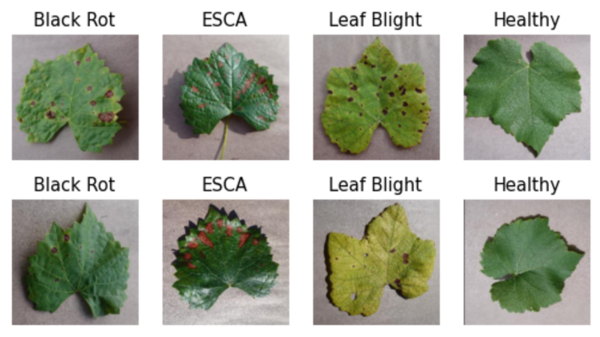
Globally, the cultivation of 77.8 million tons of grapes each year underscores their significance in both diets and agriculture. However, grapevines face mounting threats from diseases such as black rot, Esca, and leaf blight. Traditional detection methods often lag, leading to reduced yields and poor fruit quality. To address this, authors used machine learning, specifically deep learning with Convolutional Neural Networks (CNNs), to enhance disease detection.
Read More...Antibacterial activity by Dombeya wallichii plant extracts obtained by ultrasound-assisted extraction

Medicinal plants could be a good source of medication to combat antibiotic resistance. Dombeya wallichii, which is commonly called Pink Ball Tree in the family Sterculiaceae, has been documented to have medicinal potential. We observed the highest antibacterial activity in the stem extracts, followed by leaf and bark extracts. The extracts were more effective against tested Gram-positive bacteria when compared with Gram-negative strains.
Read More...Utilizing the Magnus effect to produce more downforce than a standard wing
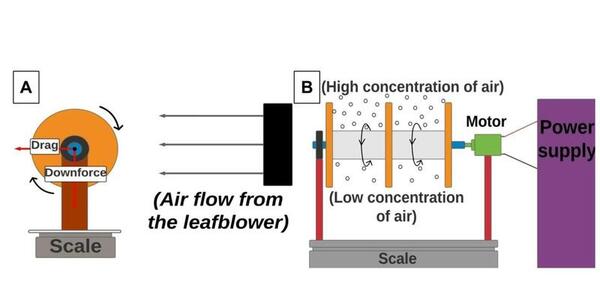
Here, seeking a better solution to produce downforce that keeps a vehicle grounded at high speeds than wings which tend to result in degraded car performance due to increased air resistance, the authors considered using the Magnus effect as a replacement. The authors found that a spinning cylinder generated significantly more downforce through the Magnus effect than a standard wing at all wind speeds as simulated through the use of a leaf blower. They suggest that a cylinder could be a potential replacement for a wing when downforce is a priority.
Read More...Effects of Various Environmental Factors on Stomatal Density, Area, and Potential Conductance Index
In this study, the authors investigate the combinatorial effects of CO2 plus other environmental factors including salinity, temperature, acidity, and drought on how effectively plants can transport water and carbon through their stomata.
Read More...