Browse Articles

The effect of floating plant on water purification: Comparison of the water purification capability of Water Hyacinth, Duckweed, and Azolla

Park et al. | Nov 21, 2020

The effect of floating plant on water purification: Comparison of the water purification capability of Water Hyacinth, Duckweed, and Azolla

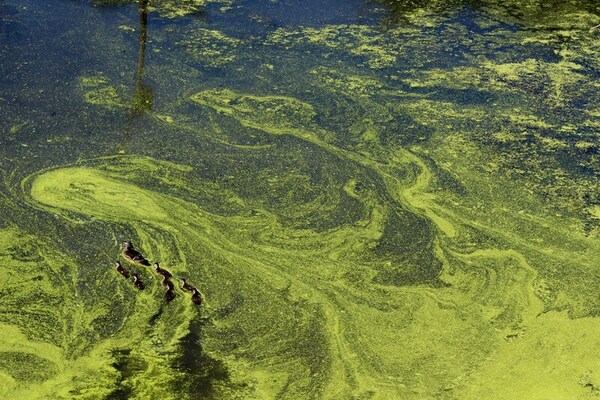
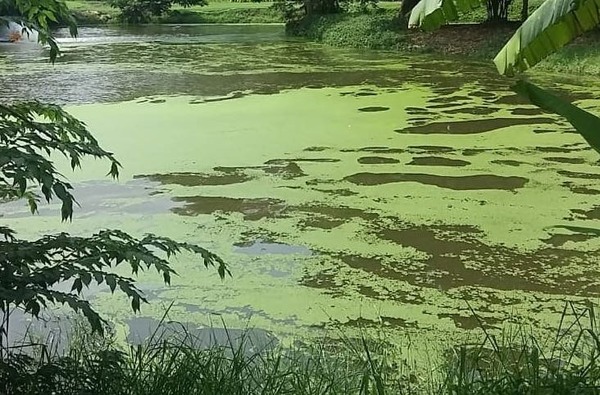
Clean water is a necessity for every household, yet water pollution is a serious problem in many parts of the world and plays a major role in compromising water security in the 21st century. In this paper, the authors address the utility of several plants as natural water purifiers. They estimate the effectiveness of duckweed, hyacinth, and azolla in improving the quality of water from the Mithi river in India by measuring several metrics. They conclude that all three plants are effective in improving water quality, suggesting that these plants as eco-friendly options for water treatment.

Read More...

Enhancing marine debris identification with convolutional neural networks

Wahlig et al. | Apr 03, 2024

Enhancing marine debris identification with convolutional neural networks
Image credit: The authors

Plastic pollution in the ocean is a major global concern. Remotely Operated Vehicles (ROVs) have promise for removing debris from the ocean, but more research is needed to achieve full effectiveness of the ROV technology. Wahlig and Gonzales tackle this issue by developing a deep learning model to distinguish trash from the environment in ROV images.

Read More...

A Juxtaposition of Airborne Microplastics and Fiber Contamination in Various Environments

Truong-Phan et al. | Dec 04, 2020

A Juxtaposition of Airborne Microplastics and Fiber Contamination in Various Environments

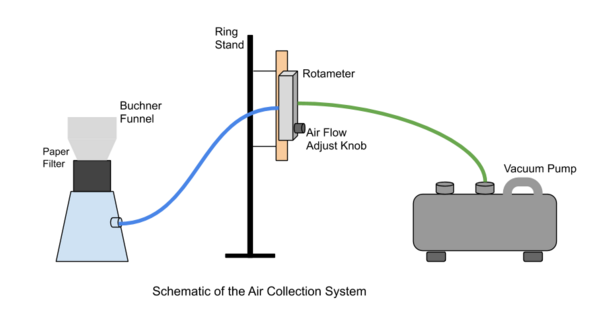
Microplastics can have detrimental effects on various wildlife, as well as pollute aquatic and atmospheric environments. This study focused on air samples collected from five locations to investigate microplastic concentrations in atmospheric fallout from indoor and outdoor settings, through a process utilizing a hand-held vacuum pump and a rotameter. The authors found that the difference between the average number of microplastic fragments and fibers collected from all locations was not large enough to be statistically significant. The results collected in this study will contribute to knowledge of the prevalence of airborne microplastics.

Read More...

How planarians are affected by mouthwash and cough syrup

Mebane et al. | Nov 14, 2021

How planarians are affected by mouthwash and cough syrup

Since cough syrup and mouthwash are commonly used items and often end up flushed down the drain or toilet, they can eventually find their way into into freshwater waterways which can be harmful to many marine organisms, such as planarians (aquatic flatworms). To investigate the effects of these substances on planarians, the authors considered different concentrations of Listerine mouthwash and Robitussin syrup along with their active ingredients. By using a behavioral assay, they identified that the active ingredients of cough syrup detrimentally affect planarian behavior. They suggest that these findings could be used to guide disposal methods to lessen detrimental effects on aquatic life.

Read More...

Investigating Lemna minor and microorganisms for the phytoremediation of nanosilver and microplastics

Iyer et al. | Apr 01, 2024

Investigating <i>Lemna minor</i> and microorganisms for the phytoremediation of nanosilver and microplastics

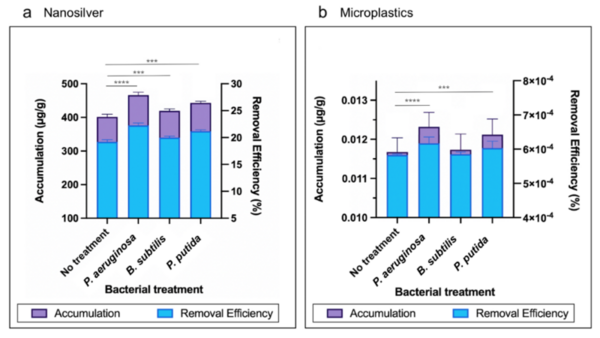
The authors looked at phytoremediation, the process by which plants are used to remove pollutants from our environment, and the ability of Lemna minor to perform phytoremediation in various simulated polluted environments. The authors found that L. minor could remove pollutants from the environment and that the addition of bacteria increased this removal.

Read More...

Androgen Diffusion Patterns in Soil: Potential Watershed Impacts

Corson et al. | Jan 24, 2019

Androgen Diffusion Patterns in Soil: Potential Watershed Impacts

Androgens are natural or synthetic steroid hormones that control secondary male sex characteristics. Androgens are excreted in cattle urine and feces, and can run off or seep into nearby waters, negatively impacting aquatic life and potentially polluting human water sources. Here, the authors investigated the effectiveness of soil as a natural barrier against androgen flow into vulnerable waterways. Their results, obtained by testing diffusion patterns of luminol, an androgen chemical analog, indicated that soil is a poor barrier to androgen diffusion.

Read More...
Floating aquatic plants form groups faster through current

May et al. | Oct 16, 2023

Floating aquatic plants form groups faster through current
Image credit: N Band

Here, the authors sought to investigate the effects of water current on the growth of colonies of duckweed, a floating plant that forms colonies in silent ponds, marshes, lakes , and streams in North America. They found that current flow mediates the formation of colonies, disrupting and recreating the colonies which provides the opportunity for reorganizations that were identified as beneficial.

Read More...