Investigating the effects of PVC microplastics on the growth of Chlorella vulgaris
(1) Jack M. Barrack Hebrew Academy, (2) Science Department, Jack M. Barrack Hebrew Academy, (3) STEAM Department, Jack M. Barrack Hebrew Academy
https://doi.org/10.59720/26-100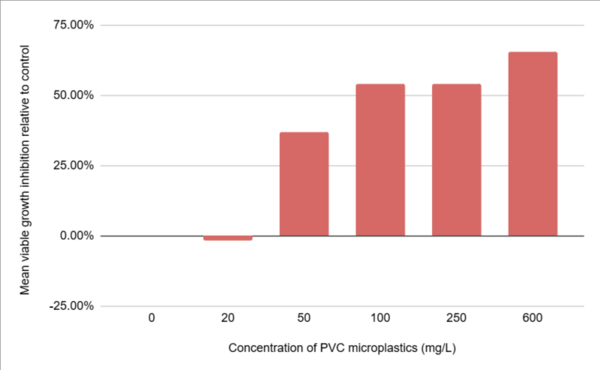
Microplastic pollution is an increasing environmental concern because microplastics can accumulate in freshwater ecosystems and disrupt aquatic organisms. As primary producers that form the foundation of freshwater food webs, algae are particularly important to study when assessing the ecological impacts of microplastics. We hypothesized that increasing concentrations of polyvinyl chloride (PVC) microplastics would reduce the growth of Chlorella vulgaris algae through chemical stressors associated with PVC exposure. This study aimed to investigate how different concentrations of PVC microplastics affect the growth of C. vulgaris in freshwater conditions. We cultured C. vulgaris under six PVC concentrations: 0, 20, 50, 100, 250, and 600 mg/L. We manually measured viable and non-viable cell densities using a hemocytometer before and after 15 days of growth. While water quality tests showed no measurable changes in chemical elements such as iron, zinc, or lead across groups, cell count data revealed a clear trend: Higher PVC concentrations were associated with nearly monotonic decreases in cell density after 15 days. At our highest concentration, we found a 65.58% growth inhibition rate. A Spearman correlation test confirmed the statistical significance of this effect. These findings support our hypothesis: PVC microplastics impaired algal growth. However, the physical or chemical stressors that caused this reduction in growth were not detected by basic water-quality assays. This study highlights the potential ecological risks posed by increasing microplastic contamination in freshwater ecosystems.
This article has been tagged with: