
In this study, the authors investigate the effect of disorganization and messiness on high school students' ability to perform well on a standardized test.
Read More...The effect of workspace tidiness on schoolwork performance of high school students
In this study, the authors investigate the effect of disorganization and messiness on high school students' ability to perform well on a standardized test.
Read More...Importance of pay on job satisfaction
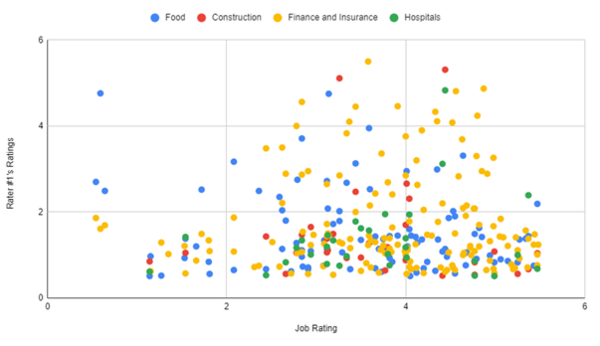
Pay is a widely debated factor in workplace motivation, influencing both incentives and job satisfaction. This work analyzed employee reviews across various industries to examine the relationship between pay importance and job satisfaction. Findings suggest that job satisfaction decreases as the importance of pay increases, particularly in construction, food, and finance industries, as well as among entry-level and experienced workers, though the results were not statistically significant.
Read More...Correlation of Prominent Intelligence Type & Coworker Relations

Ashley Moulton & Joseph Rasmus investigate 9 controversial categories of intelligence as predicted by Multiple Intelligence Theory, originally proposed in the mid-1980s. By collecting data from 56 participants, they record that there may not actually be a correlation between these categorical types when it comes to workplace atmosphere and project efficiency.
Read More...The effect of economic downturns on the frequency of mass shootings
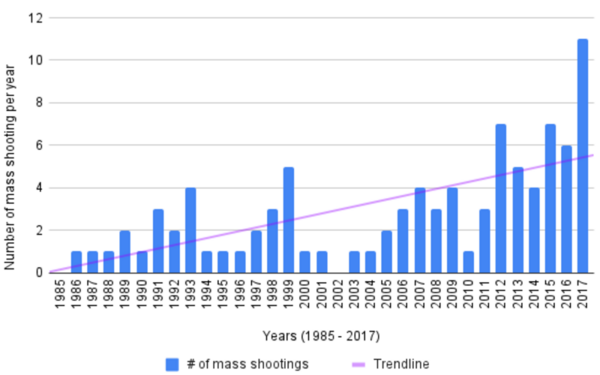
Researching gun violence and mass shootings in the U.S. is difficult due to the lack of consistent data collection. Some studies have linked mass shootings to personal financial stress, but little formal research exists on the impact of broader economic conditions. This study hypothesized an inverse relationship between mass shootings and economic performance, using the S&P 500 and unemployment rate as indicators.
Read More...Can the Growth Mindset Encourage Girls to Pursue “Male” Careers?

Despite major advances in gender equality, men still far outnumber women in science, technology, engineering and math (STEM) professions. The purpose of this project was to determine whether mindset could affect a student’s future career choices and whether this effect differed based on gender. When looking within the gender groups, 86% of females who had a growth mindset were likely to consider a “male” career, whereas only 16% of females with fixed mindset would likely to consider a “male” career. Especially for girls, cultivating a growth mindset may be a great strategy to address the problem of fewer girls picking STEM careers.
Read More...Algorithmic barriers: Investigating student perceptions of AI bias in subjective “culture fit” hiring

This study investigated perceptions of the emerging workforce toward the use of artificial intelligence in hiring, specifically for assessing subjective "culture fit." Through a mixed-methods survey of 150 high school and early-college students in Nepal, we found a significant disconnect between organizational adoption of AI and the profound skepticism of young job candidates, who express deep concerns about fairness, transparency, and the potential for AI to perpetuate systemic discrimination.
Read More...Optimizing 3D printing parameters: Evaluating infill type and layer height effects on tensile fracture force
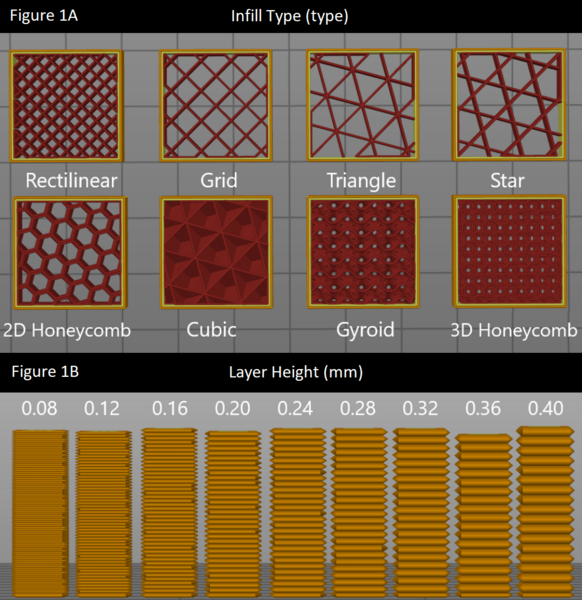
In this study, the authors test different infill patterns to determine which would be the strongest and most durable for 3D printing applications, which have become an integral part of many facets of life.
Read More...