The effect of economic downturns on the frequency of mass shootings
(1) The Harker School, (2) The University of Texas at Austin
https://doi.org/10.59720/24-007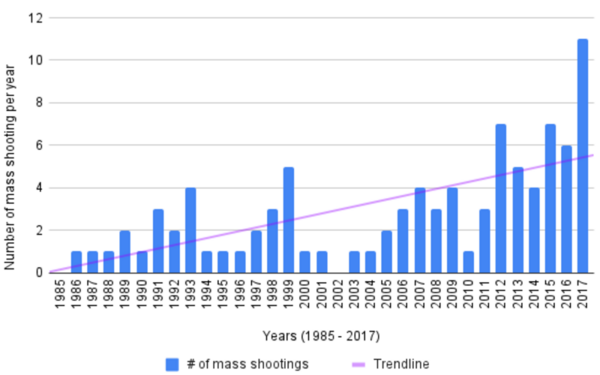
In the United States, researching the multitude of factors that contribute to the increase in gun violence and mass shootings remains challenging. There is no entity or agency that systematically and consistently collects data related to gun deaths and injuries. Using available data, several studies have shown a link between individuals carrying out mass shootings and workplace issues, job loss, and financial stress. While these past studies suggest that economic and financial stress may lead to mass shootings, there is very little formal research and analysis looking at the effect of broad financial and economic downturns on the incidence of mass shootings. We hypothesized that there would be an inverse relationship between the frequency of mass shootings and the performance of the stock market and broad economic indicators. We chose the S&P 500 index and the unemployment rate to represent the performance of stocks and the broader economy. We ran a correlation study over time to determine whether the frequency of mass shootings was related to these indicators. We found a correlation indicating that these financial and economic indicators might be linked to the frequency of mass shootings via other unifying factors. This suggests that, along with other drivers, the state of the overall economy is related to the probability of mass shooting incidents. Hence, governments, communities, and families may consider stronger mitigation strategies, especially during periods of financial stress.
This article has been tagged with: