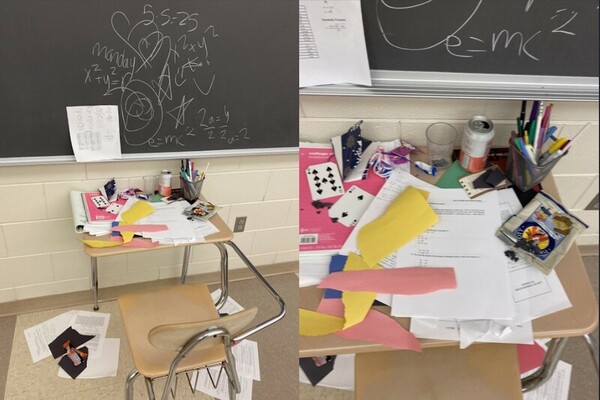
In this study, the authors investigate the effect of disorganization and messiness on high school students' ability to perform well on a standardized test.
Read More...The effect of workspace tidiness on schoolwork performance of high school students
In this study, the authors investigate the effect of disorganization and messiness on high school students' ability to perform well on a standardized test.
Read More...Impact of study partner status and group membership on commitment device effectiveness among college students

Here seeking to identify a possible solution to procrastination among college students, the authors used an online experiment that involved the random assignment of study partners that they shared their study time goal with. These partners were classified by status and group membership. The authors found that status and group membership did not significantly affect the likelihood of college students achieving their committed goals, and also suggest the potential of soft commitment devices that take advantage of social relationships to reduce procrastination.
Read More...Surface cleanliness of hydrothermally grown zinc oxide microparticles compared to commercial nanoparticles
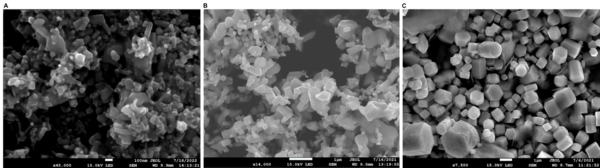
The authors test the usefulness of zinc oxide microparticles relative to zinc oxide nanoparticles as antibacterial agents.
Read More...A cost-effective IoT-based intelligent indoor air quality monitoring
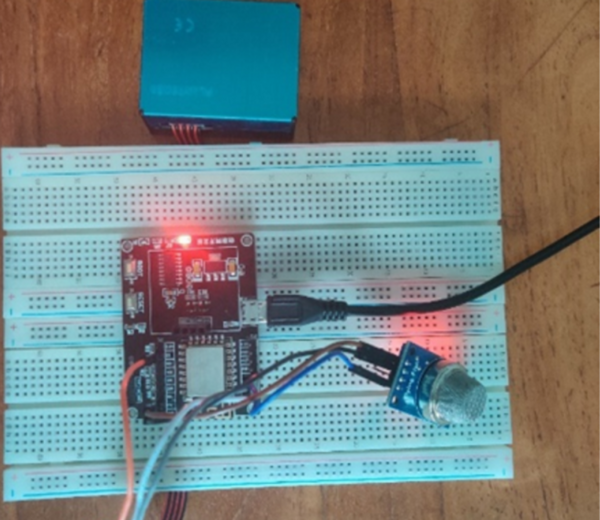
Poor air quality is associated with negative effects on human health but can be difficult to measure in an accurate and cost-effective manner. The authors design and test a monitor for measuring indoor air quality using low-cost components.
Read More...A novel in vitro blood-brain barrier model using 3D bioprinter: A pilot study
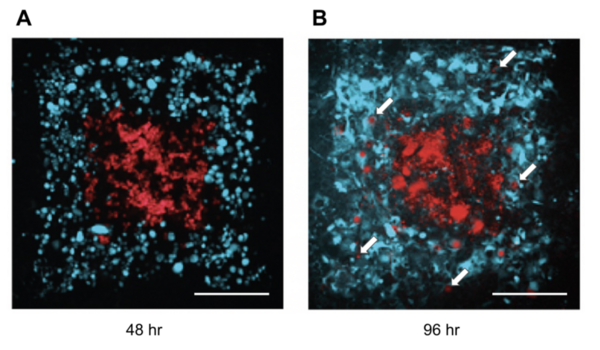
The authors looked at how a 3D bioprinter could be used to model the blood brain barrier.
Read More...Studying the effects of different anesthetics on quasi-periodic patterns in rat fMRI
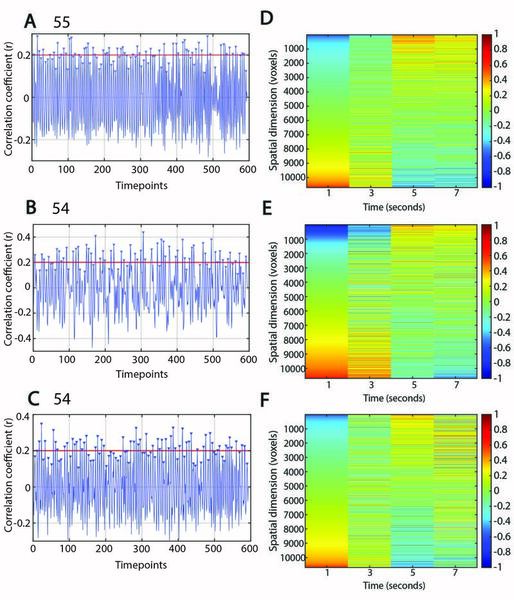
The authors looked at the effects of commonly used anesthetics in rodents on brain activity (specifically quasi-periodic patterns). Understanding effects on brain activity is important for researchers to understand when choosing rodent models for disease.
Read More...Studying habitability of the exoplanents Kepler-504 b, Kepler-315 b, and Kepler-315 c

The authors explore how similar exoplanets are to Earth and whether they could be inhabited by humans and other living organisms.
Read More...An explainable AI framework for studying query complexity and hallucinations in LLM scheduling tasks

In this study, we investigated how the complexity of a query can influence tool-use hallucinations in large language models that were tasked with setting an appointment. Using explainable AI (XAI) as a tool to test the hypothesis, we analyzed trends in hallucination rates by the type of query and saw results that when complexity and ambiguity of the query increased (such as asking for multiple days or unclear time ranges), the model was more likely to make errors due to misunderstanding time-related data from tool outputs. This shows that making large language models (LLMs) understand what seems logical to a human is still difficult, especially in complex tasks, and that knowing what causes these errors can help build more trustworthy AI systems.
Read More...Changing electronic use behavior in adolescents while studying: An interventional psychology experiment

Here, the authors investigated the effects of an interventional psychology on the study habits of high school students specifically related to the use of electronic distractions such as social media or texting, listening to music, or watching TV. They reported varying degrees of success between the control and intervention groups, suggesting that the methods of habit-breaking for students merits further study.
Read More...A machine learning approach to detect renal calculi by studying the physical characteristics of urine
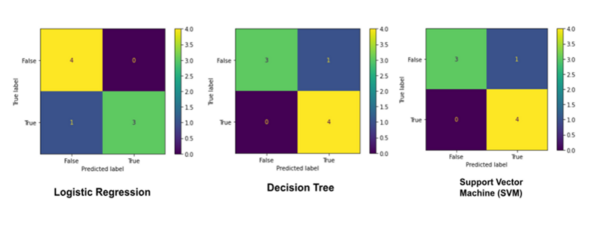
The authors trained a machine learning model to detect kidney stones based on characteristics of urine. This method would allow for detection of kidney stones prior to the onset of noticeable symptoms by the patient.
Read More...