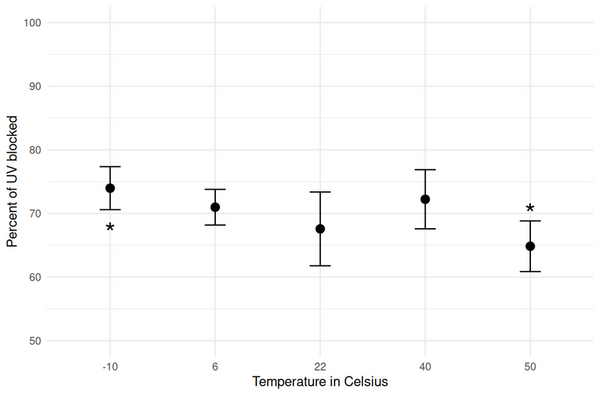
This study explored sunscreen storage temperature affects the efficacy of sunscreen to block UV light.
Read More...Improper storage of sunscreen might decrease effectiveness
This study explored sunscreen storage temperature affects the efficacy of sunscreen to block UV light.
Read More...The impact of temperature on the hydrolysis of potato starches into simple sugars

The authors looked at how storage temperature of potatoes can impact the sweetness of potatoes (due to the break down of the starch into simple sugars).
Read More...Effects of Temperature on Hand Sanitizer Efficiency

Here, recognizing the widespread use of hand sanitizers, the authors investigated their effectiveness in relation to storage temperature. They applied hand sanitizer before and after touching a cell phone and used LB-agar plates to monitor the growth of bacteria following this process. They found that 70% ethyl-alcohol-based sanitizers are least effective at temperatures above 107.27 °F and most effective at 96.17 °F.
Read More...Evaluation of platelet-rich plasma vs. platelet lysate: VEGF and PDGF concentration, stability, and shelf life

Cell-free biologicals are a novel method of treating clinical conditions which involve chronic inflammation such as tendonitis and osteoarthritis. This study compared platelet-derived growth factor (PDGF) and vascular endothelial growth factor (VEGF) in platelet-rich plasma (PRP), activated PRP (aPRP), and platelet lysate (PL). It was hypothesized that PL would contain higher concentrations of growth factors than PRP and that different storage temperatures for PL would diminish cytokine expression. Results demonstrated PL had the highest concentrations of both cytokines, with concentrations slightly diminishing at-80C. aPRP and PRP demonstrated lower concentrations of PDGF and VEGF than PL.
Read More...A new hybrid cold storage material
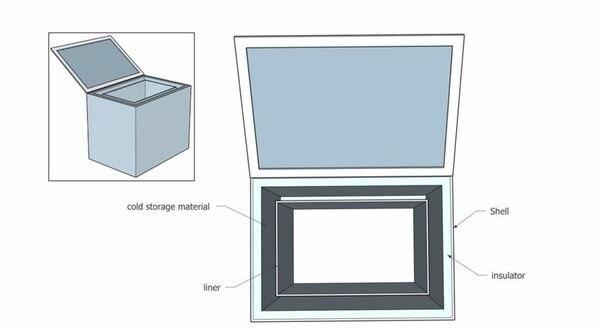
With low-temperature transportation being critical for the progress of research and medical services by preserving biological samples and vaccines, the optimization of cold storage materials is more critical now than ever. The exclusive use of dry ice has its limitations. Notably, it proves insufficient for cold storage during long-range transportation necessary for the delivery of specimens to rural areas. In this article, the authors have proposed a new means of cold storage through the combination of dry ice and ethanol. Upon thorough analysis, the authors have determined their new method as considerably better than the use of pure dry ice across many characteristics, including cold storage capacity, longevity of material, and financial and environmental feasibility.
Read More...Heat impact to food’s shelf life - An example of milk
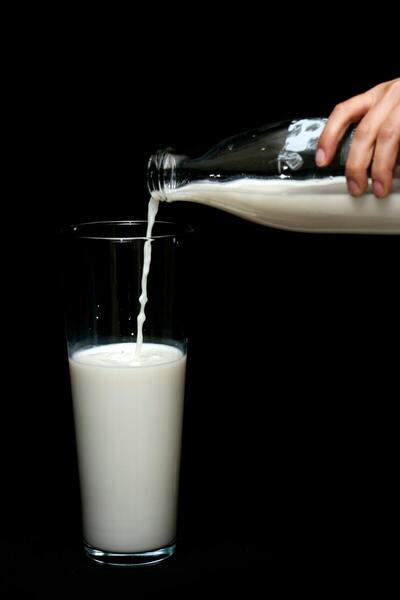
Food spoilage happens when food is not kept in a good storage condition. Qualitatively estimating the shortened shelf life of food could reduce food waste. In this study, we tested the impact of heat on milk shelf life. Our results showed that an exposure at room temperature (25°C) for 3.2 hours will decrease the shelf life of milk by one day.
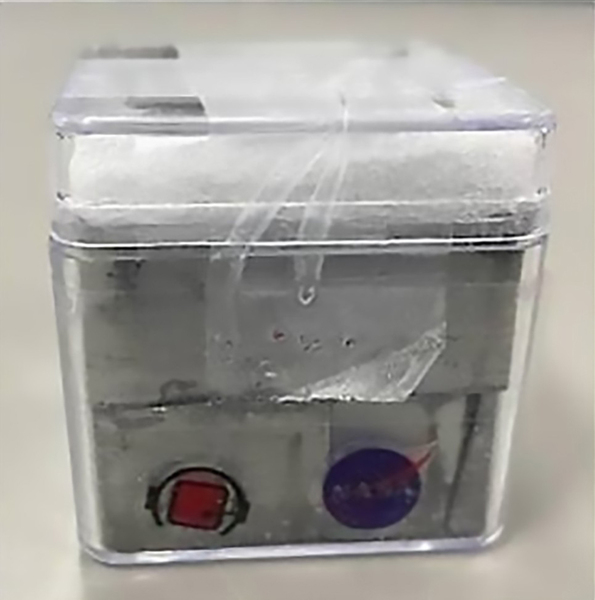
Read More...The effects of rocket travel and near-space environment on dried blood and blood plasma
Osmotic characteristics of water retention structures of Bursera microphylla in relation to soil salinity

This study hypothesized that sodium chloride was taken up through plant root structures to facilitate water transportation, and that sodium chloride accumulation was directly proportional to the soil salinity. Results showed that most cells within the “bulb” structures were isotonic at a concentration approximately twice as high as that of root tissue and ambient soil salinity, therefore supporting the presented hypothesis.
Read More...Slowing the Mold Growth on Stored Corn: The Effects of Vinegar, Baker’s Yeast, and Yogurt on Corn Weight Loss
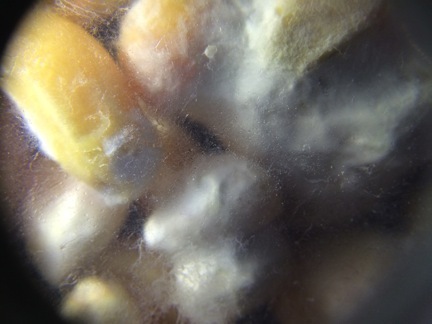
Chemical preservatives are often used to reduce grain spoilage due to mold, but can have harmful heath and environmental effects. In this study, the authors tested three low toxic compounds for their effects on mold growth on corn kernels and found that all three were successful at slowing growth.
Read More...Leveraging E-Waste to Enhance Water Condensation by Effective Use of Solid-state Thermoelectric Cooling
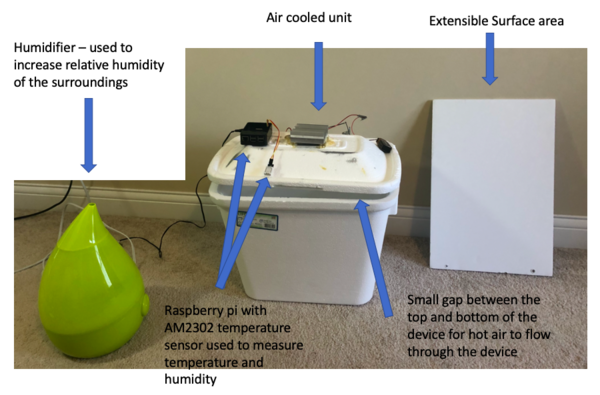
Water scarcity affects upwards of a billion people worldwide today. This project leverages the potential of capturing humidity to build a high-efficiency water condensation device that can generate water and be used for personal and commercial purposes. This compact environment-friendly device would have low power requirements, which would potentially allow it to utilize renewable energy sources and collect water at the most needed location.
Read More...