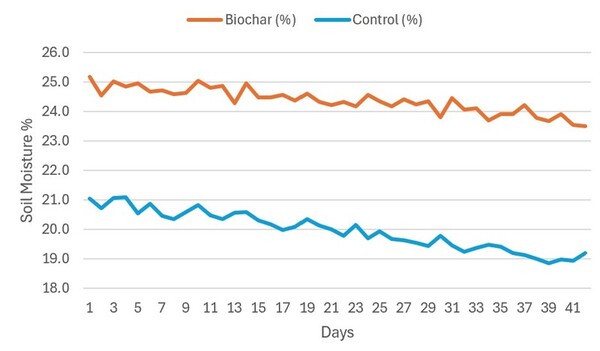
The study explored converting Gracilaria seaweed waste—known for releasing toxic hydrogen sulfide when decomposed—into biochar as a sustainable solution for waste management and soil improvement.
Read More...Enhanced soil fertility through seaweed-derived biochar: A comparative analysis with commercial fertilizers
The study explored converting Gracilaria seaweed waste—known for releasing toxic hydrogen sulfide when decomposed—into biochar as a sustainable solution for waste management and soil improvement.
Read More...Effect of environmental factors on bacterial flora of normal human skin
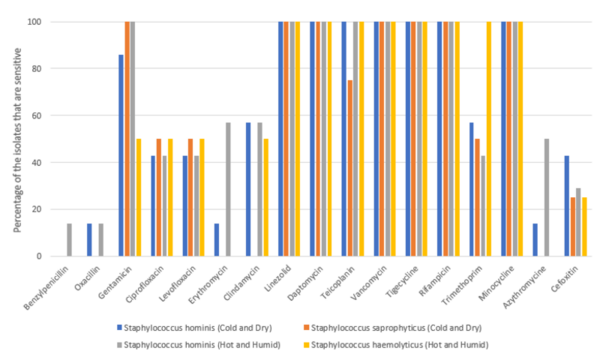
The authors looked how different working conditions impacted the microbiome of the human skin.
Read More...Bacterial Load Consistency Among Three Independent Water Distribution Systems
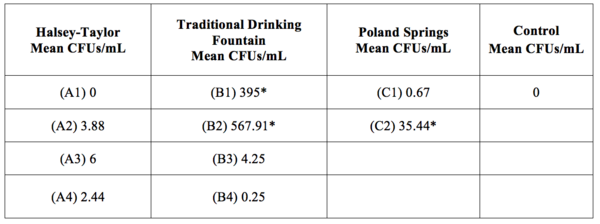
Clean drinking water is an essential component to maintaining public health. The authors of this study tested the bacterial load of water from three different disinfection and filtration systems in order to determine which system might be superior.
Read More...The ecological mysteries of Opheodesoma spectabilis : Seasonal trends, habitat preferences, and climate responses
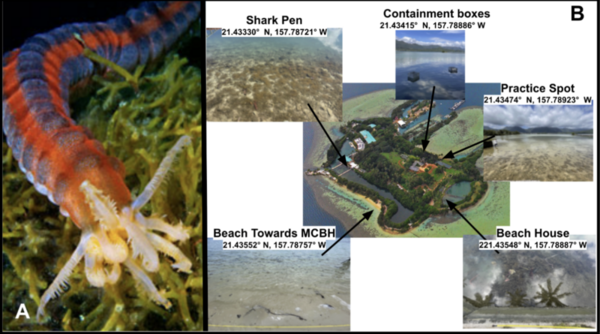
This study examines how environmental conditions influence the abundance and ecological role of the sea cucumber Opheodesoma spectabilis in Kāneʻohe Bay. Field observations and laboratory experiments showed that the species is more common in algae-dominated sandy habitats, where it improves water clarity and increases dissolved oxygen through bioturbation. However, exposure to very high temperatures caused rapid mortality, suggesting that marine heat waves could threaten this species and the ecological functions it provides.
Read More...Impact of Soil Productivity on the Growth of Two Meyer Lemon Trees
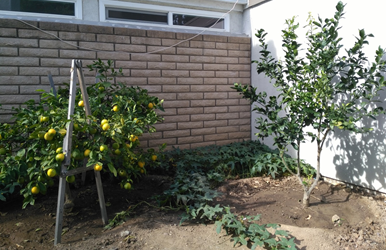
Here, the authors aimed to apply home soil testing to identify the cause of the growth differences between two lemon trees. They hypothesized that differences in physical and chemical soil characteristics were influencing differences in soil productivity and plant growth. Overall, the study demonstrated the effectiveness of home soil testing to characterize soils and help homeowners solve common gardening problems.
Read More...Performance of Panicum virgatum Cultivars in Competition With Bromus inermis and Differing Amounts of N Fertilizer

With growing demands for ethanol, many researchers are turning to Panicum virgatum (switchgrass) as a feedstock of cellulosic ethanol. In this study, Ferris and Gillan examine the germination, biomass, nitrogen, survival, and chlorophyll absorbance of two switchgrass cultivars of grown in competition with Bromus inermis (smooth brome) with two varying levels of nitrogen fertilizer. Results presented indicate that during establishment, competition from other species has a greater effect than nitrogen fertilizer.
Read More...Friend or Foe: Investigating the Relationship between a Corn Crop and a Native Ragweed Population
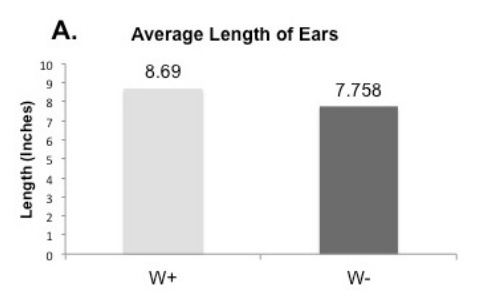
Farmers will need to increase crop yields to feed the world's growing population efficiently. The authors here investigate the effects of growing corn in the presence or absence of ragweed, an invasive weed found in many fields and gardens. Surprisingly, the authors found that corn grown in the presence of weeds grew taller and were more productive than corn that had weeds removed. This may help gardeners rethink the necessity of weeding, and may point a way to improve farm yields in the future.
Read More...Allelopathic Effects of Kudzu (Pueraria montana) on Seed Germination and Their Potential Use As a Natural Herbicide
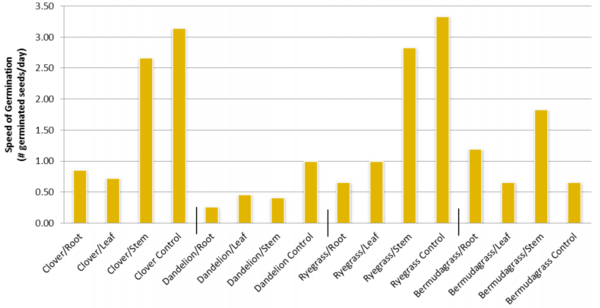
Plants in the wild compete with each other for nutrients and sunlight. Kudzu is a weed that is thought to secrete compounds that inhibit the growth of other plants. Here the authors find that certain parts of kudzu plants can block the germination of clover and dandelion seeds. These experiments may lead to a weed killer that is safe and naturally derived.
Read More...Plasmid Variance and Nutrient Regulation of Bioluminescence Genes
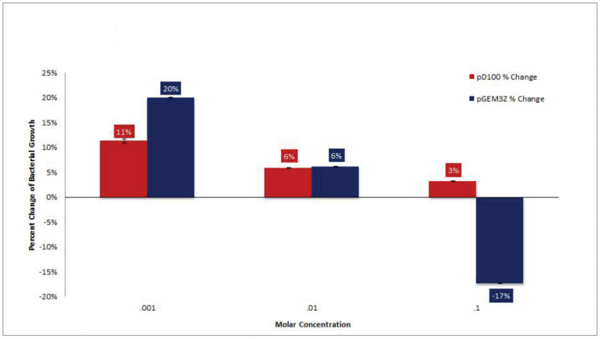
Numerous organisms, including the marine bacterium Aliivibrio fischeri, produce light. This bioluminescence is involved in many important symbioses and may one day be an important source of light for humans. In this study, the authors investigated ways to increase bioluminescence production from the model organism E. coli.
Read More...Detergent pollutants decrease nutrient availability in soil
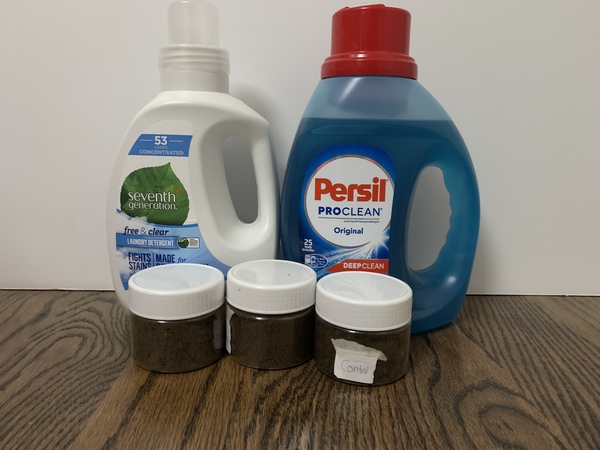
Household detergents have surfactants that can potentially harm the soil and broader ecosystems. In this study, the authors investigate whether eco-friendly and less-eco-friendly detergents affect soil pH, phosphorus, nitrogen, and potassium levels.
Read More...